
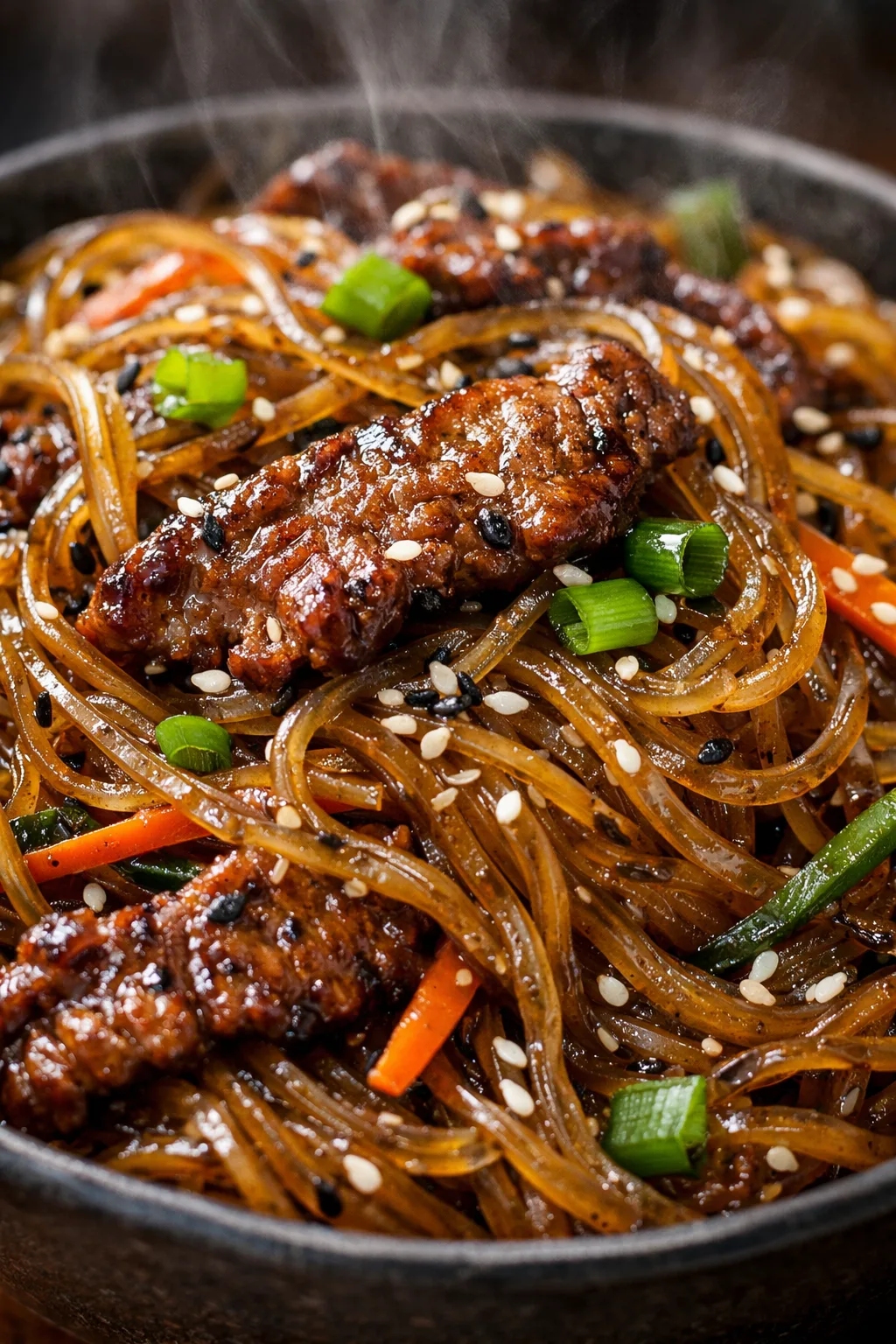
Quick Summary: A savory-sweet Mongolian beef glass noodles recipe made with Korean sweet potato noodles, ready in 20 minutes of active cooking time. The sauce is thick, glossy, and clings to every noodle no refined sugar, naturally gluten-free, and genuinely better than ordering out.
There’s something about a sauce that actually coats the noodles not just puddles at the bottom of the bowl that makes a weeknight dinner feel worth making. This Mongolian beef glass noodles recipe delivers exactly that. The sauce clings to every translucent strand, the ground beef stays juicy and well-seasoned, and the active cooking time is a real 20 minutes. Boiling water runs in the background while you build the sauce you’re not standing over the stove the entire time.
What sets this version apart is the Korean sweet potato glass noodles. They hold their chew in a saucy dish better than rice noodles, absorb flavor without turning soft, and are naturally gluten-free. Swap soy sauce for coconut aminos and this 20-minute meal works for a wider table without sacrificing anything.
Table of Contents
Table of Contents
Quick Answer
This Mongolian beef glass noodles recipe combines seasoned ground beef, Korean sweet potato noodles, and a thick soy-hoisin sauce that comes together in one pan. Active cooking time is 20 minutes. It works as a fast weeknight dinner, a meal-prep lunch, or a satisfying high-protein bowl — and it’s naturally gluten-free when made with sweet potato glass noodles.
Why This Is Better Than Takeout
Most Mongolian beef from a restaurant is deep-fried in heavy oil and built on a sugar base that spikes and crashes. This quick dinner version keeps all the flavor while cutting the shortcuts:
- Less oil ground beef browned in its own fat, no deep-frying involved
- No refined sugar coconut sugar gives a caramel depth that white sugar can’t match
- Fresher flavor real garlic, real ginger, sauce made in minutes, not sitting in a warming tray
- Customizable protein ground beef, turkey, chicken, or sliced steak all work
- Gluten-free by default sweet potato glass noodles require no special substitution
- Ready faster 20-minute meal, no waiting on delivery, no minimum order
What Are Glass Noodles (And Why They Work Here)
Glass noodles also called cellophane noodles, sweet potato starch noodles, or dangmyeon in Korean are made from sweet potato starch and water. When raw, they look like stiff, translucent threads. Once cooked, they turn soft, slightly chewy, and genuinely clear, which is where the name comes from.
They’re not the same as rice noodles. Rice noodles are made from rice flour, stay opaque after cooking, and tend to be more delicate. Glass noodles have more structural integrity they hold their shape when tossed in a hot, saucy pan without collapsing, which makes them ideal for this Mongolian beef recipe. They’re also flavorless on their own, which means they absorb whatever sauce they’re coated in completely.
That neutral base is exactly why they work here. The bold Mongolian-style sauce salty, sweet, faintly spicy needs something that carries flavor rather than competes with it. Glass noodles do that better than almost any other noodle in this style of quick dinner.
Quick Comparison: Glass Noodles vs Rice Noodles
Both are gluten-free, both work in Asian-style dishes, but they behave very differently once they hit a hot, saucy pan and that difference matters in a recipe like this.
| Glass Noodles | Rice Noodles | |
|---|---|---|
| Made from | Sweet potato starch | Rice flour |
| Appearance (cooked) | Translucent, clear | Opaque, white |
| Texture | Chewy, springy, firm | Soft, delicate, silky |
| Sauce absorption | Absorbs deeply without losing shape | Absorbs quickly but can turn mushy |
| In saucy dishes | Holds up well — ideal for tossing | Can break apart if over-stirred |
| Gluten-free | ✅ Yes | ✅ Yes |
| Calorie count | Lower than wheat pasta | Similar to glass noodles |
| Best used in | Stir-fries, saucy bowls, Japchae | Pad Thai, soups, spring rolls |
| Cook time | 4–5 minutes | 3–8 minutes (varies by thickness) |
| Freezer-friendly | ❌ No — texture breaks down | ❌ No — same issue |
The bottom line for this recipe: Glass noodles win here because they stay intact when tossed aggressively with hot beef and thick sauce. Rice noodles would work in a pinch, but you’d need to be gentler during the toss and serve immediately they don’t hold their texture as long once dressed.
Healthy Mongolian Beef with Sweet Potato Noodles Benefits
- 20-minute active cooking time no long marinades, no complicated prep
- Thick, glossy sauce that clings to the noodles not pooling at the bottom
- Ground beef makes it faster and more affordable than flank steak versions
- Naturally gluten-free with sweet potato glass noodles no substitution required for the base
- No refined sugar coconut sugar adds sweetness with a caramel depth white sugar lacks
- One pan, one pot minimal cleanup for a complete high-protein dinner
- Balanced flavor salty, slightly sweet, faintly spicy without any one note dominating
Are Glass Noodles Healthy?
For a quick dinner built on noodles and ground beef, this glass noodles recipe holds up reasonably well nutritionally. Sweet potato starch noodles are lower in calories than wheat pasta and are naturally gluten-free. They have a relatively high carbohydrate content, but they’re also low in fat and contain no gluten proteins.
The health profile of this Mongolian beef recipe depends more on the sauce than the noodles. Using low-sodium soy sauce (or coconut aminos), coconut sugar instead of refined white sugar, and lean 90/10 ground beef keeps the dish in a reasonable range around 480 calories per serving with solid protein content. It’s not a salad, but it’s a far cleaner version of what you’d get from a takeout box.
What Makes This Recipe Work
The starch slurry is the turning point. Adding arrowroot or cornstarch mixed with cold water to the sauce transforms it from thin and loose to thick and glossy in under 90 seconds. That shift is what makes the sauce coat the glass noodles rather than sliding off it’s the difference between a dish that tastes assembled and one that feels intentional.
The flavor logic matters too. Hoisin brings sweetness and depth, low-sodium soy sauce adds salt and umami without overwhelming, and beef broth gives the sauce body without heaviness. Coconut sugar caramelizes slightly as it cooks, adding a subtle richness that straight white sugar skips entirely. The crushed red pepper doesn’t dominate it just adds enough heat to keep each bite interesting.
🚨 Pro Tip: Don’t Overcook the Noodles
This is the most common failure point in any glass noodle recipe, and it’s worth understanding why it happens. Sweet potato starch noodles are made of long-chain starch molecules that gelatinize rapidly in boiling water. Cook them to the right point and those chains hold their structure, giving you that satisfying chew. Go 90 seconds past the recommended time and the starch network breaks down the noodles turn gummy, collapse on themselves, and lose exactly what makes them worth eating.
Key tips for perfect glass noodles:
- Rinse immediately under cold water after draining stops gelatinization instantly
- Do not overcook max 4 to 5 minutes depending on brand; check the package
- Toss while the noodles are still warm they absorb sauce better
- Avoid overcrowding the pot they need room to move or they’ll clump and cook unevenly
- Stir during the first minute this is when sticking is most likely
Can You Make Mongolian Beef Without Hoisin?
Yes, and it still works well. Hoisin adds a distinct sweet-savory depth, but it’s not irreplaceable. If you’re out of it or avoiding it for dietary reasons, here are workable substitutes:
- Coconut aminos + a small amount of molasses replicates the sweetness and slight thickness
- Oyster sauce similar depth, slightly more savory and less sweet; reduce added sugar slightly
- GF plum sauce sweeter and fruitier, but creates a similar coating effect
- Extra soy sauce + a teaspoon of sesame paste less sweet, more umami-forward
The sauce won’t be identical, but any of these options keeps the Mongolian beef glass noodles recipe cohesive. The starch slurry does the heavy lifting for texture either way.
Ingredients You’ll Need
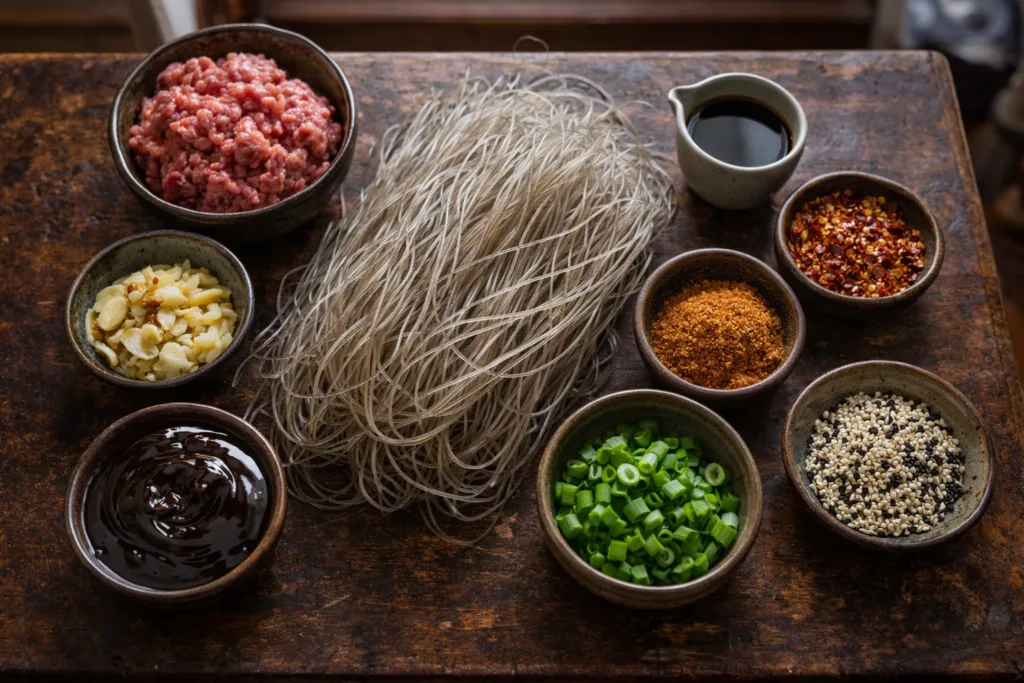
- Ground beef (90/10) lean enough to skip draining, still flavorful; 80/20 works with a drain step
- Garlic (4 cloves, mashed) mashed melts into the sauce more evenly than minced
- Low-sodium soy sauce (¼ cup) keeps salt in check so the sauce doesn’t overpower
- Hoisin sauce (¼ cup) thick, sweet, slightly tangy backbone of the flavor
- Beef broth (¼ cup) adds depth and stretches the sauce without thinning it
- Coconut sugar (¼ cup) caramel-note sweetness without refined sugar
- Ground ginger distributes evenly, more consistent than fresh in this application
- Black pepper + crushed red pepper flakes warmth and a low steady heat
- Arrowroot starch or cornstarch the ingredient that creates the glossy sauce texture
- Korean glass noodles (sweet potato) chewy, gluten-free, holds up to tossing
- Green onions + sesame seeds freshness, crunch, and visual contrast at serving
Ingredient Swaps
| Original | Swap | Notes |
|---|---|---|
| Soy sauce | Coconut aminos | Sweeter, soy-free, fully gluten-free |
| Coconut sugar | Brown sugar | Works well; slightly less caramel depth |
| Arrowroot starch | Cornstarch | Direct 1:1 swap |
| Ground beef | Ground turkey or chicken | Leaner, milder; add extra garlic to compensate |
| Glass noodles | Rice noodles | Stays gluten-free; softer texture |
| Beef broth | Chicken or vegetable broth | Minor flavor shift, still cohesive |
| Hoisin sauce | GF hoisin or aminos + molasses | Check labels standard hoisin often contains wheat |
How to Make It
1. Brown the beef.
Heat a large skillet over medium-high. Add ground beef and break it apart with a wooden spoon. Cook 5 to 6 minutes until fully browned with some real color don’t rush. That caramelization builds flavor that carries through the whole dish.
2. Add the garlic.
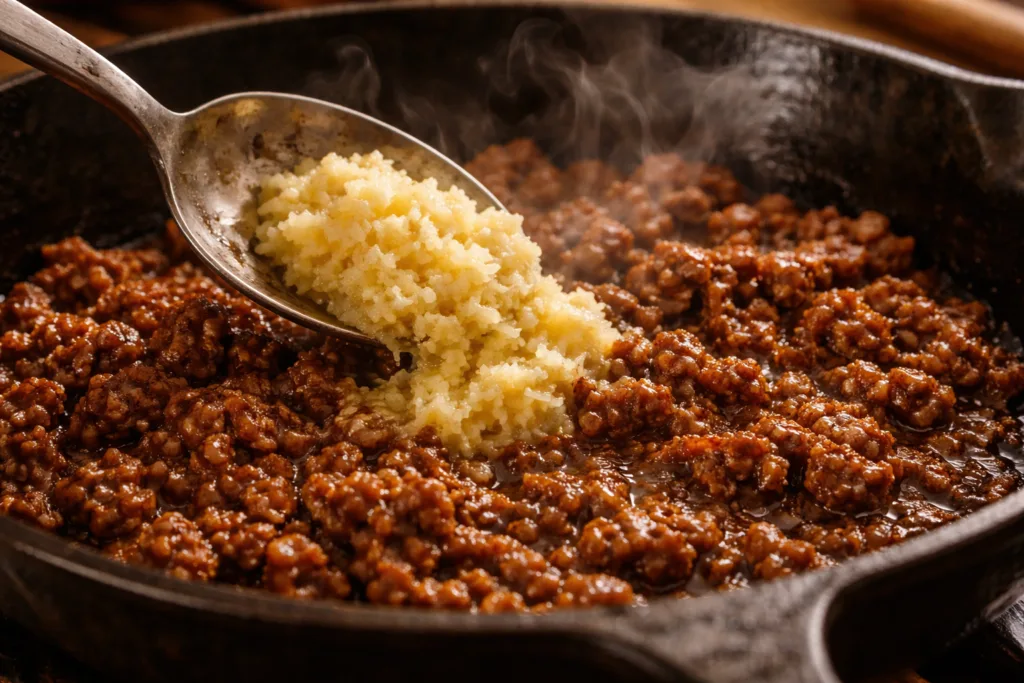
Push the beef aside and add mashed garlic to the open space. Cook 60 seconds until fragrant, then mix into the beef. Sixty seconds is enough any longer and it risks turning sharp and bitter.
3. Build the sauce.
Add soy sauce, coconut sugar, beef broth, hoisin, ground ginger, black pepper, and red pepper flakes to the skillet. Stir to combine. It’ll look loose that changes in the next step.
4. Thicken it.
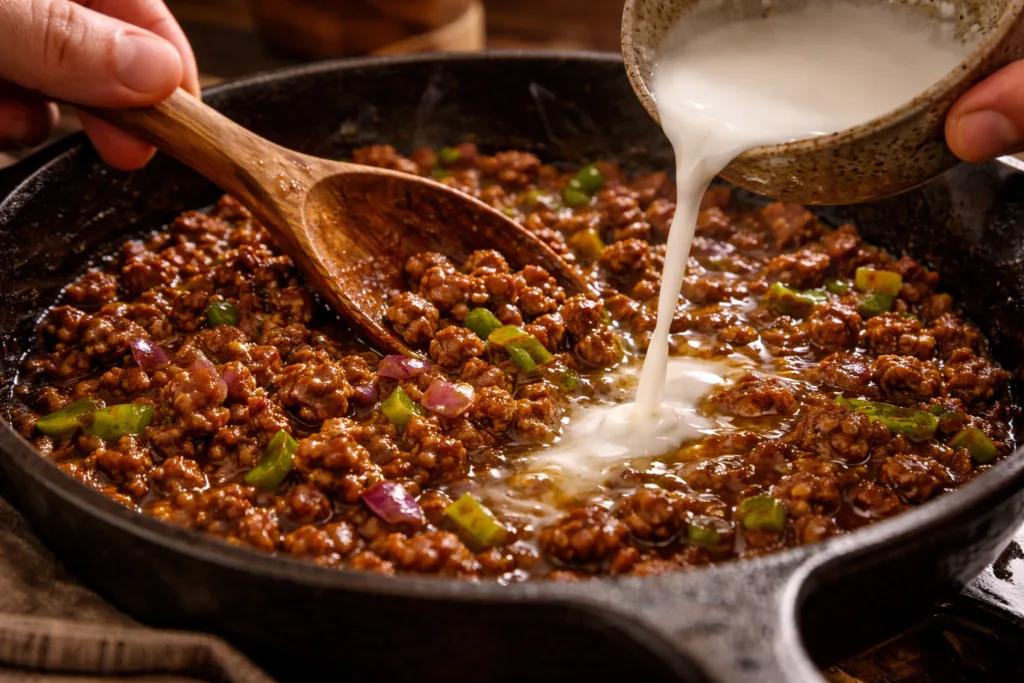
Whisk arrowroot or cornstarch with an equal amount of cold water in a small bowl until completely smooth. Pour into the skillet and stir. Simmer gently within 60 to 90 seconds the sauce becomes glossy and thick. Pull from heat when it reaches your preferred consistency; it continues thickening as it sits.
5. Cook the glass noodles.
Boil water and cook noodles per package directions typically 4 to 5 minutes. Stir in the first minute to prevent clumping. Drain and rinse under cold running water immediately. Don’t skip the rinse.
6. Toss and serve.
Add noodles to the skillet. Toss until every strand is coated in sauce. The residual pan heat handles the final sauce absorption. Top with green onions and sesame seeds and serve immediately.
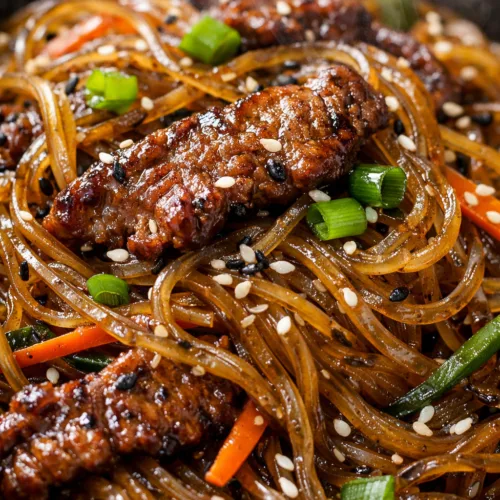
Viral Mongolian Beef Glass Noodles

Equipment
- Large Skillet or Wok Preferably cast iron or heavy-bottomed stainless steel to get that perfect brown on the beef
- Large Pot For boiling the glass noodles
- Colander / Sieve To drain the noodles and rinse them under cold water immediately
- Wooden Spoon or Spatula To break apart the ground beef and toss the noodles
- Small Mixing Bowl To whisk the starch slurry until smooth
- Chef’s Knife For mashing the garlic and dicing the vegetables
- Measuring Cups and Spoons For the soy sauce, hoisin, and starch measurements
Ingredients
The Noodles
- 8 oz Korean glass noodles (sweet potato starch)
- Water for boiling
The Beef & Aromatics
- 1.5 lbs lean ground beef (90/10)
- 4 cloves garlic, mashed
- 1 green bell pepper, diced
- ½ red onion, diced
The Mongolian Sauce
- ¼ cup low-sodium soy sauce (or coconut aminos)
- ¼ cup hoisin sauce (GF if needed)
- ¼ cup beef broth
- ¼ cup coconut sugar
- 1 tsp ground ginger
- 1 tsp black pepper
- ½ tsp crushed red pepper flakes
- 1 tbsp arrowroot starch (or cornstarch) mixed with 1 tbsp cold water
Instructions
- Step 1: Brown the ground beef in a large skillet over medium-high heat until fully cooked and caramelized (5-6 mins).
- Step 2: Push beef aside, add mashed garlic to the skillet for 60 seconds until fragrant, then combine.
- Step 3: Stir in soy sauce, hoisin, beef broth, coconut sugar, ginger, and peppers.
- Step 4: Whisk the starch slurry and pour into the pan. Simmer for 60-90 seconds until the sauce turns thick and glossy.
- Step 5: Boil noodles per package directions (4-5 mins), drain, and rinse immediately with cold water.
- Step 6: Toss noodles into the skillet until fully coated. Top with green onions and sesame seeds.
Notes
- Always rinse glass noodles in cold water after boiling. This stops the cooking process and prevents them from clumping together into a sticky mass before tossing with the sauce.
Best Tips
- Cold water rinse on noodles is non-negotiable prevents clumping, preserves chew
- Make the slurry with cold water hot water causes starch to clump before it hits the sauce
- Taste the sauce before adding noodles noodles dilute flavor slightly; season now
- Toss noodles while the pan is warm, not boiling absorption without overcooking
- Mash garlic flat with a knife bigger soft pieces melt into the sauce rather than burning as sharp minced bits
Common Mistakes
Skipping the slurry prep. If the slurry isn’t ready when the sauce hits the pan, you’ll scramble to mix it while everything overcooks. Prep it first, before the beef even goes in.
Letting the noodles sit after draining. Glass noodles clump fast. Time the boil so you’re draining right as the sauce finishes — then toss immediately.
Under-browning the beef. Grey beef makes a flat-tasting sauce. Give it real color before adding anything else.
Burning the garlic. It goes from golden to bitter in under a minute in residual fat. Add it, stir it, move on.
How to Store It
Refrigerate in an airtight container for up to 3 days. The noodles absorb more sauce overnight — texture softens slightly but flavor deepens. Reheat in a skillet over medium-low with a splash of broth or water to loosen. Microwaving works but heats unevenly.
This dish doesn’t freeze well glass noodles lose their texture after thawing and become soft and shapeless.
Serving Ideas
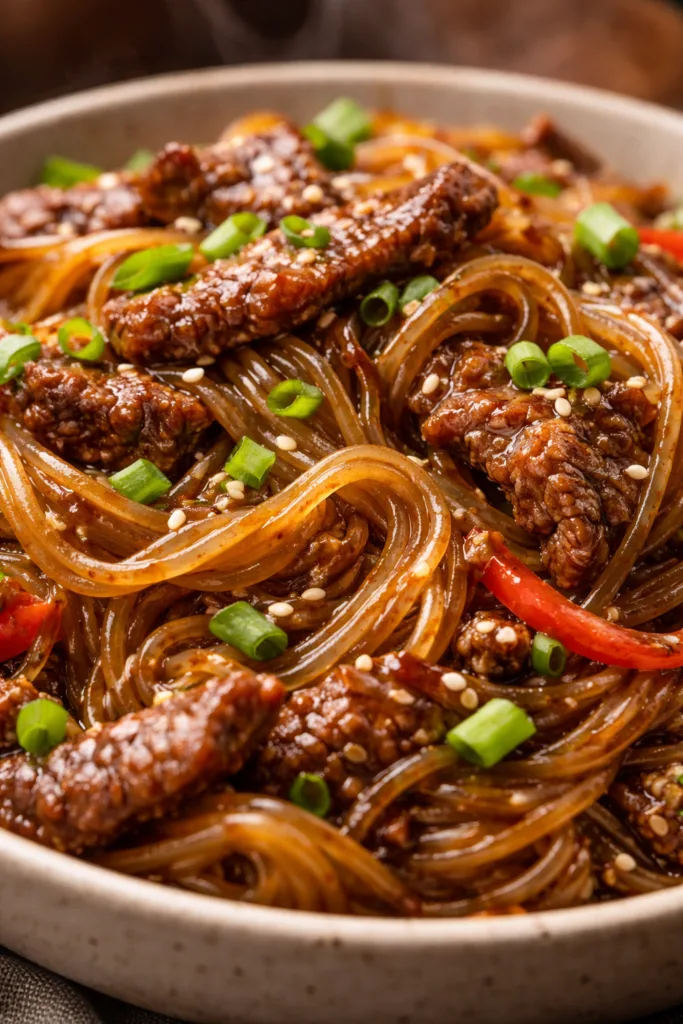
- In a bowl with chili oil, extra green onions, and a soft-boiled egg
- With stir-fried bok choy or broccoli on the side to cut through the sauce richness
- With a fried egg on top broken yolk into the sauce is genuinely excellent
- As a meal-prep lunch holds 3 days, reheats well with a splash of broth
- With rotisserie chicken instead of beef when you want a lighter variation
Common Questions About Cooking Glass Noodles
Are glass noodles the same as rice noodles?
No. Glass noodles are made from sweet potato starch and turn translucent when cooked. Rice noodles are made from rice flour and stay opaque. Both are gluten-free, but glass noodles are chewier and hold up better in saucy dishes like this Mongolian beef recipe.
Can I use a different protein?
Yes ground turkey, ground chicken, or sliced flank steak all work. For sliced steak, sear separately and add back in with the noodles to avoid overcooking.
Is this recipe gluten-free?
The glass noodles are naturally gluten-free. For the full dish, use coconut aminos or certified GF soy sauce, and confirm your hoisin is GF-labeled standard hoisin often contains wheat.
How do I prevent the sauce from over-thickening?
Add the slurry gradually and stir continuously. If it tightens too much, add a tablespoon of broth. Once noodles go in, they absorb some sauce and naturally balance the consistency.
Can I make this Mongolian beef recipe ahead of time?
Cook and refrigerate the beef sauce separately from the noodles. Reheat sauce in a skillet, add noodles, toss, and serve. This prevents the noodles from absorbing all the liquid overnight.
What’s the best ground beef ratio for this recipe?
90/10 is ideal. Juicy without excess grease in the pan. If using 80/20, drain fat after browning before building the sauce.
More Recipes You’ll Love
If this Mongolian beef glass noodles recipe hit the spot, these are worth saving next:
- 30-Minute Saucy Chicken Noodles the best weeknight application for flat rice noodles
- Chili Oil Noodles (10 Minutes) minimum effort, maximum flavor
- Are Rice Noodles Gluten Free? What You Need to Know Before Buying
2 thoughts on “Viral Mongolian Beef Glass Noodles Recipe (Better Than Takeout in 20 Minutes)”