
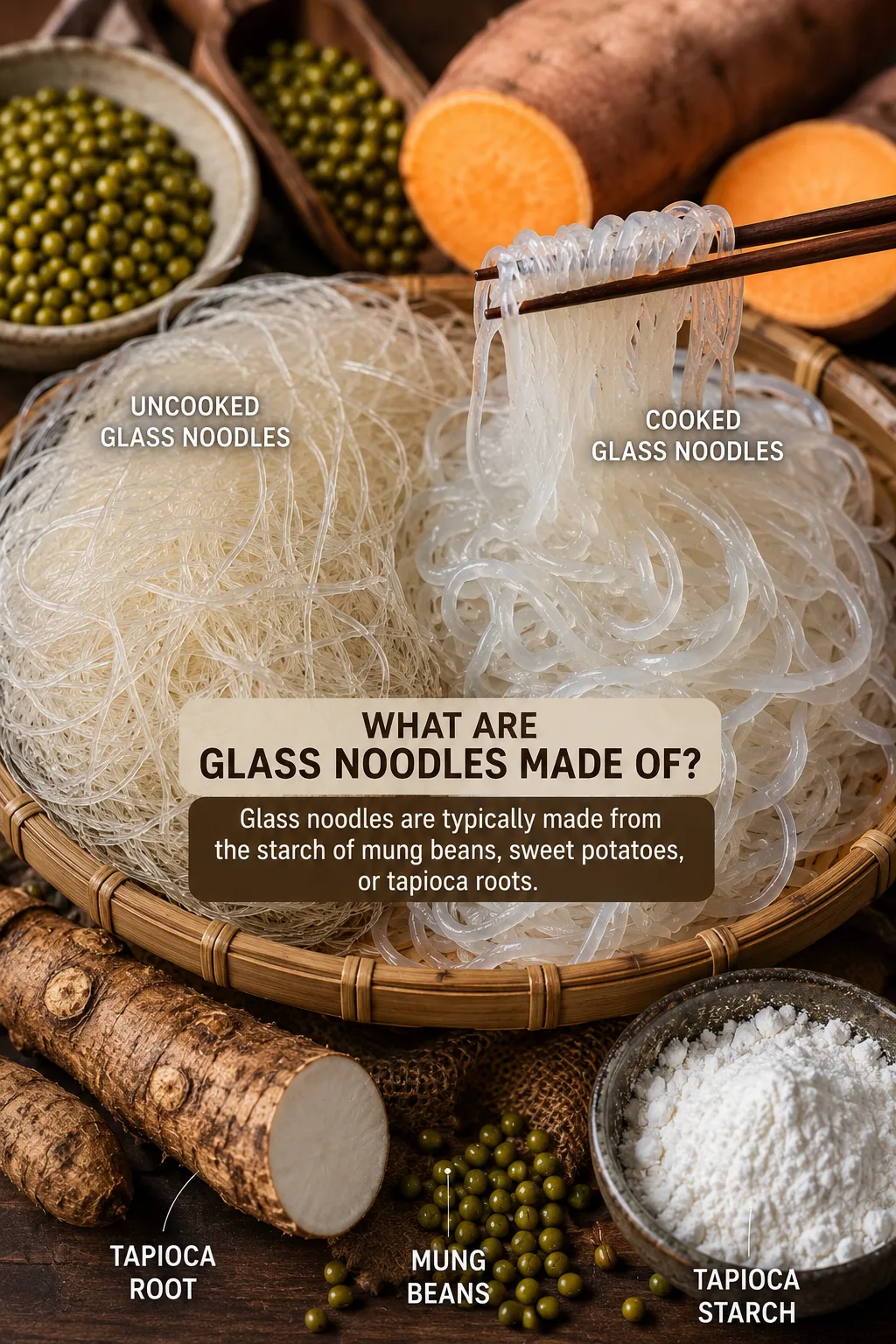
What are glass noodles made of? These translucent strands, also called cellophane noodles, originate from starch extracted from sweet potatoes or mung beans. They combine a neutral bite with a chewy texture that turns any dish into a layered delight.
Table of Contents
| Prep Time | 10 min | Cook Time | 5 min |
|---|---|---|---|
| Total Time | 15 min | Servings | 4 |
| Difficulty | Easy | Cuisine | Asian |
Why This Recipe Works
From the first bite, I noticed how glass noodles absorb flavors without becoming soggy, thanks to their high starch composition. Their subtleness allows sauces, herbs, and heat to shine, making them a versatile backbone for both stir‑fries and soups.
In kitchens around the world, chefs rely on these noodles for their quick cooking time and their ability to carry textures—from crisp vegetables to tender proteins—while still offering a delicate chew that satisfies the palate.
Ingredients
| Ingredient | Quantity | Notes / Alternatives |
|---|---|---|
| Glass noodles (mung bean or sweet‑potato starch) | 120 g (≈ 2 ½ cups, drained) | Can replace with cooked rice vermicelli for a lower starch version. |
| Vegetable broth | 1 ½ cups | Use low‑sodium homemade broth for better flavor control. |
| Sesame oil | 1 tbsp | Alternatives: grapeseed or high‑heat canola oil. |
| Shredded carrots | ½ cup | Use fresh or quickly sautéed for texture variety. |
| Snow peas | ½ cup | Can switch to green beans or broccoli florets. |
| Sliced firm tofu | 200 g | Press tofu before cooking for even browning. |
| Chopped scallions | ¼ cup | White and green portions give color contrast. |
| Minced garlic | 1 tsp | Fresh garlic enhances bright aroma. |
| Ginger, grated | 1 tsp | Substitute with galangal for a floral twist. |
| Red pepper flakes | ½ tsp | Adjust according to heat preference. |
| Soy sauce | 2 tbsp | Use tamari for gluten‑free option. |
| Rice vinegar | 1 tbsp | Omit if you favor a sweeter profile. |
| Brown sugar | 1 tsp | Replace with honey for a natural alternative. |
| Crushed peanuts | 2 tbsp | Can sprinkle with sesame seeds instead. |
| Fresh cilantro | 2 tbsp, chopped | Alleviates any heaviness from the sauce. |
Step‑by‑Step Instructions
Preparing the Noodles
Boil a pot of water and add the glass noodles. Cook 3‑4 minutes until translucent, then drain and rinse under cold water to stop the cooking process.
Marinating the Tofu
Press tofu, cube, and toss with 1 tsp soy sauce and 1 tsp sesame oil. Let sit for 10 minutes to absorb flavor.
Stir‑Frying Veggies
Heat 1 tbsp sesame oil in a wok. Add garlic, ginger, and red pepper flakes; sauté 30 seconds. Toss in carrots and snow peas, cooking 2 minutes until crisp.
Adding Protein and Flavor
Push veggies to the side, add marinated tofu, fry until golden, then mix everything together.
Integrating Noodles
Lay the blanched noodles over the skillet, pour the broth, soy sauce, rice vinegar, and brown sugar. Stir gently, letting the liquid absorb fully.
Finishing Touches
Sprinkle chopped scallions, crushed peanuts, and cilantro over the top. Serve immediately for maximum chew.
Chef Tips for Perfect Results
- Use a high‑heat oil to ensure the tofu crisps without soaking in moisture.
- Rinse noodles with cold water after boiling; this prevents them from sticking.
- Keep broth at a gentle simmer; a rolling boil will create a mushy texture.
- Reserve a splash of broth before mixing and add slowly; this helps create a silky sauce.
- Let the dish rest 1 minute off‑heat; steam completes the noodle absorption.
Common Mistakes to Avoid
- Overcooking noodles – they become gluey; test them with a quick bite halfway through the 3‑minute boil.
- Skipping rinsing – stale starch clumps form a cloudy soup; use cold water to clean.
- Underseasoning the broth – glass noodles are neutral; boost with extra soy or vinegar to taste.
- Stirring too hard after adding noodles – damages the delicate strands; use a slotted spoon instead.
- Adding tofu at the end – it may not brown; render protein early for better texture.
Variations and Substitutions
| Ingredient | Substitution | Impact on Flavor |
|---|---|---|
| Glass noodles | Rice vermicelli | Lower starch, firmer bite, slightly less sauce retention. |
| Soy sauce | Tamari | Gluten‑free, deeper umami profile. |
| Sweetener | Maple syrup | Adds caramel nuance and darker color. |
| Protein | Firm tempeh | Earthy flavor, denser texture, extra protein. |
| Vegetables | Baby bok choy | Delicate leafy texture and slight bitterness. |
Serving Suggestions and Pairings
Serve over steamed jasmine rice for a light dinner or pair this dish with a chilled cucumber salad for a refreshing contrast. On a special occasion, accompany it with a classic Jianbing appetizer for a full‑meal experience. For a vegetarian banquet, mix in edamame and serve the noodles at room temperature to showcase their unique chew.
Storage and Reheating
| Method | Duration | Instructions |
|---|---|---|
| Refrigerator | Up to 48 hrs | Cool completely, then store in an airtight container. |
| Freezer | Up to 2 weeks | Flash‑freeze in a single layer, then transfer to freezer bags. |
| Reheat | 2‑3 min | Heat in a steamer or microwave, adding a splash of water to loosen noodles. |
Nutritional Information
| Nutrient | Amount per Serving (Approximate) |
|---|---|
| Calories | 280 kcal |
| Protein | 11 g |
| Fat | 10 g |
| Carbohydrates | 35 g |
| Fiber | 3 g |
| Sugar | 5 g |
| Sodium | 600 mg |
Frequently Asked Questions
Can I use other types of starch for glass noodles?
Yes. Swap mung bean starch with sweet‑potato or arrowroot starch for variations in color and chewiness. The cooking time remains similar.
What is the best method to keep glass noodles from sticking?
Immediately after boiling, rinse the noodles under cold running water and drain thoroughly. This stops the cooking and removes surface starch.
How do I achieve a brighter tomato‑based glass noodle soup?
Blend a small quantity of tomato paste into the broth, and simmer until the color deepens. The acidity brightens the sauces while complementing the neutral noodles.
Can I prepare this dish ahead of time?
Yes. Cook noodles, vegetables, and tofu separately, then combine with broth just before serving. The noodles retain optimal texture when reheated in a short steam or microwave session.
What side dishes enhance the flavor profile of glass noodles?
A light cucumber salad dressed with rice vinegar and a sprinkle of chili flakes balances richness and highlights the noodles’ texture. For a vegan option, a sesame‑ginger pickled carrot slaw works well.
Discover additional noodle varieties at WHOOPEDIA’s Noodle Section and nutritional details from the USDA Food Data Central.
Glass noodles offer a canvas for endless creativity; experiment, tweak, and taste until you find the combination that resonates with your palate.
Conclusion
Mastering glass noodles reveals why they dominate Asian kitchens worldwide: their adaptability, quick cooking, and subtle texture make every meal an opportunity to explore flavor. Embrace this guide, adjust according to taste, and let every bite remind you of the art behind simple, yet profound, noodle crafts.