
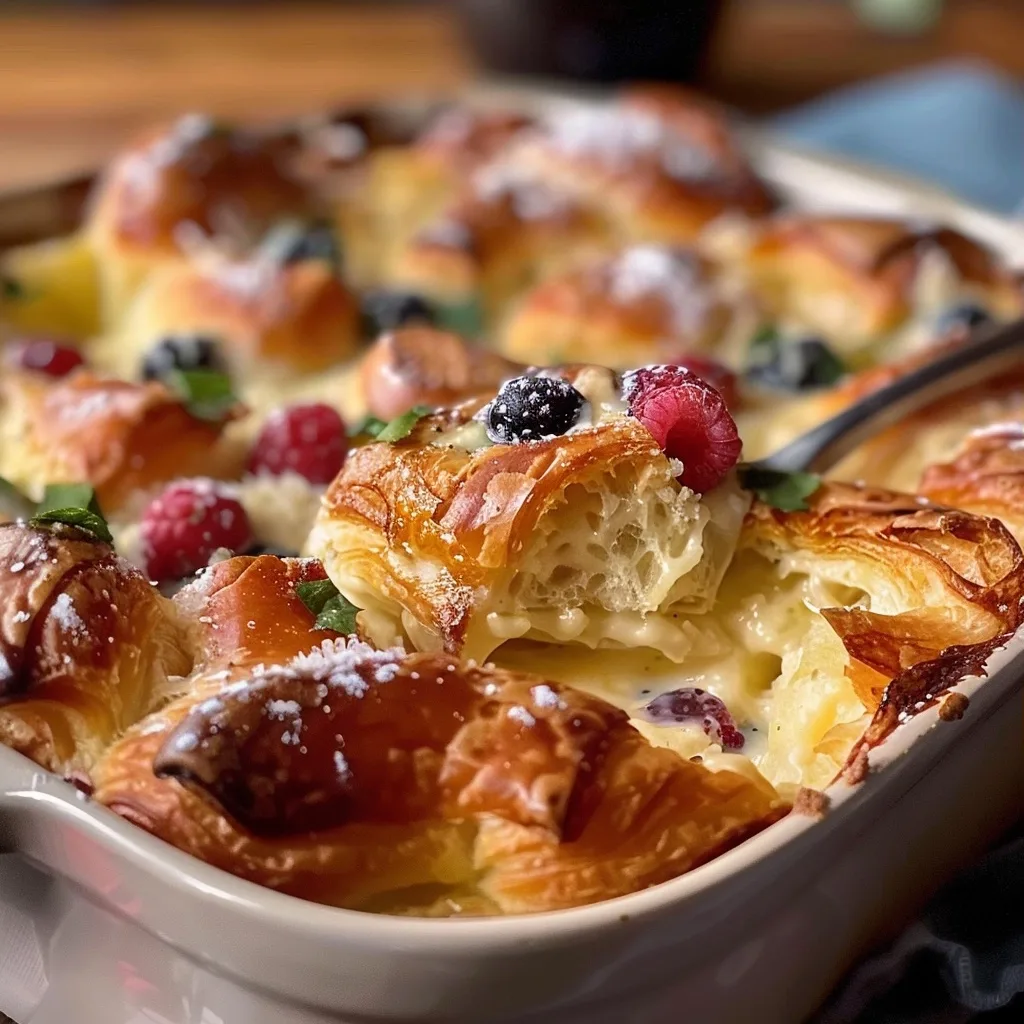

Simple Croissant Breakfast Casserole transforms flaky croissants into a warm, hearty breakfast for any morning. This dish layers buttery pastry, creamy eggs, and aromatic herbs to create a comforting, dish that requires no special skill. A quick assembly turns ordinary croissants into a show‑stopper filled with melted cheese and savory flavors. The perfect way to start a weekend brunch or impress guests without spending hours in the kitchen.
| Preparation Time | 15 minutes |
|---|---|
| Cook Time | 35 minutes |
| Total Time | 50 minutes |
| Servings | 6 |
| Difficulty | Easy |
| Cuisine | Comfort Food |
Why This Recipe Works
My first attempt at a breakfast casserole involved leftover bread and a handful of eggs; the result was dry and bland. Switching to croissants introduced soft, buttery layers that hold moisture and expand beautifully when baked. The flaky nature of the pastry, combined with the custard-like filling, results in a light, airy structure that releases steam during cooking. Careful harmony between crunchy edges and a creamy core makes this casserole irresistible.
Another advantage lies in the simplicity of the ingredient list. No need for elaborate spices or hard-to-find components; fresh herbs, a gentle cheese, and ready‑made croissants are all you require. The method balances fat, protein, and carbohydrates, delivering a satisfying breakfast that sustains energy throughout the day. By baking the casserole as a single unit, you save prep time while maximizing flavor.
Ingredients
| Ingredient | Quantity | Notes / Alternatives |
|---|---|---|
| Ready‑made croissants (store‑bought) | 3 large | Halal or dairy‑free options available. Avoid meaty fillings. |
| Large eggs | 6 | Free‑range preferred for richer taste. |
| Whole‑milk | 1 cup | Can substitute with almond milk for dairy reduction. |
| Heavy cream | ½ cup | Use lactose‑free cream if required. |
| Shredded Gruyère cheese | 1 cup | Swiss works as a milder alternative. |
| Fresh chives, finely chopped | 2 tbsp | Add blanched scallions for different texture. |
| Fresh thyme leaves | 1 tsp | Oregano can be used as a harsher herb. |
| Salt | ½ tsp | Adjust to taste. |
| Black pepper | ¼ tsp | Freshly ground for best flavor. |
Step‑by‑Step Instructions
Preparation
- Preheat oven to 375°F (190°C) and grease a 9‑inch square baking dish with butter or cooking spray.
- Separate the croissant pieces, removing the top crust to create stackable halves. Lay them flat in the dish, arranging horizontally for even layers.
- Whisk together eggs, milk, heavy cream, salt, pepper, shredded cheese, chopped chives, and thyme until fully incorporated.
Assembly
- Pour ⅓ of the custard mixture over one layer of croissant halves, ensuring even coverage.
- Fold a second layer of croissant pieces on top, smoothing edges. Repeat with remaining custard and final croissant layer.
- Press lightly to eliminate air pockets, and sprinkle a thin coat of cheese over the top for a golden crust.
Baking
- Cover the dish loosely with foil and bake for 20 minutes.
- Remove foil and bake for an additional 10–12 minutes, or until the top is golden and the custard is set.
- Let stand 5 minutes before slicing. Serve hot with a side of fruit or fresh herbs.
Chef Tips for Perfect Results
- Use pre‑cut croissants: They reduce prep time and maintain uniformity in layers.
- Rest before baking: Allow the assembled casserole to rest 10 minutes after assembly; this ensures the pastry oils redistribute for even browning.
- Watch the oil: Spritzing a light mist of water on the top before the final bake step can prevent excessive drying of the crust.
- Cheese ratio matters: A 70/30 mix of Gruyère and Parmesan adds depth without overpowering the pastry.
- Serve immediately: The dish is best enjoyed fresh; reheating may result in sogginess.
Common Mistakes to Avoid
- Over‑fluffing eggs: Over‑whisking introduces too much air, creating a cake‑like texture that undermines crisp edges.
- Layer too tightly: Stuffing croissant layers too compactly traps steam and can cause the casserole to puff unevenly.
- Using cold milk: Cold liquids chill the eggs immediately, preventing a smooth rise and leading to a dense filling.
- Skipping the rest period: Not allowing the dish to rest before baking impedes proper heat penetration on the pastry.
- Leaving the casserole uncovered: Baking uncovered from the start burns the crust before the interior sets, resulting in a bitter taste.
Variations and Substitutions
| Ingredient | Substitution | Impact on Flavor |
|---|---|---|
| Cheese | Cheddar | Provides sharper flavor but less meltiness. |
| Herbs | Cilantro | Adds citrusy note; best in Latin brunch theme. |
| Milk | Skim milk | Reduces richness; flavor remains. |
| Additional vegetables | Sautéed spinach | Enhances color and nutrition. |
Serving Suggestions and Pairings
Present the casserole in a decorative baking dish, accompanied by a side of mixed‑fruit salsa and a drizzle of maple syrup. This pairing highlights the sweet‑savory balance inherent in the dish. For brunch events, spoon portions onto individual plates and garnish with microgreens. Pair with a light citrus‑infused yogurt smoothie to cut through the buttery layers. During holiday breakfasts, serve alongside pumpkin seed granola for crunch.
Storage and Reheating
| Method | Duration | Instructions |
|---|---|---|
| Refrigeration | Up to 3 days | Cover tightly with foil and refrigerate. |
| Freezing | Up to 2 months | Wrap well; thaw overnight, then bake as per instructions. |
| Reheat in oven | 10–12 minutes | Cover loosely, bake until warmed through. |
| Microwave | 30–45 seconds | Cover with a damp cloth; stir halfway. |
Nutritional Information
| Nutrient | Amount per Serving (Approximate) |
|---|---|
| Calories | 480 kcal |
| Protein | 20 g |
| Fat | 30 g |
| Carbohydrates | 36 g |
| Fiber | 1 g |
| Sugar | 5 g |
| Sodium | 540 mg |
Frequently Asked Questions
How can I make this casserole dairy‑free?
Replace the whole‑milk and heavy cream with unsweetened almond milk and coconut cream. Substitute the Gruyère cheese for a dairy‑free cheese blend that melts well. Ensure you use vegan butter when greasing the baking dish.
What is the best way to achieve a golden crust?
Pre‑warm the oven to 375°F, then bake the casserole covered for 20 minutes before removing the foil for the final 10‑12 minutes. This technique traps steam, allowing the crust to brown evenly and prevent drying.
Can I use other pastries instead of croissants?
Yes, puff pastry or biscuit dough work equivalently. Use two layers of puff pastry for a lighter texture; biscuit dough will give a denser, hearty bite. Each alternative will adjust the overall flavor profile slightly.
Is this casserole safe to pre‑make for a big brunch?
Indeed, assemble the casserole up to an hour before baking. Refrigerate it covered; bring to room temperature for 15 minutes before baking. This method keeps the pastry receptive to heat while holding its structure.
How can I keep the casserole moist if I mix in vegetables?
Add moist vegetables like spinach or zucchini that have been sautéed briefly to remove excess water. Mix them into the custard early, ensuring they absorb the dairy evenly. This approach maintains moisture throughout the bake.
Conclusion
Simple Croissant Breakfast Casserole proves that elegance and expectancy rely on balanced flavor, accessible ingredients, and a clear method. With flaky crusts that rise into creamy, golden interiors, this breakfast cake not only satisfies taste buds but beautifies any table. Serve it wholeheartedly to pique curiosity, then enjoy the exceptional, buttery harmony that showcases the art of comfort breakfast. Bon appétit!