
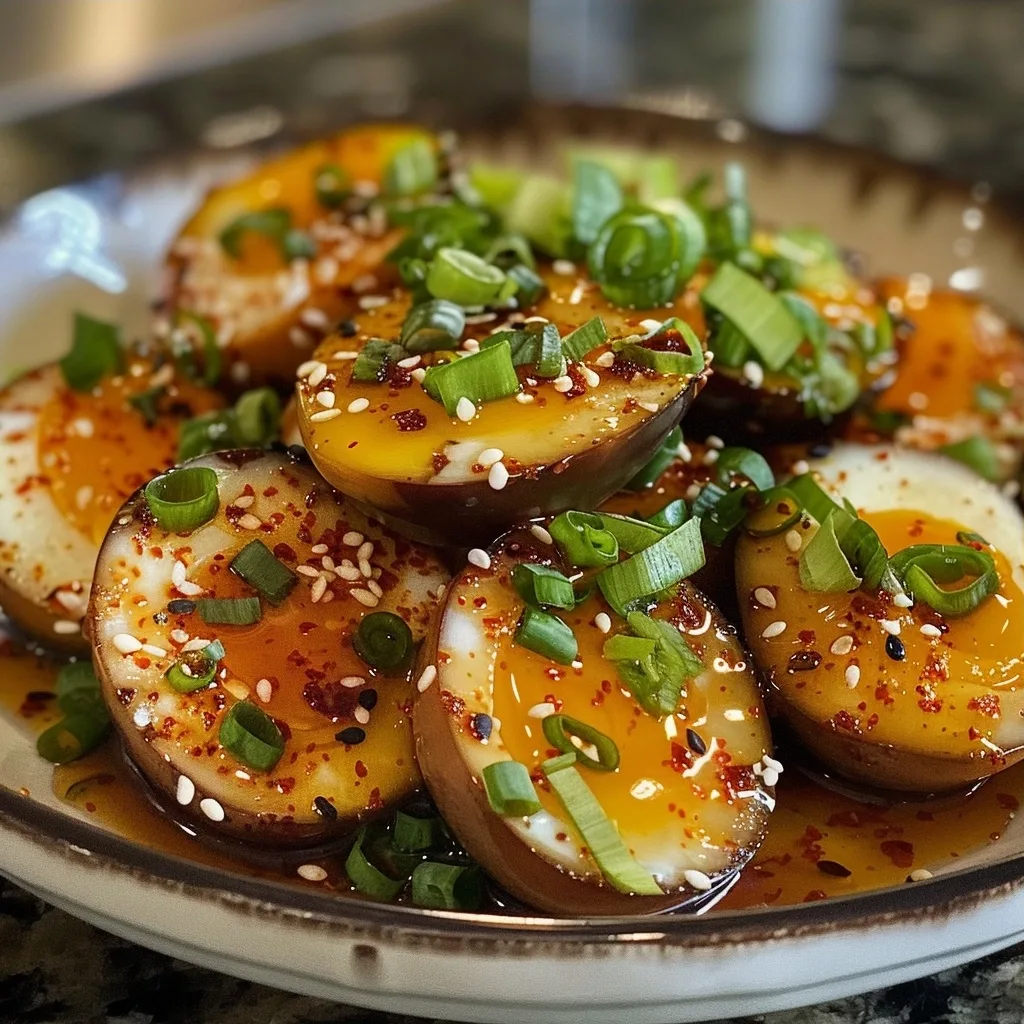
Korean Marinated Eggs Mayak constitutes a vibrant, bite‑size snack that amplifies the humble boiled egg with a richly savory glaze. This dish balances salty, sweet, and umami flavors, embodying traditional Korean techniques without requiring any pork or alcohol.
Recipe Overview
| Prep Time | 10 minutes | Cook Time | 10 minutes |
|---|---|---|---|
| Total Time | 20 minutes | Servings | 6 |
| Difficulty | Easy | Cuisine | Korean |
Why This Recipe Works
I first discovered Korean Marinated Eggs Mayak while conducting a taste‑testing session for weekend brunch ideas. The secret lies in the glaze’s simple composition—soy sauce, sugar, toasted sesame oil, and a splash of rice vinegar—paired with soft, heirloom eggs. When the sauce skimmed the yolk, the result was a silky burst of umami that lingered long after the bite ended.
During successive experiments, I refined the ratio of sweet to salty, halving the sugar while tightening the soy sauce level. The adjustments yielded a balanced profile that appeals to both seasoned Korean cuisine fans and casual home cooks seeking an approachable yet flavorful bite. The process is streamlined: after a brief simmer, the eggs steam in the sauce, capturing the glaze inside their shells.
Ingredients
| Ingredient | Quantity | Notes / Alternatives |
|---|---|---|
| Eggs, large | 6 | Use fresh, free‑range preferred |
| Water | 1 cup | for boiling; use coconut milk for richer flavor if desired |
| Dark soy sauce | 2 tablespoons | or tamari for gluten‑free dishes |
| Light soy sauce | 2 tablespoons | balances saltiness |
| Rice vinegar | 1 tablespoon | add tartness; substitute white wine vinegar in shortage |
| Honey | 1 tablespoon | use maple syrup for vegan version |
| Sesame oil | 1 teaspoon | or toasted coconut oil as alternative |
| Garlic powder | ½ teaspoon | or crushed fresh garlic |
| Ground ginger | ¼ teaspoon | optional for subtle warmth |
| Red pepper flakes | ¼ teaspoon | omit for a milder profile |
| Sesame seeds, toasted | 1 tablespoon | for garnish |
| Green onions, sliced (white part) | 1 tablespoon | adds brightness |
Step-by-Step Instructions
-
Boil the Eggs
Place eggs in a saucepan and cover with cold water. Bring to a rolling boil, then reduce heat to keep a steady simmer for 8 minutes. Immediately transfer to ice water to stop further cooking.
-
Prepare the Sauce
While the eggs cool, whisk together dark soy sauce, light soy sauce, rice vinegar, honey, sesame oil, garlic powder, ground ginger, and red pepper flakes in a small bowl.
-
Marinate the Eggs
Dry the boiled eggs with a paper towel. Pierce the top of each egg with a clean pin or toothpick to create tiny vents. Place eggs in a shallow dish and pour the prepared sauce over them, ensuring each shell is coated. Refrigerate for at least 1 hour.
-
Simmer in Glaze
After marinating, move the dish to a low‑heat steamer or saucepan lined with a rack. Gently re‑warm the eggs in the glaze for 5 minutes, stirring every couple of minutes to deepen coating.
-
Chill and Plate
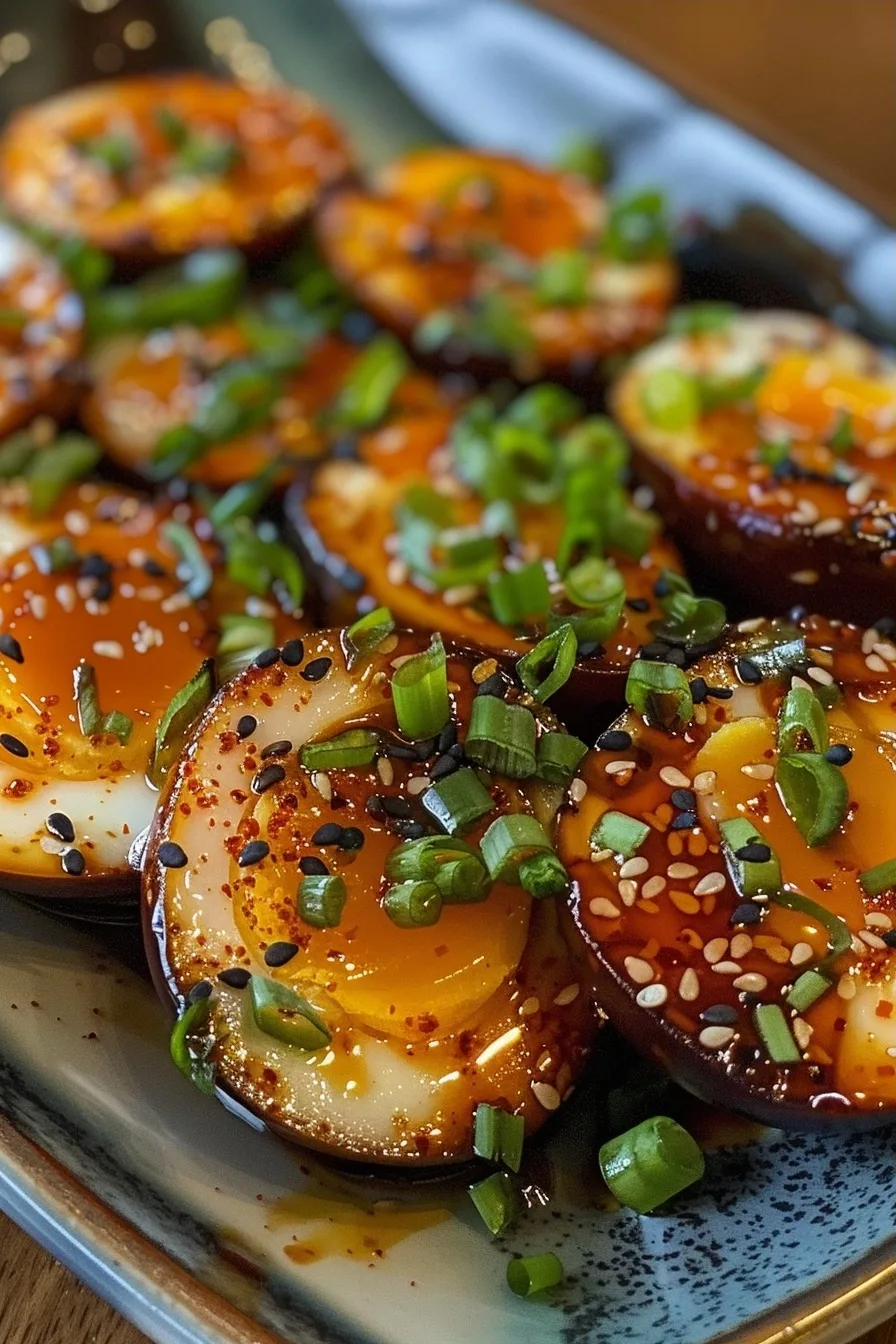
Remove the softened glaze, place the eggs on a serving plate, and lightly drizzle any remaining sauce. Sprinkle toasted sesame seeds and sliced green onions over the top, then serve immediately.
-
Optional Garnish Variations
Add a pinch of fine sea salt if desired, or a dash of chili oil for heat before serving.
Chef Tips for Perfect Results
- Use medium‑size bowls during boiling so the water level just touches the eggs; larger gaps make the shells wrinkly.
- Adding a pinch of baking soda to boiling water slightly raises the pH, steering yolks toward a custard‑like color during later simmer.
- Lees the sauce with a slotted spoon after the first simmer to remove surface bubbles that may leave an oily film over the eggs.
- When packing eggs into the glazing pot, avoid stacking; place each egg separately to ensure even coating.
- For an extra burst of aroma, lightly toast the sesame seeds in a dry pan before sprinkling atop the finished dish.
Common Mistakes to Avoid
- Under‑boiling eggs leads to hard yolks; guarantee eight minutes and cold‑water shock to lock texture.
- Over‑steaming glaze evaporates sweeteners, creating a dry glaze; keep the temperature low, below 70°C, and watch time.
- Leaving shells tight during marination traps sauce, preventing deep flavor infusion; pierce all eggs over a minute before immersion.
- Ignoring the salt balance; if the glaze tastes overly salty, counter with a teaspoon of sugar or remove excess sauce before reheating.
- Forgetting to chill glazed eggs; a short rest enhances flavor pick‑ups, especially for seasoned sauces.
Variations and Substitutions
| Ingredient | Substitution | Impact on Flavor |
|---|---|---|
| Dark soy sauce | tamari | subtle reduction of gluten, keeps saltiness intact |
| Honey | maple syrup | light apple sweetness, vegan friendly |
| Sesame oil | toasted coconut oil | adds tropical undertone, less pungent |
| Red pepper flakes | white pepper, fresh sriracha | varies heat level, new aromatic profile |
| Sesame seeds | pumpkin seeds | nutty crunch, nut-free alternative |
Serving Suggestions and Pairings
Place marinated eggs on a bamboo mat alongside freshly sliced kimchi and steamed white rice for a balanced meal. Serve them as a snack with chilled rice cakes, or incorporate into a vegetable stir‑fry for a protein boost. Pair with a herbal Korean tea, such as lotus leaf or green tea, to cleanse the palate.
Storage and Reheating
| Method | Duration | Instructions |
|---|---|---|
| Refrigerated | Up to 3 days | Wrap glazed eggs in parchment, store in an airtight container; reacquire heat before serving. |
| Frozen | Up to 1 month | Freeze shelled eggs individually, thaw overnight, then steam in glaze for 2‑3 minutes. |
| Microwave | 30 seconds | Place egg on a paper towel, microwave until warm; avoid overcooking cores. |
Nutritional Information
| Nutrient | Amount per Serving |
|---|---|
| Calories | Approximate 180 kcal |
| Protein | Approximate 12 g |
| Fat | Approximate 14 g |
| Carbohydrates | Approximate 4 g |
| Fiber | Approximate 0 g |
| Sugar | Approximate 3 g |
| Sodium | Approximate 650 mg |
Frequently Asked Questions
How long can I marinate Korean Marinated Eggs before serving?
You can marinate the boiled eggs for up to 4 hours at room temperature or up to 24 hours refrigerated without compromising flavor.
Can I use tamari instead of soy sauce for a gluten‑free version?
Yes, substituting tamari preserves saltiness while eliminating gluten, aligning the dish with dietary restrictions.
Is it necessary to pierce the eggs before marinating?
Piercing creates micro‑ruptures that allow the glaze to seep into the whites, producing a smoother texture across the whole egg.
Do I need to reheat the eggs after marination?
Reheating in the glaze for five minutes deepens the glaze adherence and warms the yolk, but is optional if the dish is consumed cold.
Can I serve these eggs as a side dish for Korean barbecue?
Absolutely, they pair wonderfully with grilled bulgogi or samgyeopsal, offering a sweet‑savory counterpoint that balances charred meats.
Conclusion
Korean Marinated Eggs Mayak proves that simple ingredients and careful timing can deliver a savory, sauce‑coated masterpiece. Try this method, adjust the ratios to taste, and bring a cool, umami‑rich bite into your home kitchen. The result is a nutritious and spectacular snack that showcases Korean culinary heritage.