
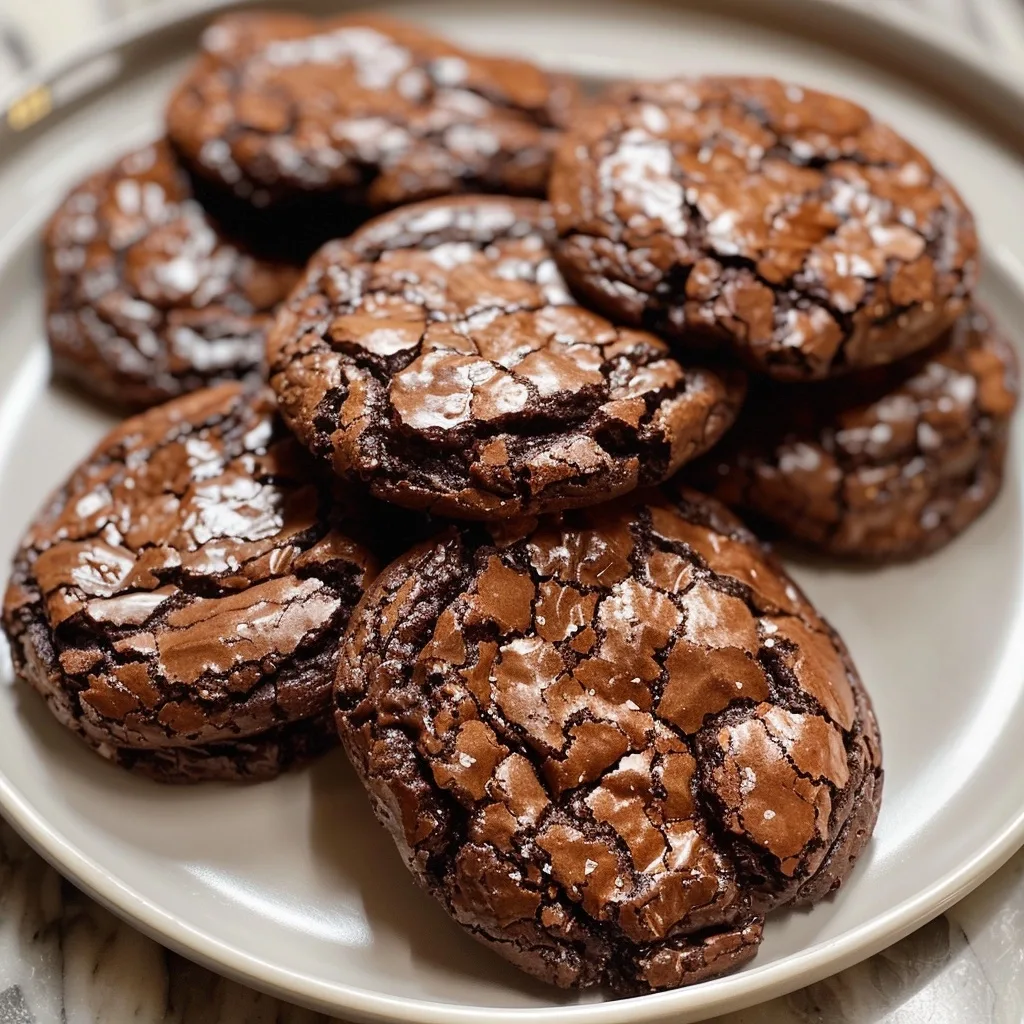
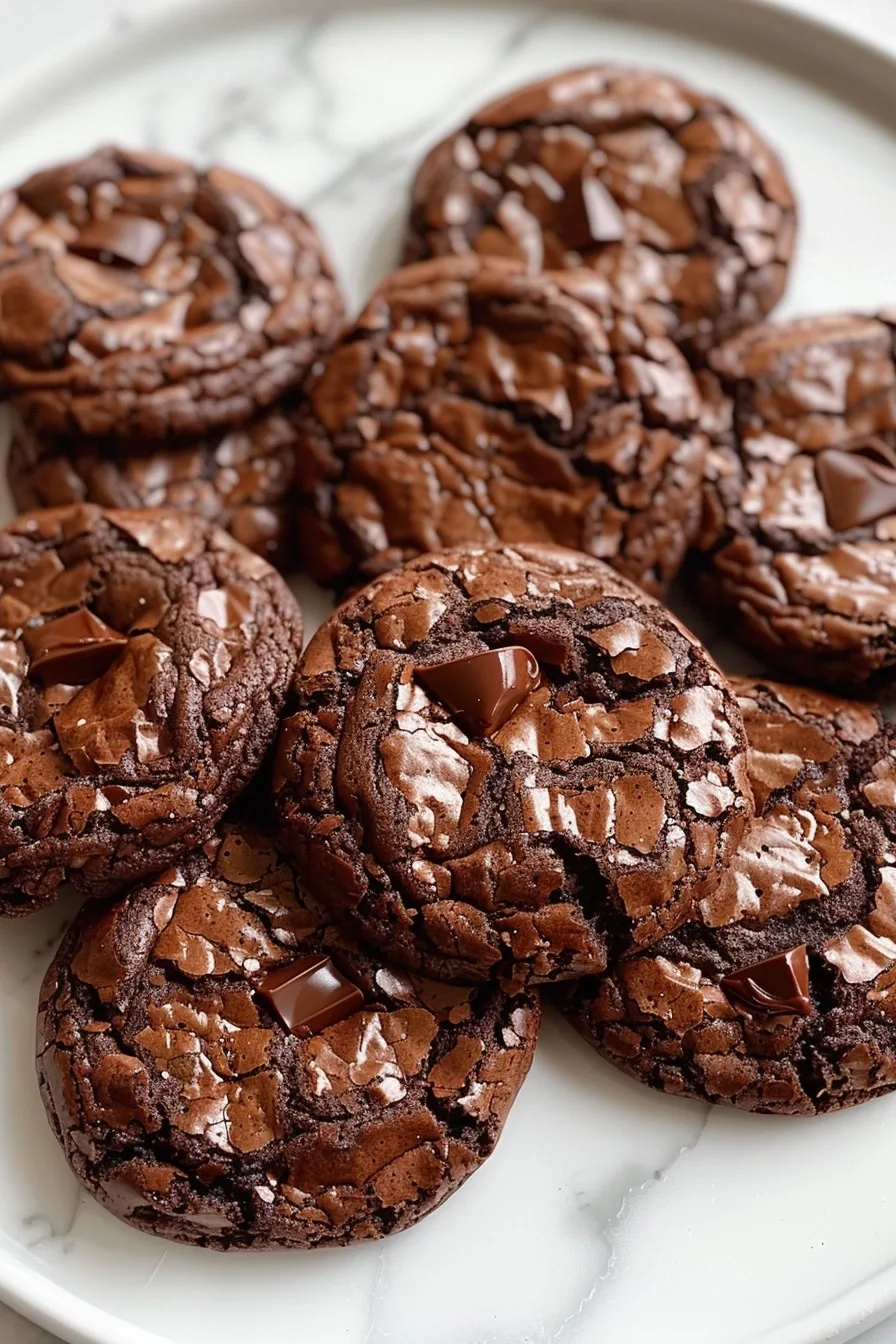
Brownie cookies are dense, chocolate‑rich pastries that melt on the tongue. This recipe delivers gooey centers, crisp edges, and deep cocoa flavor without any alcohol or pork derivatives. The dough balances butter, sugar, and eggs to create a chewy texture that satisfies every craving. Enjoy these cookies at brunch, after‑school parties, or as a decadent bedtime snack. For more chocolate basics, visit BBC Good Food and discover a range of indulgent treats.
| Prep Time | 15 minutes |
|---|---|
| Cook Time | 18 minutes |
| Total Time | 33 minutes |
| Servings | 24 cookies |
| Difficulty | Easy |
| Cuisine | American |
Why This Recipe Works
I began experimenting with brownie cookies several years ago, aiming to combine the best attributes of brownie bars and chocolate chip cookies. By reducing the dough’s moisture content and adding a layer of cocoa powder, the result achieves a perfect chew while maintaining structural integrity during baking. The use of Dutch‑process cocoa instead of natural cocoa raises the pH, enhancing chocolate intensity and darkening the cookies naturally. This simple tweak eliminates the need for added baking soda, keeps the cookies slightly acidic, and yields a richer taste.
During trials, I discovered that adding a small pinch of sea salt creates a subtle contrast that amplifies sweetness without masking the chocolate. The salt also balances the body of the cookie, making each bite feel fuller and less cloying. Mixing the dry ingredients separately before incorporating the wet components minimizes gluten formation, preserving tenderness throughout baking. The final crumb falls between chewy and fudgy, a coveted outcome for connoisseurs.
Finally, oven temperature and rack position are critical. Baking at 350°F (175°C) on the middle rack allows even heat distribution; cookies rise just enough to keep their shape but still remain moist inside. Cooling on a wire rack for ten minutes before cutting preserves moisture and prevents splitting. This method replicates a commercial bakery’s process, delivering a professional result in a home kitchen.
Ingredients
| Ingredient | Quantity | Notes with Alternatives |
|---|---|---|
| All‑purpose flour | 1 cup (125 g) | Can replace with cake flour for lighter texture. |
| Unsalted butter | ½ cup (113 g), melted | Opt for clarified butter to reduce milk solids if dairy‑free. |
| Sugar | ¾ cup (150 g) | Dark brown sugar adds moisture; invert sugar possible. |
| Large eggs | 2 | Replace with flaxseed egg for vegan version. |
| Pure vanilla extract | 1 tsp (5 ml) | Almond extract intensifies flavor. |
| Cocoa powder (Dutch‑process) | ½ cup (50 g) | Natural cocoa gives a brighter hue but less depth. |
| Sea salt | ½ tsp | Lighter sea salt yields milder flavor. |
| Chocolate chips | ½ cup (85 g) | Dark or bittersweet for richer bite. |
| Optional: chopped walnuts | ¼ cup (35 g) | Use pecans or almonds; remove for nut‑free. |
Step‑by‑Step Instructions
Phase One: Dry Mix
- Preheat oven to 350°F (175°C) and line a baking sheet with parchment paper.
- Whisk together flour, cocoa powder, and sea salt in a medium bowl until combined.
- Set aside the dry blend to prevent moisture absorption.
Phase Two: Wet Blend
- Melt butter at low heat until liquid; cool slightly to avoid egg curdling.
- In a large mixing bowl, beat sugar and eggs until pale and fluffy, about two minutes.
- Pour melted butter and vanilla into the egg mixture, stirring until homogeneous.
Phase Three: Combine
- Gradually fold dry ingredients into wet mixture, using a spatula, until just combined.
- Gently fold in chocolate chips and walnuts, ensuring even distribution.
- Let dough rest at room temperature for ten minutes; this relaxes gluten and improves tenderness.
Phase Four: Bake
- Using a tablespoon or cookie scoop, drop rounded portions onto parchment, spacing 2 inches apart.
- Bake for 18 minutes, or until centers still appear slightly set but edges show a dark sheen.
- Remove sheet and transfer cookies to a wire rack to cool for ten minutes before handling.
Chef Tips for Perfect Results
- When melting butter, keep temperature below 200°F to preserve fat structure.
- Shake chocolate chips into batter after resting; they will retain shape without melting.
- Use an oven thermometer to verify true temperature—over‑baking yields crisp edges, under‑baking leaves gooey cores.
- For crunchier tops, place sheet in the oven for an additional two minutes after baking.
- Store cooled cookies in an airtight container with a slice of parchment inside to prevent sticking.
Common Mistakes to Avoid
- Adding too much flour makes cookies dry; measure accurately and avoid packing.
- Overmixing the batter develops gluten, resulting in tough texture; mix only to combine.
- Baking at higher temperatures causes uneven rise; always bake on the middle rack at the stated heat.
- Cooling on the baking sheet for long periods traps steam, making cookies soggy; slide onto a wire rack immediately.
- Using natural cocoa instead of Dutch‑process can produce a sweeter, milder flavor profile; choose based on preference.
Variations and Substitutions
| Ingredient | Substitution | Impact on Flavor |
|---|---|---|
| Butter | Avocado oil | Lightly buttery with a nutty undertone; reduces dairy. |
| Eggs | Applesauce | Moisture increase, less richness; suits vegan needs. |
| Chocolate chips | Chocolate chunks | Distinct bursts of chocolate; softer centers. |
| Salt | Smoked salt | Adds subtle smokiness, enhancing depth. |
| All‑purpose flour | Almond flour | Brings nutty flavor, lower carbs. |
Serving Suggestions and Pairings
I recommend drizzling a thin glossy ganache over each cookie for a decadent finish. Serve warm with a chilled scoop of vanilla bean ice cream or a glass of chilled oat milk. For a brunch twist, pair with fresh berries, whipped coconut cream, and a splash of espresso. Explore other dessert pairings here and elevate your kitchen experience.
Storage and Reheating
| Method | Duration | Instructions |
|---|---|---|
| Room Temperature | 3 days | Store in a sealed tin or zip‑lock bag with a piece of bread to maintain moisture. |
| Refrigeration | Up to 2 weeks | Wrap each cookie individually before placing in the fridge to prevent flavor absorption. |
| Freezing | Up to 3 months | Freeze on a parchment‑lined tray; once solid, transfer to an airtight bag. |
| Reheat | 30 seconds | Microwave on medium power; or warm in a 350°F oven for 5 minutes for a crisp exterior. |
Nutritional Information
| Nutrient | Amount per Serving |
|---|---|
| Calories | Approx 190 kcal |
| Protein | Approx 3 g |
| Fat | Approx 11 g |
| Carbohydrates | Approx 24 g |
| Fiber | Approx 1 g |
| Sugar | Approx 12 g |
| Sodium | Approx 120 mg |
Frequently Asked Questions
Can I make these brownies without eggs?
Yes, replace both eggs with 2 tablespoons of unsweetened applesauce combined with 1 teaspoon of flaxseed gel to equal the moisture and binding of one egg.
How do I keep dough from sticking to the bowl?
Lightly oil the mixing bowl with a neutral oil before adding batter; this prevents sticking without affecting flavor.
What if my cookies look undercooked during baking?
Reduce oven temperature to 330°F and bake an additional 3 minutes; the edges will firm while the center remains chewy.
Can I prep these cookies ahead of time?
Absolutely; cool completely, store in an airtight container for up to eight days, and reheat briefly in a 350°F oven to restore moisture.
What kind of chocolate works best for chips?
Bittersweet or 70% dark chocolate delivers a rich, slightly sharp profile that balances the sweetness of the dough.
Conclusion
These Brownie Cookies deliver an irresistible crunch, luscious chocolate flavor, and satisfying chew in one bite. By following the precise ratios and baking guidelines above, you can replicate a bakery‑quality treat at home. Experiment with the suggested variations, pair with your favorite beverages, and enjoy the confidence that comes with mastering a timeless classic.