
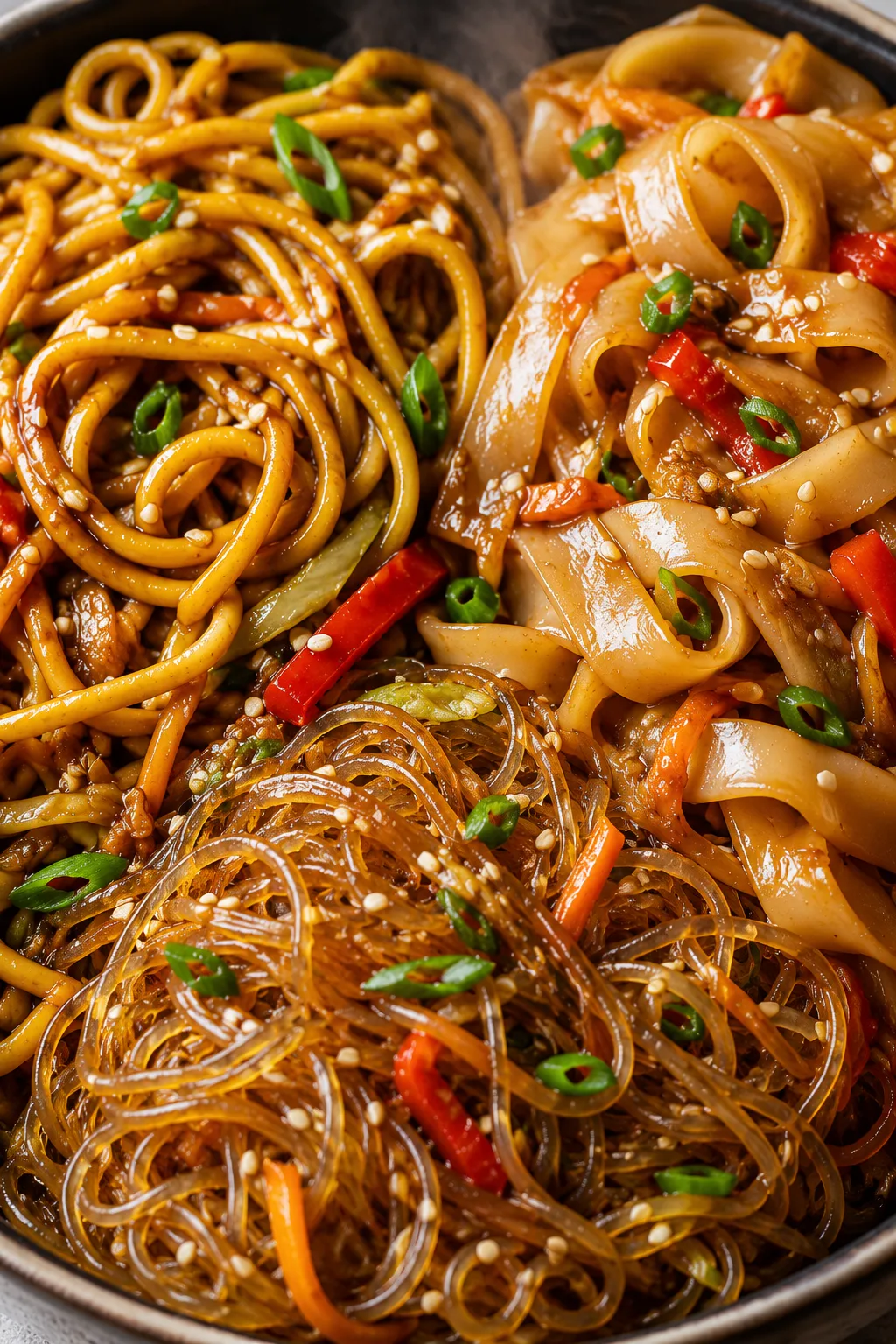
Best noodles for stir fry deliver crisp texture and bold flavor in a single pan, making them the ultimate choice for fast, satisfying meals. This recipe blends the best choice of noodles with fresh vegetables and a tangy sauce for an effortless dinner.
Table of Contents
| Prep Time | 10 minutes |
|---|---|
| Cook Time | 8 minutes |
| Total Time | 18 minutes |
| Servings | 2-3 |
| Difficulty | Easy |
| Cuisine | Asian Fusion |
Why This Recipe Works
I first discovered the secret to a perfect stir‑fry night when I swapped thick egg noodles for chewy wide rice noodles. The result was a dish that stayed moist during the high‑heat stir‑fry without the glue‑like texture that often comes from standard pasta. This substitution gives the dish an authentic chew that partners beautifully with bright vegetables.
Another reason this recipe succeeds is the combination of aromatics—fresh ginger, garlic, and scallion—sautéed until fragrant. Those initial aromatics form the flavor base and lift the raw taste of vegetables, creating a dish that is neither bland nor overpowering. I learned this trick by watching seasoned chefs highlight the importance of starting slow.
Finally, the sauce is balanced with salty soy, sweet hoisin, and a splash of sesame oil, creating that classic savory‑sweet profile that many crave in stir‑fries. The sauce coats each noodle piece, preserving moisture while delivering a complex flavor that makes the dish irresistible for diners who prefer hearty, comforting meals.
Ingredients
This dish uses fresh veggies and sauce components that deliver both crunch and umami.
| Ingredient | Quantity | Notes with Alternatives |
|---|---|---|
| Wide rice noodles | 200 g | Can substitute with udon or rice sticks; for gluten‑free, choose certified GF noodles. |
| Vegetable oil | 2 Tbsp | Peanut or canola oil gives a mild flavor suitable for high heat. |
| Carrots, julienned | 1 cup | Use baby carrots for quicker prep. |
| Red bell pepper, sliced | 1 cup | Blue or orange peppers work as colorful variations. |
| Broccoli florets | 1 cup | Can use cauliflower or snow peas for a different crunch. |
| Garlic cloves, minced | 2 | For a sharper bite, leave whole and mince after cooking. |
| Fresh ginger, minced | 1 tsp | Ground ginger is acceptable but keep fresh for aroma. |
| Scallions, sliced | 2 | White part for crunch; green part for freshness. |
| Soy sauce | 2 Tbsp | Low‑sodium preferred to control salt. |
| Hoisin sauce | 1 Tbsp | Vegetarian hoisin ensures no animal glaze. |
| Sesame oil | 1 Tbsp | Reserve for finish to avoid burning. |
| Sesame seeds | 1 tsp | Can be toasted for extra nutty flavor. |
| Optional protein: firm tofu, cubed or scrambled eggs | ½ cup | Replace with tempeh for richer protein. |
Step‑by‑Step Instructions
Follow these steps to achieve a crisp, flavorful dish.
- Prepare components.
- Phase: Prep
- Boil the wide rice noodles according to package directions—typically 3–4 minutes—until just tender, then drain and set aside. Rinse with cold water to halt cooking and drizzle with a light coat of light sesame oil, tossing to prevent sticking.
- Heat oil.
- Phase: Sauté aromatics
- In a large wok or skillet, heat 1 Tbsp vegetable oil over high heat. Add minced garlic, ginger, and white scallion, sautéing for 30 seconds until fragrant. Be careful not to burn.
- Cook vegetables.
- Phase: Veggie stir‑fry
- Introduce carrots and bell pepper first, stir‑frying for 2 minutes to preserve crunch. Add broccoli and continue stir‑frying for another minute. If using tofu or eggs, cook them in the same pan before vegetables.
- Combine noodles and sauce.
- Phase: Noodle fusion
- Add drained noodles directly to the wok. Pour soy sauce, hoisin sauce, and 1 Tbsp of the remaining vegetable oil. Toss vigorously for 1–2 minutes to coat all components evenly. Adjust seasoning with extra soy if needed.
- Finish.
- Phase: Final touches
- Drizzle sesame oil over the stir‑fry, sprinkle sesame seeds and green scallion slices. Toss quickly to distribute heat without overcooking vegetables. Serve hot and feel free to add a fresh lime wedge for acidity.
Chef Tips for Perfect Results
Here are essential tips to perfect every batch.
- Use a heat‑proof skillet or wok with a wide rim; this allows rapid tumbling and minimizes sticking.
- Coat noodles lightly with oil prior to cooking to counteract clumping.
- Keep the wok at a consistently high heat—just below smoke point—to sear vegetables.
- Finish the sauce with a splash of bright lime juice for acidity that contrasts the sweet hoisin.
- Serve immediately after cooking; waiting lowers the noodles’ ideal chew and allows vegetables to soften further.
Common Mistakes to Avoid
Avoid these pitfalls for a consistent result.
- Overcooking noodles leads to mushy texture; boil only until al dente and cool with cold water.
- Skipping the oil rinse on noodles causes clumping—always toss with oil and let sit for a minute.
- High heat with low oil burns aromatics before they impart flavor—add oil first, then aromatics.
- Adding sauce too early can make noodles absorb all liquid; wait until noodles are in the pan.
- Leaving the wok too cool dilutes flavor; always maintain high, steady heat through the process.
Variations and Substitutions
Try these swaps to customize flavor and texture.
| Ingredient | Substitution | Impact on Flavor |
|---|---|---|
| Rice noodles | Udon | Heavier chew, slightly sweet. |
| Broccoli | Snow peas | Spry sweetness and crispness. |
| Hoisin sauce | Sweet chili paste | Softer heat, less thickness. |
| Sesame oil | Grapeseed oil | Milder flavor, but still high heat. |
| Protein | Firm tofu | Silky texture, neutral absorbability. |
Serving Suggestions and Pairings
This stir‑fry pairs wonderfully with a light Cauliflower Fried Rice, creating a balanced meal. For a side, try a quick cucumber salad tossed with sesame dressing to cut through the savory richness. If serving a dinner party, present the noodles hot, plated with a dust of toasted sesame seeds and a side of chilled Miso Soup to reinforce the Asian flavor profile.
Storage and Reheating
Store and reheat safely to maintain taste.
| Method | Duration | Instructions |
|---|---|---|
| Refrigeration | 3 days | Store in an airtight container; refrigerate until ready to reheat. |
| Freezing | 2 weeks | Keep separated in airtight wraps; thaw overnight in fridge before reheating. |
| Stovetop Reheat | 3–4 minutes | Use a hot skillet, add a splash of water to keep moisture. |
| Microwave | 2 minutes | Cover with a damp paper towel to trap steam. |
Nutritional Information (Approximate values)
Here’s per‑serving nutrition for quick reference.
| Nutrient | Amount per Serving |
|---|---|
| Calories | 420 kcal |
| Protein | 14 g |
| Fat | 13 g |
| Carbohydrates | 55 g |
| Fiber | 4 g |
| Sugar | 5 g |
| Sodium | 800 mg |
Frequently Asked Questions
Can I use gluten‑free noodles?
Yes, any gluten‑free brand of rice or buckwheat noodles works. They follow the same cooking method; just adjust boiling time for package instructions.
How do I determine the right doneness for noodles?
Taste the noodles before draining; they should be firm to the bite but not hard. A quick rinse with cold water stops the cooking process immediately.
What if I prefer a sweeter sauce?
Increase hoisin sauce by 1 Tbsp and add a teaspoon of honey or maple syrup. Stir until fully combined before adding noodles.
Can I make this recipe ahead of time?
Yes, prepare the noodles and sauce separately. Store in airtight containers for up to 3 days. Reheat and combine quickly for best texture.
Should I add scallions before or after cooking?
Add the white part during sauté to release aroma, and reserve the green part for a final garnish to preserve freshness.
Conclusion
By choosing the right noodle, mastering the heat, and balancing sauces, this recipe becomes a cornerstone for any quick, flavorful meal. Embrace the crunchy vegetables and silky noodles, serve hot, and enjoy the unbeatable harmony that marks the best noodles for stir fry.