
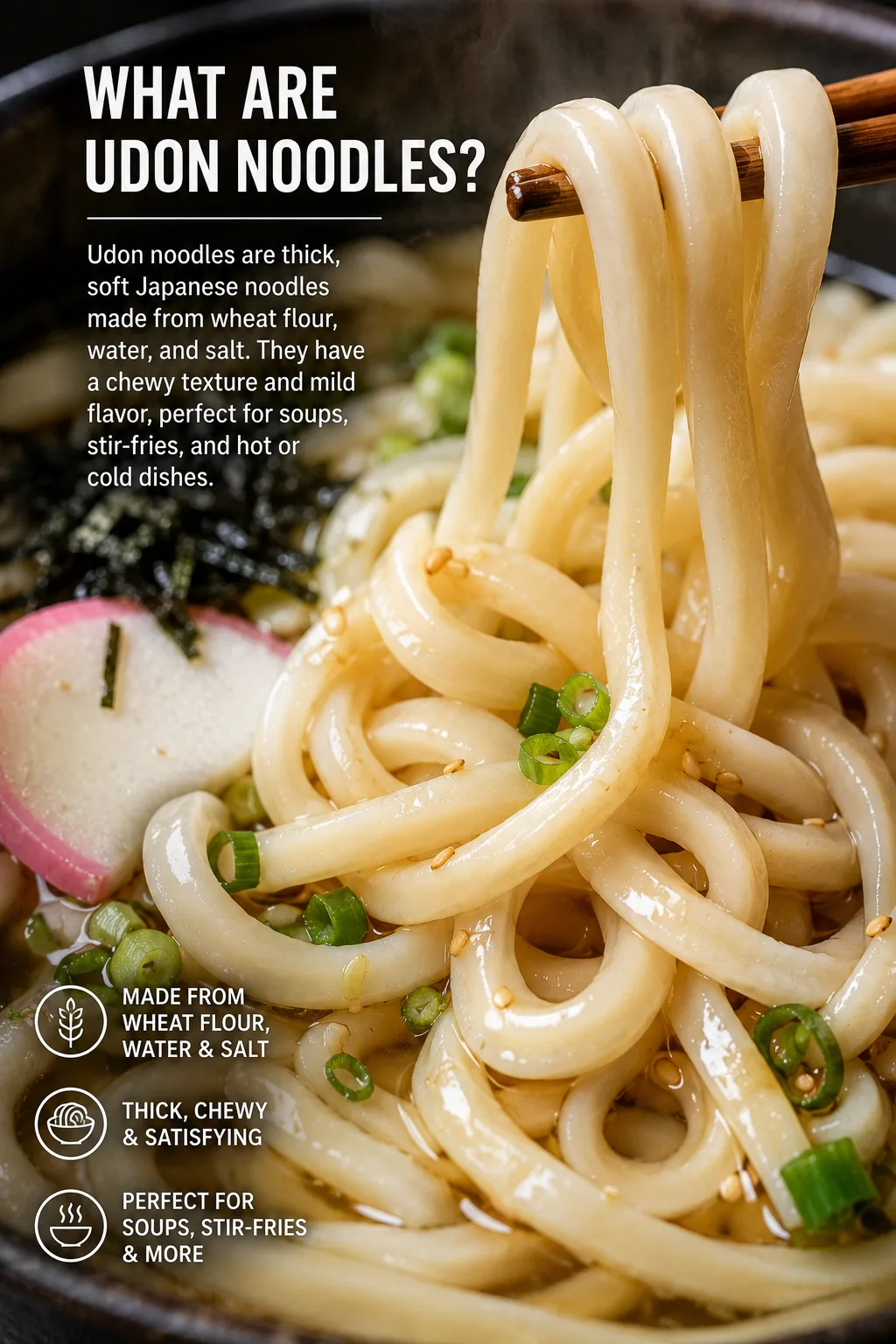
Udon noodles are thick, soft wheat noodles that originate from Japan and have become a staple in many Asian kitchens. They are made from a simple dough of wheat flour, salt, and water, resulting in a chewy texture and mild flavor that serves as an excellent canvas for savory broths, stir‑fries, and dipping sauces.
Table of Contents
| Prep Time | 20 minutes |
|---|---|
| Cook Time | 10 minutes |
| Total Time | 30 minutes |
| Servings | 4 servings |
| Difficulty | Easy |
| Cuisine | Japanese |
Why This Recipe Works
I first discovered udon while traveling in Japan and was instantly captivated by the noodles’ comforting texture. The combination of a delicate broth and fluffy, chewy noodles creates a satisfying mouthfeel that lingers long after each bite. This recipe emphasizes simplicity, letting the authenticity of the udon shine through without overpowering spices.
Using fresh udon or well‑branded store‑bought varieties ensures a smooth chew. The broth’s balance of umami from dashi, saltiness from soy sauce, and subtle sweetness from mirin curates a harmony that complements the noodles. The addition of scallions and sesame seeds provides contrast in texture and subtle fragrance, elevating the dish.
Ingredients
| Ingredient | Quantity | Notes (alternatives) |
|---|---|---|
| Udon noodles | 400 g (fresh) or 200 g dried | For dried, rehydrate in hot water for 5–8 minutes before use. |
| Dashi stock | 4 cups (medium‑strength) | Use instant dashi packets or homemade kelp stock for vegan option. |
| Soy sauce | 3 tbsp | Low‑sodium soy can replace for reduced salt. |
| Mirin | 1 tbsp | Use non‑alcoholic mirin if required. |
| Sugar | 1 tsp | Can be omitted if you prefer less sweetness. |
| Scallions (green onions) | 3, finely sliced | Other green vegetable options: cilantro or chives. |
| Sesame seeds | 2 tsp, toasted | Crushed sesame oil adds depth if desired. |
| Silken tofu | 150 g, cubed | Replace with firm tofu or tempeh for texture variation. |
| Shiitake mushrooms | 4, sliced | Use dried mushrooms soaked at 30 minutes for umami. |
| Shredded carrot | 1 cup | Substitute with zucchini ribbons if desired. |
| Fresh ginger | 1 tsp, grated | Fresh ginger brings brightness; freeze‑dry works in a pinch. |
Step‑by‑Step Instructions
Phase 1: Make the Broth
- Combine dashi stock, soy sauce, mirin, and sugar in a saucepan.
- Heat over medium heat until the mixture reaches a gentle simmer.
- Stir in ground ginger and freshly sliced shiitake mushrooms.
- Allow the broth to simmer for 5 minutes to integrate the flavors.
Phase 2: Prep the Noodles and Vegetables
- Simmer the udon noodles in a large pot of boiling water according to the package instructions until al dente.
- Drain the noodles and rinse with cold water to halt cooking.
- In a small bowl, toss the silken tofu cubes with a pinch of salt.
- Stir‑fry shredded carrot in a lightly oiled pan until slightly softened.
Phase 3: Assemble the Dish
- Place a generous portion of noodles into each bowl.
- Pour the heated broth over the noodles, ensuring the liquid covers the noodles.
- Garnish with tofu cubes, stir‑fried carrots, sliced shiitake mushrooms, sliced scallions, and toasted sesame seeds.
- Optional: Drizzle a sprinkle of sesame oil for an aromatic finish.
- Serve immediately while the noodles remain warm and chewy.
Chef Tips for Perfect Results
- Rinse dumplings thoroughly after cooking to coat the surface with a bit of starch, preventing mushiness.
- Use a stove‑top or slow cooker to maintain a stable simmer for the broth; avoid boiling over to preserve delicate seasonings.
- Toast sesame seeds in a dry skillet for 1–2 minutes until golden; this releases their nutty aroma.
- When adding tofu, press gently to remove excess moisture before cubing; this creates a firmer bite.
- Keep the broth at a gentle simmer; aggressive boiling can evaporate steam, resulting in a dry broth.
Common Mistakes to Avoid
- Overcooking udon noodles produces a gummy texture. Keep a close eye on the packages or test for al dente just before draining.
- Using too much soy sauce can overpower the broth. Measure carefully and taste before adding more.
- Simmering tofu for too long causes it to break apart. Add tofu in the last 2 minutes of broth simmering.
- Neglecting to rinse noodles after boiling results in a sticky clump. Rinse under cold water for 30 seconds.
- Adding raw carrots in the broth will not soften. Stir‑fry carrots first to gain tenderness and color.
Variations and Substitutions
| Ingredient | Substitution | Impact on Flavor |
|---|---|---|
| Udon noodles | Rice noodles, soba, or spaghetti | Rice noodles turn the dish lighter; soba adds a nutty undertone; spaghetti introduces western familiarity. |
| Dashi stock | Vegetable broth | Vegetable broth reduces umami intensity but keeps broth clear. |
| Silken tofu | Firm tofu or tempeh | Firm tofu provides a firmer bite; tempeh adds fermented depth. |
| Mirin | Rice vinegar sweetened with honey | Creates a slight tartness while still sweet. |
| Scallions | Fresh cilantro or parsley | Herbs add more brightness and peppery hints. |
Serving Suggestions and Pairings
- Breakfast: Serve with sliced scallions, nori shreds, and a soft boiled egg.
- Lunch: Pair the noodles with miso soup and steamed edamame for a balanced meal.
- Dinner: Offer alongside grilled teriyaki tofu or a side of sautéed spinach.
- Cultural event: Present as part of a Japanese tea ceremony with hushiya and matcha.
- Midday snack: Mix with chili oil and crispy shallots for a spicy burst.
Storage and Reheating
| Method | Duration | Instructions |
|---|---|---|
| Refrigerator | Up to 3 days | Store the broth separately from the noodles. Reheat broth over low heat, add fresh noodles just before serving. |
| Freezer | Up to 2 months | Freeze broth in airtight containers. Thaw overnight in the fridge, reheat gently, and combine with freshly boiled noodles. |
Nutritional Information (Approximate values)
| Nutrient | Amount per Serving |
|---|---|
| Calories | 420 kcal |
| Protein | 20 g |
| Fat | 10 g |
| Carbohydrates | 65 g |
| Fiber | 5 g |
| Sugar | 5 g |
| Sodium | 900 mg |
Frequently Asked Questions
1. How can I replace soy sauce to make the dish low-sodium?
Use a low‑sodium soy sauce that contains 50–60% less sodium, then taste and adjust with a pinch of salt or a sharp splash of rice vinegar for balance.
2. What is the ideal firmness level for udon noodles?
Target an al dente chew; the noodles should give slightly under pressure yet retain bite, which is achieved by cooking for 6–8 minutes then rinsing with cold water.
3. How do I troubleshoot soggy noodles?
Rinse noodles quickly in cold water after draining, then pat them dry with a towel. Avoid letting them sit in the broth for too long before serving.
4. Can I make this dish ahead of time?
Yes, prepare and refrigerate the broth separately; keep fresh noodles refrigerated and assemble just before serving to preserve texture.
5. Does the dish pair well with alcohol?
While the instructions avoid alcohol, a light Japanese beer or a sparkling sake would complement the umami flavors if desired in a relaxed setting.
Conclusion
Adopting this straightforward udon recipe lets you experience the heart of Japanese comfort food without complex steps or hard‑to‑find ingredients. The chewy wheat noodles combined with a savory broth deliver satisfaction that echoes a quiet, humble call to taste. Enjoy this wholesome dish in any setting, and let the heat of the broth, the bite of the noodles, and the aroma of herbs remind you of simple, sincere flavor.