
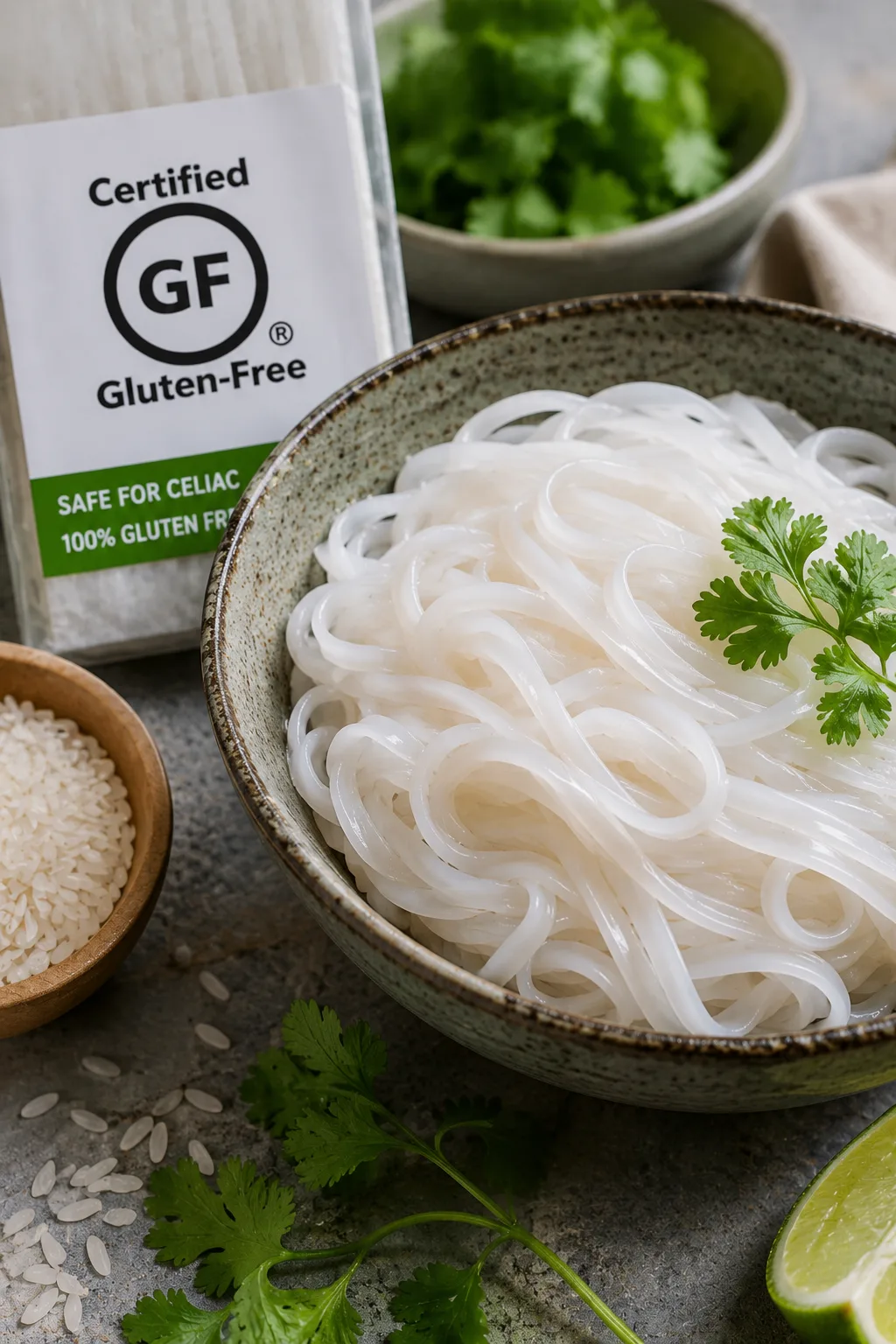
Quick Summary: Yes rice noodles are naturally gluten free. The only real risk is cross-contamination during manufacturing, and knowing what to look for on the label takes about thirty seconds.
I once served a rice noodle stir-fry to a friend with celiac disease feeling completely confident about it. She flipped the package and pointed to one line I had never noticed: “processed in a facility that also handles wheat.” We ordered pizza. Since then I check every package, every time. The ingredient is safe. What’s on the label is where it gets complicated.
Table of Contents
Quick Answer
Yes. Rice noodles are made from rice flour and water two ingredients with no wheat, barley, or rye. They are naturally gluten free and safe for most people with celiac disease, provided the brand is certified or manufactured in a dedicated gluten-free facility.
The Celiac Disease Foundation confirms rice as a naturally gluten-free grain, while also noting that any grain product carries cross-contamination risk when processed alongside wheat.
Why Rice Noodles Are Naturally Gluten Free
Gluten is a protein found in wheat, barley, and rye. Rice contains none of these. Traditional rice noodles the kind used in pho, pad thai, and stir-fry dishes are rice flour and water, sometimes with tapioca starch added for extra chew, which is also gluten free.
The risk, when it exists, has nothing to do with the rice itself. It comes from what happens during manufacturing.
✅ 3 Things to Check on the Label
Reading the ingredient list is not enough for celiac disease. Here is what actually matters:
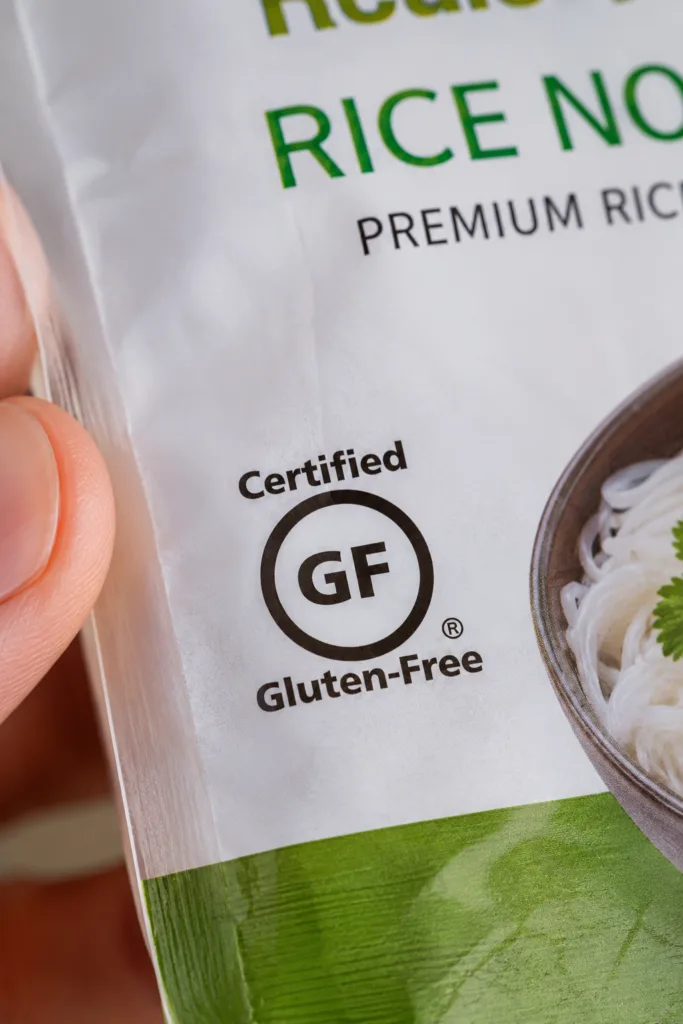
1. “Certified Gluten Free” seal
Third-party organizations like GFCO (Gluten-Free Certification Organization) test products to below 10 ppm of gluten stricter than the FDA’s legal threshold of 20 ppm. A brand printing “gluten free” on the package without this seal is making a self-declared claim, not a tested one. Under the FDA’s 2013 final rule on gluten-free labeling, manufacturers are not required to test their products only to ensure they meet the standard. The label is a legal claim; the certification seal is a verified result.
2. “Made in a dedicated gluten-free facility”
No shared equipment with wheat products at all. This is the safest scenario for celiac disease. Certification tells you the product was tested; the dedicated facility tells you the production environment was controlled from the start.
3. “May contain wheat” or “processed in a facility with wheat”
A cross-contamination warning. For mild sensitivity, this may be acceptable. For celiac disease, it is not. In January 2026, the FDA issued a Request for Information specifically focused on improving how gluten cross-contact is disclosed on packaging which confirms this remains an unresolved gap in current labeling standards.
certified gluten free rice noodles label celiac safe what to look forThe Mistake Most People Make
Assuming rice noodles are always safe because rice is always safe.
Some brands add wheat starch as a binder to prevent mushiness uncommon, but it happens. Others include wheat-based seasonings in noodle kit packets that are easy to miss when you only check the noodle itself. At restaurants, the noodle may be clean while the broth, soy sauce, and oyster sauce it is cooked in are not. The dish can fail even when the noodle passes.
Are Rice Sticks Gluten Free?
Yes. Rice sticks are simply flat, wide-cut rice noodles same ingredients, same answer. They appear in pho, pad see ew, and stir-fry dishes across Southeast Asian cooking. Naturally gluten free, and the same label rules apply.
Are Brown Rice Noodles Gluten Free?
Yes. Brown rice flour carries no gluten protein the gluten status is identical to white rice noodles, with slightly more fiber and a nuttier flavor. Jovial is the most trusted brown rice noodle brand on the market, made in a dedicated gluten-free facility with consistent certification.
Can Celiacs Eat Rice Noodles?
Yes, with one condition: certified gluten free, or made in a dedicated GF facility. “Naturally gluten free” does not protect against cross-contamination from shared manufacturing equipment. According to Celiac Canada, milling of gluten-free grains on equipment previously used for wheat is a recognized and documented contamination source and one that standard labeling does not currently address unless the manufacturer chooses to disclose it.
Safest approach:
- Look for a GFCO or equivalent certification seal (tested below 10 ppm)
- Prioritize dedicated GF facilities
- Skip packages with “may contain wheat” warnings
- At restaurants, ask about sauces and broth not just the noodle variety
Are Rice Noodles Healthy?
For a carbohydrate source, rice noodles hold up well across most dietary goals:
- Digestibility: easier on the gut than wheat pasta, making them a common recommendation for people with IBS or sensitive digestion
- Glycemic index: white rice noodles have a moderate GI (around 53–61 depending on preparation), lower than white bread and comparable to regular pasta when not overcooked cooking time directly affects starch gelatinization and how quickly glucose enters the bloodstream
- Protein and fiber: lower than whole wheat pasta; if satiety is a priority, pairing with a protein source and vegetables closes that gap quickly
- Gluten-free athletes: common among endurance athletes who need easy-to-digest carbohydrates before training without the gut discomfort some experience with wheat
- Calorie comparison: roughly similar to wheat pasta per serving, though slightly lower in most brands
The short version: rice noodles are a clean, versatile carbohydrate base. What surrounds them protein, fat, vegetables, sauce determines whether the meal is genuinely nutritious.
What Dishes Use Rice Noodles
- Pho thin rice noodles in Vietnamese beef or chicken broth
- Pad Thai flat-width noodles in tamarind sauce with egg and peanuts
- Pad See Ew wide rice sticks in dark soy sauce with Chinese broccoli
- Chow Fun broad flat noodles stir-fried at high heat, Cantonese style
- Rice vermicelli bowls thin noodles in cold Vietnamese-style bowls with herbs
- Chili oil noodles the fastest application; the Chili Oil Noodles recipe takes ten minutes with almost no technique required
Gluten Free Noodle Brands Worth Knowing
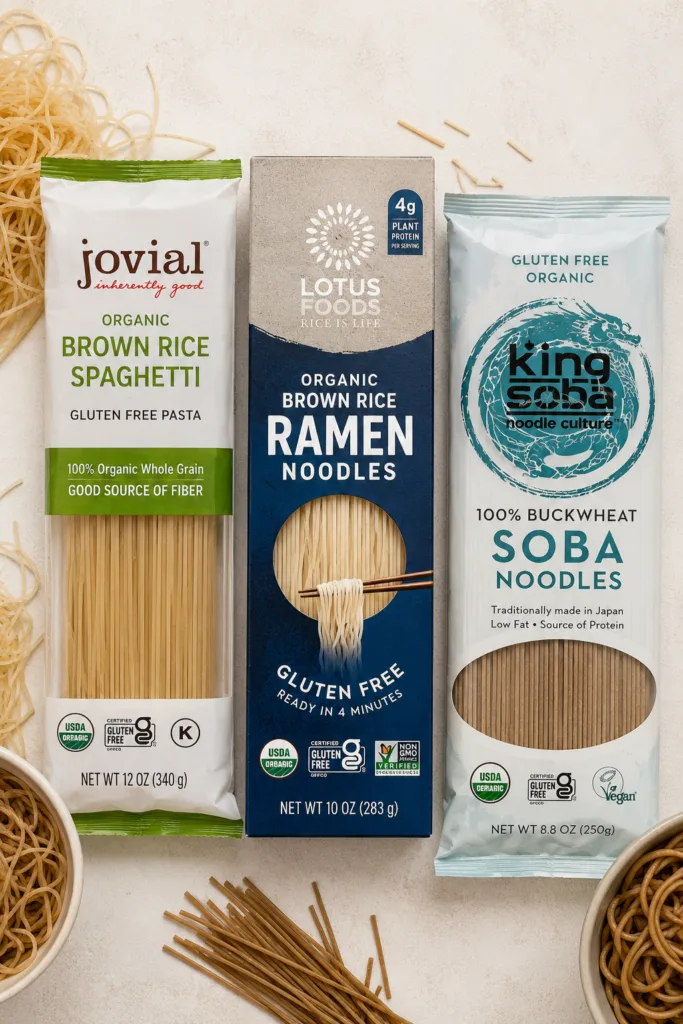
Top 3 for celiac disease:
- Jovial Organic Brown Rice Pasta certified GF, dedicated facility, best texture retention across all cooking methods; the one worth keeping stocked
- Lotus Foods certified GF, multiple varieties including brown, white, and millet-rice blends; widely available in mainstream grocery stores
- King Soba certified organic and GF, strong options for both stir-fry and broth-based dishes
Also worth mentioning: Annie Chun’s (certified, good for pad thai-style), Thai Kitchen (widely available, confirm current labeling), Tinkyada (dedicated facility, best for pasta-style applications).
How to Cook Rice Noodles
I overcooked a batch once by treating them like pasta boiling water, full cooking time. By the time they hit the skillet they were already breaking apart. Rice noodles don’t need boiling:
- Soak in hot, not boiling, water 8 to 10 minutes for stir-fry width, 3 to 5 for vermicelli
- Check at 8 minutes pliable but still firm when bitten
- Rinse immediately under cold water to stop cooking
- Add to the skillet slightly underdone the sauce finishes them
The 30-Minute Saucy Chicken Noodles is built on this exact technique flat rice noodles finished in a peanut-soy sauce in one skillet. And the Mongolian Beef Glass Noodles shows how the same approach works with sweet potato glass noodles when you want something chewier.
Quick Comparison: Rice Noodle Types
| White Rice | Brown Rice | Rice Sticks | Vermicelli | |
|---|---|---|---|---|
| Gluten free | Yes | Yes | Yes | Yes |
| Texture | Soft, silky | Firmer, nuttier | Wide, slightly chewy | Thin, delicate |
| Best use | Pad Thai, stir-fry | Stir-fry, saucy bowls | Pho, pad see ew | Spring rolls, light soups |
| Celiac safe | If certified | If certified | If certified | If certified |
| GI (approx.) | Moderate | Lower | Moderate | Moderate-high |
Common Questions
Do rice noodles have gluten?
Not naturally. The risk is cross-contamination or added wheat starch in certain brands not the rice flour itself.
Is glutinous rice gluten free?
Yes. “Glutinous” refers to the sticky texture, not gluten content. Safe for celiac disease despite the misleading name.
Are rice noodles dairy free?
Yes. Rice flour and water no dairy in a traditional rice noodle.
Are rice noodles vegan?
Yes. No animal products in a standard rice noodle.
Are rice noodles good for sensitive digestion?
Generally yes. They are easier to digest than wheat pasta and commonly tolerated by people with IBS. The absence of gluten and egg removes two common digestive triggers.
How to Store Rice Noodles
Dry: Airtight container, cool pantry, up to 12 months. More moisture-sensitive than wheat pasta seal tightly after opening.
Cooked: Refrigerate up to 3 days. Toss with sesame oil before storing to prevent clumping. Reheat in a skillet with a splash of water or broth.
Freezing: Not recommended texture breaks down after thawing.
More Recipes Worth Saving
- 30-Minute Saucy Chicken Noodles the best weeknight application for flat rice noodles
- Chili Oil Noodles (10 Minutes) minimum effort, maximum flavor
- Viral Mongolian Beef Glass Noodles the next step when you want something chewier
1 thought on “Are Rice Noodles Gluten Free? What You Need to Know Before Buying”