
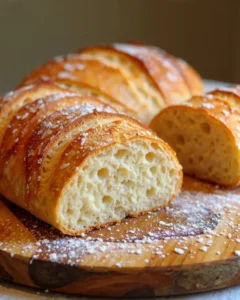
Welcome to the world of French bread! This article will guide you through making French bread and mastering its techniques. You’ll learn how to create a loaf that’s as good as your favorite bakery’s. You’ll find an easy recipe and learn the baking basics from Artisan Bread in Five Minutes and King Arthur Baking.
Table of Contents
- Master the art of making French bread with the right techniques.
- Explore various types of French bread and their unique characteristics.
- Utilize quality ingredients for the best flavors and textures.
- Follow a step-by-step guide to avoid common baking mistakes.
- Discover the differences between French bread and other varieties.
Understanding French Bread
French bread is a culinary delight that many love. It’s known for its crusty outside and soft inside. It’s great with soups, sandwiches, or just with a spread.
Making homemade bread lets you learn the techniques that make it special. The fermentation process adds rich flavors to the bread. Different yeasts create various textures and tastes, making French bread authentic.
- Crust: A thick, golden-brown crust that offers a satisfying crunch
- Interior: A chewy but airy crumb that can hold moisture well
- Flavor: A delightful combination of nutty, yeasty notes, crafted through proper fermentation
These elements make the bread enjoyable and enhance culinary experiences. Baking French bread fills your kitchen with great smells and a feeling of pride.
History of French Bread
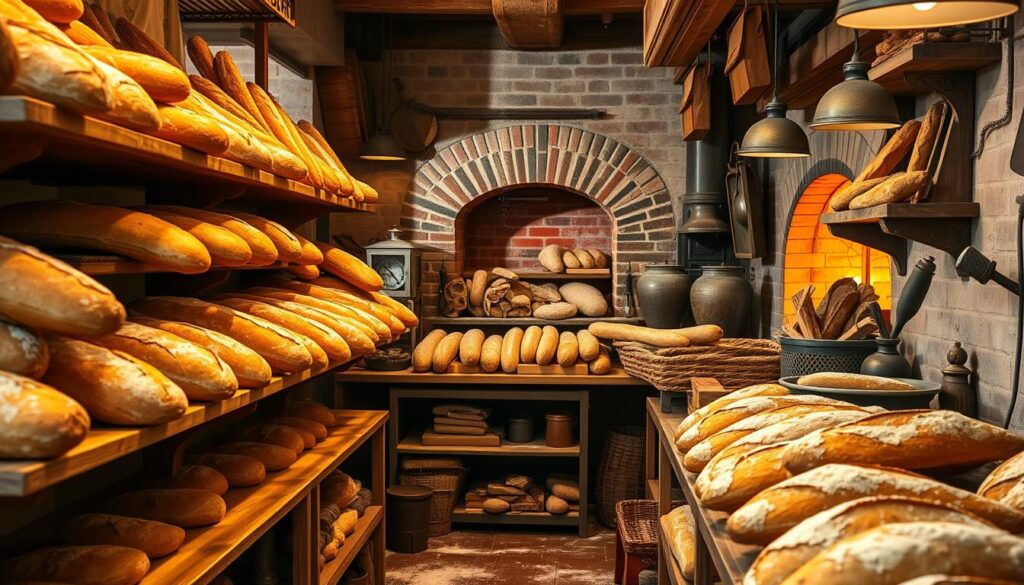
The history of French bread is a fascinating tale that links to France’s culture and society. It goes back to the Neolithic age, where bread was a key food. Over time, ancient people made bread in different ways, using new ingredients and techniques.
Artisanal bread, known for its traditional making and quality, grew from this history. In the Middle Ages, bakers started using leavening agents for the first time. This was a big step in bread-making and helped create the many French bread types we love today.
The 19th century brought big changes with the industrial revolution. It changed how bread was made. Some liked these new ways, but many bakers stuck to old methods. This mix of old and new has shaped French bread’s history.
Now, French bread’s history is more than just food. It shows how France’s society and economy have changed. From simple loaves to fancy baguettes, bread shows the bond between bread and French culture.
| Era | Key Developments | Types of Bread |
|---|---|---|
| Neolithic Age | Introduction of simple grain-based products | Cave bread, flatbreads |
| Middle Ages | Use of leavening agents; refinement of process | Round loaves, sourdough |
| 19th Century | Industrial revolution; mechanized baking | Baguette, pain de campagne |
| Modern Era | Revival of artisanal techniques | Artisanal bread varieties |
Types of French Bread
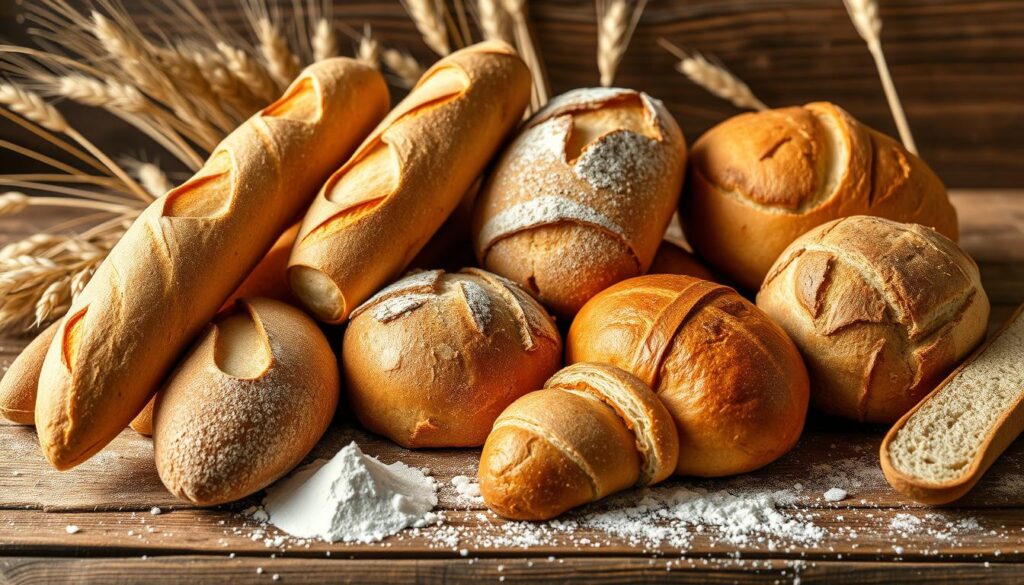
Exploring french bread reveals a wide variety of options. The baguette stands out with its long shape and crisp crust. It’s great with cheese or charcuterie.
The round bread loaf, or “boule,” is also delightful. It has a hearty texture, perfect for sharing. Pain de campagne is another favorite, known for its robust flavor and rustic look.
Other notable varieties include:
- Bâtard: A shorter, thicker cousin of the baguette, perfect for sandwiches.
- Ficelle: A thin version of the baguette, ideal for lighter accompaniments.
- Pain Complet: Made with whole wheat flour, providing a nuttier taste.
Each type of french bread has its own crust, flavor, and texture. They cater to different culinary needs. Whether with dinner or soup, these breads show their importance in French cuisine.
Ingredients for Authentic French Bread
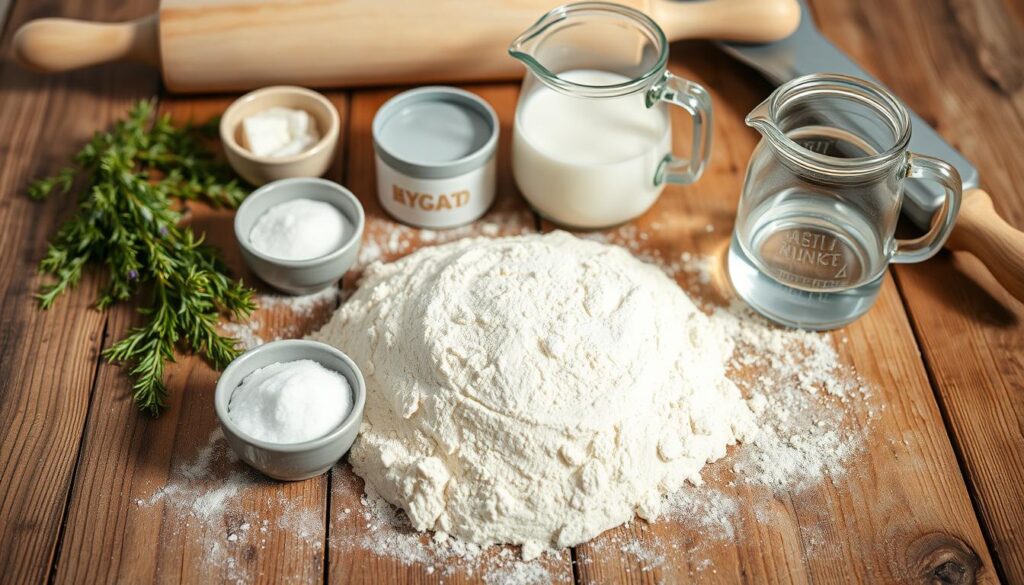
Making authentic French bread starts with knowing the key ingredients for french bread. You need flour, water, yeast, and salt. Each one is vital for the bread’s taste and texture.
Flour is the main ingredient. For a chewy crust, use high-protein flours like bread flour. All-purpose flour works for lighter loaves. Choosing quality flour affects the bread’s taste and texture.
Water is also key. It makes the flour gluten, which gives the bread structure and elasticity. The water’s temperature affects yeast activity, which is important for rising.
Yeast makes the dough rise. You can use active dry or instant yeast. The right mix with other ingredients creates the perfect flavor.
Salt adds flavor and controls yeast. It also helps the gluten, making the bread rise well and get a crispy crust. The right salt amount improves taste and crust texture.
Trying different ingredients for french bread can lead to new tastes and textures. Experiment with flour types or water sources like filtered water. This mix creates the joy of making your own crusty bread.
| Ingredient | Function | Recommended Type |
|---|---|---|
| Flour | Structure and texture | High-protein bread flour |
| Water | Hydration and yeast activation | Filtered water |
| Yeast | Fermentation and rising | Active dry or instant yeast |
| Salt | Flavor enhancement and yeast regulation | Sea salt or kosher salt |
How to Make French Bread
Making your own French bread is a fun and rewarding task. A step-by-step guide can make it easier and help you succeed. You can also tweak the recipe to fit your taste preferences.
Step-by-Step Baking Guide
Here’s a simple way to bake French bread:
- Gather Ingredients: You’ll need flour, water, yeast, and salt.
- Mix the Dough: Start by mixing water and yeast in a bowl until it’s dissolved. Then, add flour and salt slowly. Keep mixing until the dough comes together.
- Knead: Move the dough to a floured surface. Knead it for about 10 minutes until it’s smooth and elastic.
- First Rise: Put the dough in a greased bowl. Cover it and let it rise in a warm spot for 1-2 hours. It should double in size.
- Shape Your Loaf: After the dough has risen, punch it down. Shape it into a loaf. Place the loaf on a floured baking sheet.
- Second Rise: Cover the loaf again. Let it rise for another hour.
- Bake: Heat your oven to 450°F (230°C). Make some slashes on top of the loaf. Then, bake for 25-30 minutes until it’s golden brown.
Common Mistakes to Avoid
When baking French bread, there are a few mistakes to watch out for:
- Under-kneading can make the dough dense.
- Not proofing the dough right can stop it from rising.
- Using the wrong flour can change the bread’s taste and texture.
- Not using steam in the oven can make the crust less crispy.
By following these steps and avoiding common mistakes, you can make delicious homemade French bread. It will add a special touch to any meal.
Easy French Bread Recipe
Looking to make authentic homemade bread? This easy French bread recipe is a simple yet satisfying way to bake at home. Get your ingredients ready for a fun baking adventure!
- 4 cups all-purpose flour
- 1 tablespoon sugar
- 2 teaspoons salt
- 1 packet active dry yeast (about 2 1/4 teaspoons)
- 1 1/2 cups warm water (about 110°F)
Follow these simple steps for success:
- In a large bowl, mix warm water and sugar. Sprinkle yeast on top and wait for about 5 minutes until it’s foamy.
- Add salt and mix in the flour slowly until a dough forms.
- Knead the dough on a floured surface for about 10 minutes until it’s smooth and elastic.
- Put the dough in an oiled bowl, cover it with a damp cloth, and let it rise in a warm place for about an hour, or until it doubles in size.
- Punch down the dough and divide it into two equal parts. Shape each into a loaf and place them on a lined baking sheet.
- Cover the loaves again and let them rise for another 30 minutes.
- Preheat your oven to 425°F (220°C). Make diagonal slashes on top of each loaf.
- Bake for 25-30 minutes until the bread has a golden crust and sounds hollow when tapped.
This easy French bread recipe gives you a crispy crust with a soft inside. It’s perfect for sandwiches or enjoying with butter. Have fun making your own homemade bread!
Tips for Baking Crusty Bread
Baking crusty bread is fun and rewarding. Choosing the right flour is key for a great crust. Different flours change the crust’s texture and taste. Here are some tips for baking crusty bread and picking the right flour.
Choosing the Right Flour
The flour you pick greatly affects your bread. High-protein flours, like bread flour, make a crusty loaf. All-purpose flour makes a softer bread, which might not have the crust you want. Try different flours to find your perfect match.
- Bread Flour: Contains around 12-14% protein, perfect for crusty loaves.
- All-Purpose Flour: Offers versatility but less protein, suitable for softer bread.
- Whole Wheat Flour: Adds a nutty flavor and can enhance texture, though it may require additional liquid.
- Specialty Flours: Consider options like rye or spelt for unique flavors and crust characteristics.
French Bread vs Other Bread Varieties
Exploring the world of bread, you find a wide range of textures, tastes, and baking methods. French bread is known for its thin, crispy crust and soft inside. This is thanks to special techniques and top-notch ingredients. On the other hand, artisanal bread offers a variety of flavors, like sourdough, whole grain, and rye.
The taste and texture differences are significant:
| Bread Type | Taste Profile | Texture | Preparation Technique |
|---|---|---|---|
| French Bread | Mild, slightly nutty | Crispy crust, soft interior | High hydration, steam baking |
| Sourdough | Tangy, complex | chewy crust airy crumb> | Natural fermentation |
| Whole Grain | Earthy, hearty | Dense, robust | Whole grains, longer kneading |
| Artisanal Bread | Varied based on ingredients | Crunchy to soft | Crafted methods, long fermentation |
Every bread, from french to artisanal, has its own charm. Artisanal bread celebrates traditional baking, while french bread shows off baking skill. Discovering these differences helps you appreciate the art of making bread.
Conclusion
Starting your journey to make authentic French bread is exciting. You’ll see how each loaf shows your hard work and skill. Making bread is more than just a recipe; it’s about knowing your ingredients, techniques, and patience.
There’s nothing like the joy of taking a warm loaf out of the oven. The smell of fresh bread makes your home feel cozy and welcoming. You might enjoy looking into books like “The Artisan Bread Cookbook” for more baking inspiration. Or, try making different breads, like this banana bread recipe to show off your baking talents.
Remember, making perfect French bread is a journey of discovery and creativity. Every try makes you better and helps you appreciate the simple things that make a great loaf. So, get ready, dive in, and enjoy the special feeling of eating your own fresh bread.
FAQ
What is the easiest way to make French bread at home?
Making French bread at home is easy with a simple recipe. You’ll need flour, water, yeast, and salt. Knead the dough well and let it ferment properly for a perfect crust and airy interior.
How can I ensure my homemade French bread has a crusty exterior?
For a crusty exterior, bake your bread in a preheated oven with steam. Use a pan of water in the oven or spray water on the bread before baking. This method helps create the desired crust.
What types of flour are best for making authentic French bread?
High-protein bread flour is ideal for authentic French bread. It develops gluten for structure and chew. Mixing all-purpose flour with whole wheat flour adds flavor and nutrients.
What is the key to getting a light and airy interior in French bread?
A light interior comes from proper kneading and fermentation. Knead until smooth and elastic, then ferment well to develop flavor and texture.
Can I use a bread machine to make French bread?
Yes, a bread machine can make French bread. Just use a suitable recipe and follow your machine’s instructions. It will mix, knead, and bake for consistent results.
What are some common mistakes to avoid when baking French bread?
Avoid under-kneading, not enough fermentation time, and not preheating the oven. Following a good recipe helps avoid these mistakes.
How long should I let my dough rise?
Let your dough rise until it doubles in size, about 1 to 2 hours. A second rise after shaping is key for the best texture.
How can I tell when my French bread is done baking?
Check if the bottom of the loaf sounds hollow when tapped. An internal thermometer should read 190-210°F (88-99°C) for doneness.