
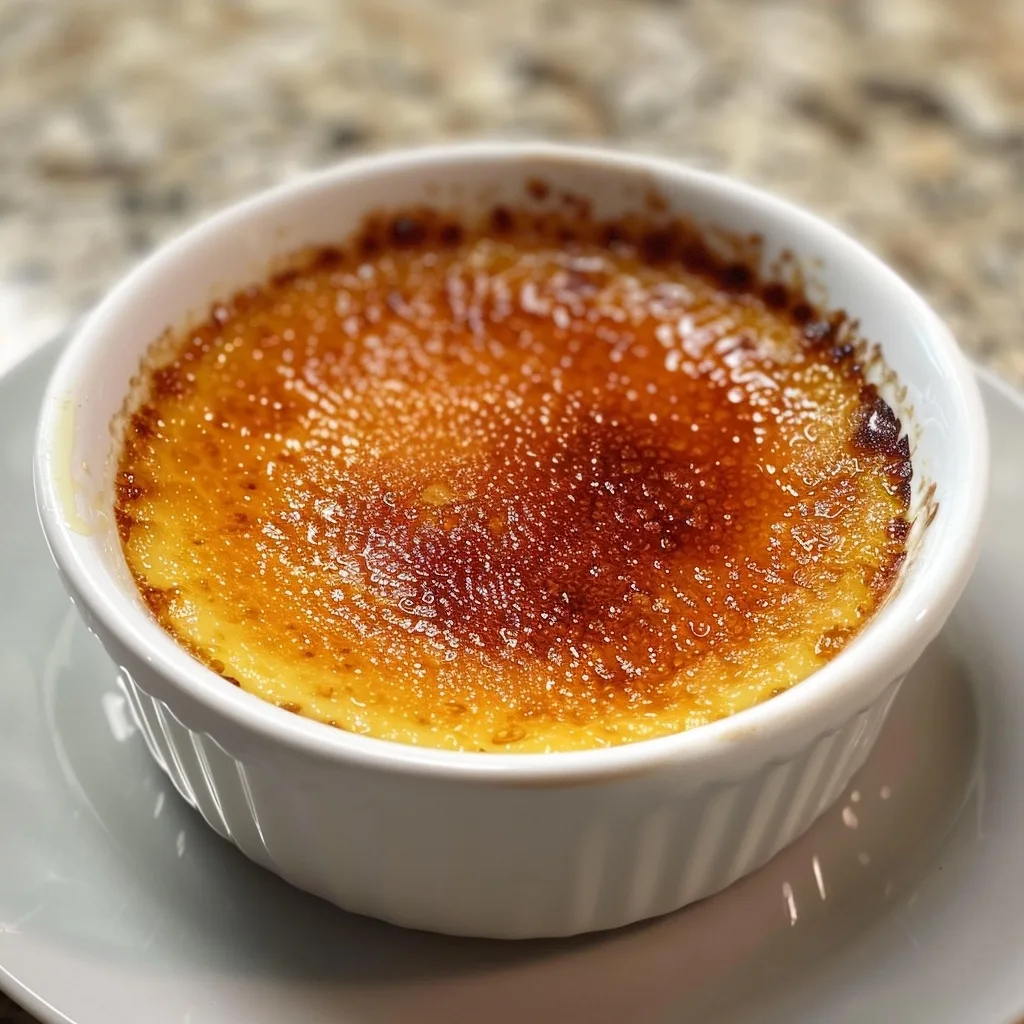
Crème Brûlée is a silky custard topped with a brittle caramelized sugar layer, embodying French elegance with every spoonful. This timeless dessert combines rich vanilla cream, carefully folded egg yolks, and a glossy caramel crust that cracks with a satisfying snap. Its contrasting textures and subtle sweetness deliver a refined finish to any meal.
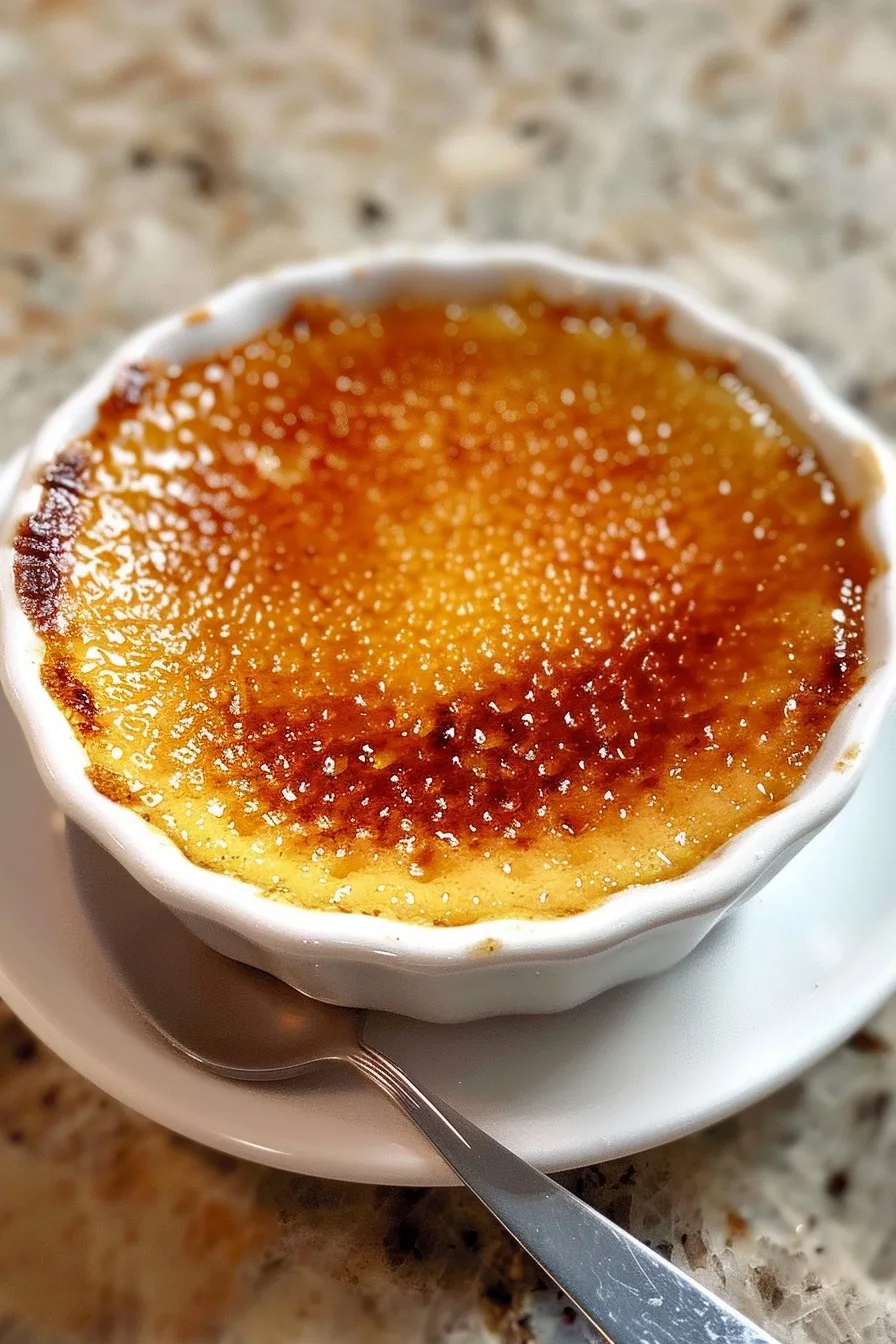
| Prep Time | Cook Time | Total Time | Servings | Difficulty | Cuisine |
|---|---|---|---|---|---|
| 15 minutes | 10 minutes | 25 minutes | 6 | Easy | French |
Why This Recipe Works
I discovered through seasoned experimentation that the key to triumph is balancing sugar and yolk ratios. Keeping the custard slightly under‑set before caramelizing creates a luxurious mouthfeel. The brief oven bake sets the structure, while the flash of heat on the sugar top adds an unforgettable crunch.
Each element—silky custard, fragrant vanilla, and caramelized glaze—contributes depth. The precise technique elevates a simple dessert into a memorable finale. My approach blends tradition with a touch of modern precision.
Ingredients
| Ingredient | Quantity | Notes / Alternatives |
|---|---|---|
| Heavy Cream | 2 cups (480 ml) | Replace with coconut milk for a dairy‑free version. |
| Granulated Sugar | ½ cup (100 g) | Brown sugar yields a deeper flavor. |
| Sugar for Caramelizing | ¼ cup (50 g) | White sugar preferred for crispness. |
| Egg Yolks | 6 large | Use fresh eggs for maximum richness. |
| Vanilla Bean | 1, split | Pure vanilla extract works if fresh bean unavailable. |
| Ice‑Water Bath | Water to fill ramekins to 1 inch (2.5 cm) | Keeps custard evenly cooked. |
| Spray‑Dry Sugar (optional) | Pinch | Helps even caramelization. |
Step-by-Step Instructions
-
Preheat & Prep
Set oven to 325°F (160°C) and arrange a shallow pan in the middle rack.
-
Prepare Custard
Heat cream and vanilla bean in a saucepan until just below boiling.
-
Whisk Yolks
Beat yolks in a bowl, slowly adding half the powdered sugar for smoothness.
-
Combine & Strain
Slowly pour warm cream into yolks, whisking constantly, then strain through a fine sieve.
-
Fill Ramekins
Pour custard into six 6‑oz ramekins, leaving a ¼‑inch gap at the top.
-
Steam Bake
Place ramekins in a water bath and bake 35‑40 minutes until the edges set but center slightly wobbles.
-
Cool & Chill
Remove ramekins, let cool to room temperature, then refrigerate at least 2 hours.
-
Caramelize
Just before serving, sprinkle granular sugar over each custard and torch with a kitchen torch until molten and crisp.
-
Serve Immediately
Allow the sugar to harden, then serve the custard with a side of fresh berries.
Chef Tips for Perfect Results
- Use a thermometer: target 170°F (77°C) during the bake for silky texture.
- Whisk yolks thoroughly to avoid graininess.
- Strain custard twice to guarantee the ultimate smooth finish.
- Hold the torch steady 1‑inch from the surface to create an even crust.
- Cool ramekins gently to prevent cracking.
Common Mistakes to Avoid
- Overbaking: leads to a ropey centre.
- Under‑seasoning: results in bland custard; add a pinch of sea salt.
- High flame on torch: burns sugar, produces bitter taste; use a controlled flame.
- Insufficient chilling: results in a lumpy reheated dessert.
- Not resting ramekins: causes cracks when placing in water bath.
Variations and Substitutions
| Ingredient | Substitution | Impact on Flavor |
|---|---|---|
| Whole Cream | Half‑and‑half | Lower fat, slightly lighter body. |
| Vanilla Bean | Almond extract | Adds nutty nuance. |
| Custard Sweetener | Maple syrup | Results in a subtle caramel undertone. |
| Caramelizing Sugar | Brown sugar | Introduces molasses depth. |
| Beat Room‑Temperature Eggs | Chilled eggs | Tightens custard structure slightly. |
Serving Suggestions and Pairings
Cosmetically plate with a drizzle of raspberry coulis, a dusting of chopped pistachios, and a splash of chilled champagne‑free sparkling wine. Pair with French biscuits like amaretti, or serve beside a chilled coffee for brunch. A single ramekin works as a sophisticated dessert at dinner parties or a warm finale to a holiday banquet.
Storage and Reheating
| Method | Duration | Instructions |
|---|---|---|
| Refrigeration | Up to 48 hours | Keep in airtight container, and shake slightly before serving. |
| Thawing | At least 8 hours | Let custard sit at room temperature; avoid overnight. |
| Reheating | ≤2 minutes | Gently warm at 200°F (93°C); avoid steam to preserve texture. |
Nutritional Information
| Nutrient | Amount per Serving |
|---|---|
| Calories | 210 kcal |
| Protein | 3g |
| Fat | 12g |
| Carbohydrates | 25g |
| Fiber | 0g |
| Sugar | 20g |
| Sodium | 140mg |
Frequently Asked Questions
Can I use a non‑dairy milk substitute?
Yes, coconut milk or almond milk will work, though the custard may be slightly thinner. The caramelization remains unchanged, delivering a subtle new flavor profile.
What bake time ensures a silky center?
Bake the custard until the edges firm while the center wobbles. A thermometer read 170°F (77°C) guarantees consistency.
How to fix a cracked custard surface?
Cool the ramekins slowly; a sudden temperature change induces cracks. If cracked, cover the topping with parchment and refrigerate until ready to serve.
Is it possible to prepare Crème Brûlée ahead?
Yes, cook the custard, chill, then caramelize at each serving time. Most chefs reserve the final caramel step to preserve the crunch.
Do I need a torch to caramelize the sugar?
While a torch provides a perfect crust, you can broil the sugar lightly for a few seconds, keeping constant eye contact to avoid scorching.
Conclusion
Crème Brûlée combines velvety richness with dramatic caramelization, making it a standout dessert across cultures. With precise timing, thoughtful ingredients, and a touch of flair, you can create a memorable finale that showcases French culinary artistry.