
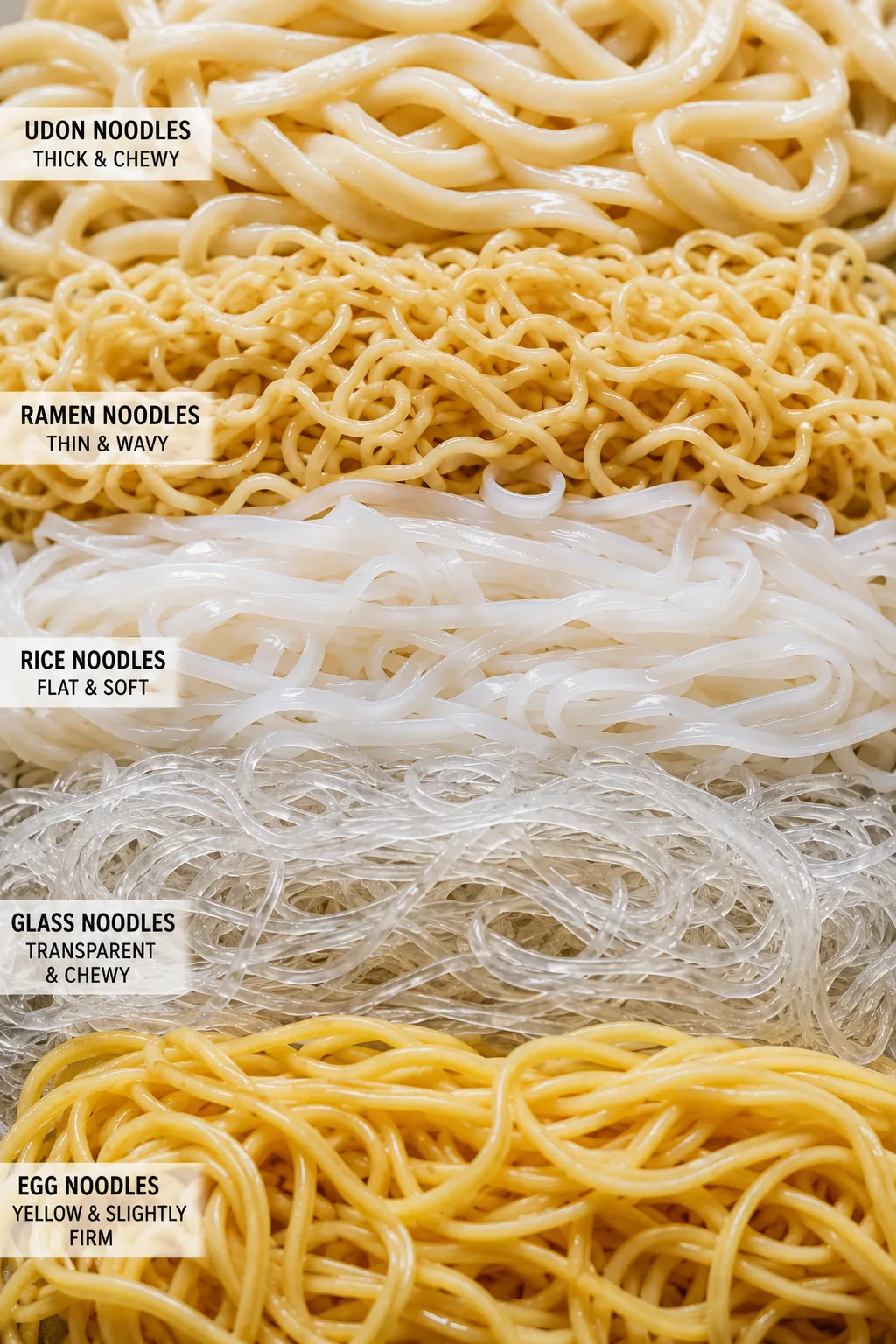
Quick Answer: There are 5 main types of noodles based on their core ingredients:
- Wheat Noodles — Udon, Ramen, Soba, Somen
- Rice Noodles — Pad Thai noodles, Rice Vermicelli, Pho noodles, Rice Sticks
- Egg Noodles (Wheat + Egg) — Lo Mein, Chow Mein, Chinese Egg Noodles
- Glass Noodles (Starch) — Mung Bean, Sweet Potato, Cellophane
- Low-Carb Alternatives — Shirataki, Zucchini, Kelp, Hearts of Palm
The first time I made pho at home, I grabbed the wrong noodles. I used the wide, flat ones — the kind that belong in pad see ew — instead of the thin round ones pho actually needs. The broth was right. The protein was right. But the noodles sat in the bowl like wet cardboard and absorbed everything wrong. I ate it anyway. That mistake sent me down a week-long rabbit hole learning every noodle type I had ever cooked with — and why it actually matters.
Most cooking mistakes that look like technique problems are really ingredient problems. Noodles are no exception.
Table of Contents
What Are the Main Types of Noodles? {#main-types}
There are five broad noodle categories. Within each category, shape, thickness, and cooking method change everything — the same ingredient handled differently produces a completely different result in the bowl.
The three factors that separate one noodle from another:
- Base ingredient — wheat, rice, buckwheat, starch, or none of the above
- Shape and thickness — thin vermicelli vs. wide flat vs. round chewy
- Cooking method — boiled, soaked, soaked then fried, or no cooking at all📸 Hero Image: Overhead flat lay of 8 different noodle types arranged side by side, dry and raw, labeled
Alt-text:types of noodles complete guide wheat rice glass egg shirataki low carb
Different Types of Asian Noodles Explained {#wheat}
Wheat Noodles
Wheat noodles are the most common noodle category globally and the most diverse in texture — from hair-thin somen to thick, springy udon.
Udon
Thick, round, and intensely chewy. Made from wheat flour, water, and salt — the simplest ingredient list of any wheat noodle, which is exactly why the texture is so recognizable. Best in hot broth (kake udon), cold with dipping sauce (zaru udon), or stir-fried in dark soy sauce. The What Are Udon Noodles guide covers regional styles and fresh vs. frozen differences in full.
Ramen
Thin, springy wheat noodles made with an alkaline solution (kansui) that gives them a yellow tint and firm bite. Designed specifically for hot broth — they stay firm longer than regular wheat noodles in liquid. Ramen vs. Udon is one of the most common comparison questions in Asian cooking, and the answer lives entirely in that alkaline difference.
Soba
Made from buckwheat flour, sometimes blended with wheat. 100% buckwheat soba (juwari) is naturally gluten free — blended versions are not. Earthy, nutty flavor that stands on its own, which is why it works best cold with minimal dressing rather than buried in a heavy sauce.
Somen
The thinnest wheat noodle. Hair-thin, white, and delicate — served cold in Japan during summer with a light dashi dipping sauce. Not a stir-fry noodle. Built for cold, clean, minimal applications.
📸 Image: Udon, soba, and ramen side by side on a wooden board, raw
Alt-text:wheat noodle types udon soba ramen comparison raw
Rice Noodles: The Gluten-Free Noodle Guide {#rice}
Made from rice flour and water. Naturally gluten free, naturally dairy free. The Are Rice Noodles Gluten Free guide covers the safety details in full — the short version is that cross-contamination from manufacturing is the only real risk, and certified brands eliminate it.
Pad Thai Rice Noodles (Medium Flat)
Flat, 3–5mm wide, silky when cooked correctly. These absorb sauce as they finish cooking in the pan rather than just sitting in it — which is why they dominate the Best Noodles for Stir Fry list. Also the foundation of the saucy chicken noodles and Chili Oil Noodles recipes that use the soak-then-finish technique.
Rice Vermicelli
Thin, round, and delicate. Cook in 3–5 minutes of soaking — significantly faster than flat noodles — and cannot handle heavy sauce or prolonged heat. Used in Vietnamese rice noodle bowls, cold spring rolls, and light soups.
Wide Rice Sticks / Chow Fun Noodles
The widest rice noodle. Used in pho, pad see ew, and chow fun. Wide rice sticks in a screaming-hot wok with dark soy sauce and Chinese broccoli — that is chow fun, and the Chow Fun Noodles recipe shows exactly how wok heat interacts with a noodle this wide.
Pho Noodles
A slightly wider, rounder rice vermicelli cut. Engineered to absorb broth flavor gradually — they sit in liquid longer than any other rice noodle without turning immediately soft.
📸 Image: Three rice noodle widths side by side — vermicelli, medium flat, wide rice sticks
Alt-text:rice noodle types vermicelli flat wide rice sticks gluten free comparison
Egg Noodles (Wheat + Egg) {#egg}
Wheat noodles enriched with egg, giving them a richer flavor, golden color, and slightly denser texture than plain wheat noodles.
Lo Mein and Chow Mein (Egg Noodles)
Both are wheat egg noodles — the difference is technique. Lo mein noodles are tossed with sauce while soft. Chow mein noodles are stir-fried until crispy at the edges. Same base, completely different result. Chinese egg noodles are a top performer in the Best Noodles for Stir Fry guide specifically because the egg content gives them structure in a hot wok.
Japanese Ramen (Egg Variant)
Some ramen noodles include egg in addition to the alkaline solution — a slightly richer noodle with a more pronounced yellow color, common in Hokkaido-style ramen.
European Egg Noodles
Wider, flatter, softer. Used in German Spätzle, Eastern European noodle soups, and American chicken noodle dishes. Higher egg content makes them pillowy rather than springy.
Glass Noodles: Translucent Starch Noodles Explained {#glass}
Made from starch rather than grain flour — most commonly mung bean starch, though sweet potato starch is also common. Transparent when cooked. The What Are Glass Noodles Made Of guide covers the full breakdown.
Mung Bean Glass Noodles
The most common variety. Used in Korean japchae, Chinese stir-fries, and Vietnamese soups. Naturally gluten free. They absorb sauce deeply inside the noodle rather than just coating the surface — which makes them ideal for bold sauces. Chewy and resilient even with longer cooking.
Sweet Potato Glass Noodles
Chewier than mung bean, slightly darker when cooked. The base for Korean japchae. They improve slightly with longer pan time rather than deteriorating — which is unusual and useful.
Cellophane Noodles
A thinner version of mung bean glass noodles. Used in spring rolls, Thai soups, and Chinese hot pot. Cook in under 5 minutes.
📸 Image: Cooked glass noodles in a bowl, translucent, glossy, closeup macro texture
Alt-text:glass noodles mung bean sweet potato starch cooked translucent texture
✅ 3 Things Most People Get Wrong About Noodles
- Overcooking before the pan: Rice noodles and glass noodles finish cooking in the sauce. Pull them slightly underdone — every single time.
- Using the wrong noodle for the dish: The noodle and the dish were designed together. Swapping changes the texture of every bite in a way technique cannot fix.
- Boiling rice noodles: Rice noodles need hot water, not boiling water. 8 to 10 minutes of soaking. Boiling makes them paste — and it is irreversible.
Low-Carb Noodle Alternatives {#low-carb}
Shirataki (Miracle Noodles)
Made from konjac flour — a water-soluble fiber from the konjac plant root. Near-zero calories, near-zero carbohydrates. The texture is firm and slightly rubbery, unlike any grain noodle, with a neutral flavor that takes on whatever sauce surrounds it. The key step most people skip: drain, rinse under cold water, then dry-fry in a hot pan for 2–3 minutes before adding sauce. This removes excess moisture and transforms the texture. Skip this and the first attempt at shirataki will taste wrong.
Zucchini Noodles (Zoodles)
Spiralized zucchini. Best served slightly warm or raw with a bold sauce. Do not cook longer than 2 minutes — they release water quickly and the dish turns soupy.
Kelp Noodles
Made from seaweed. Translucent, very low calorie, naturally gluten free, mild oceanic flavor. Best in raw food applications and cold salads.
Hearts of Palm Noodles
Made from the inner core of palm trees. Mild flavor, firm texture, low carb. The closest textural match to pasta of all the low-carb alternatives.
📸 Image: Shirataki noodles draining in colander and dry-frying in pan side by side
Alt-text:shirataki miracle noodles low carb keto preparation drain dry fry
Noodle Varieties: Full Comparison Table
| Noodle | Base | Gluten Free | Best Use | Texture |
|---|---|---|---|---|
| Udon | Wheat | No | Broth, stir-fry | Thick, chewy |
| Soba (100%) | Buckwheat | Yes | Cold dishes, light broth | Earthy, firm |
| Ramen | Wheat + alkaline | No | Hot broth | Springy, firm |
| Lo Mein / Chow Mein | Wheat + egg | No | Tossed or stir-fried | Soft / crispy |
| Pad Thai Rice | Rice flour | Yes (if certified) | Stir-fry, saucy bowls | Silky, flat |
| Rice Vermicelli | Rice flour | Yes (if certified) | Cold bowls, light soups | Thin, delicate |
| Pho Noodles | Rice flour | Yes (if certified) | Broth | Round, soft |
| Glass Noodles | Mung bean starch | Yes | Stir-fry, soups | Chewy, translucent |
| Sweet Potato Glass | Sweet potato starch | Yes | Japchae, stir-fry | Chewy, resilient |
| Shirataki | Konjac | Yes | Low-carb dishes | Firm, rubbery |
| Somen | Wheat | No | Cold dipping | Hair-thin, delicate |
| Zucchini | Zucchini | Yes | Cold, raw dishes | Soft, watery |
Noodle Texture & Chewiness Scores {#scores}
Original Data — rated on texture, ease of cooking, and versatility:
| Noodle | Chewiness (1–10) | Beginner-Friendly | Best For | Sauce Absorption |
|---|---|---|---|---|
| Udon | 10/10 | ✅ Easy | Broth + stir-fry | Medium |
| Ramen | 8/10 | ✅ Easy | Hot broth | Low |
| Lo Mein (Egg) | 7/10 | ✅ Easy | Stir-fry | Medium |
| Sweet Potato Glass | 8/10 | ⚠️ Medium | Japchae, stir-fry | High |
| Mung Bean Glass | 7/10 | ⚠️ Medium | Stir-fry, soups | Very High |
| Pad Thai Rice | 5/10 | ⚠️ Medium | Saucy stir-fry | High |
| Soba | 6/10 | ✅ Easy | Cold, light broth | Low |
| Rice Vermicelli | 3/10 | ✅ Easy | Light bowls, soups | Medium |
| Shirataki | 6/10 | ⚠️ Medium | Low-carb dishes | Low |
| Somen | 2/10 | ✅ Easy | Cold dipping | Very Low |
| Zucchini | 1/10 | ✅ Easy | Raw, cold | Very Low |
Best beginner noodle: Udon — forgiving to cook, hard to ruin, works in almost any application.
Most versatile: Pad Thai rice noodles — stir-fry, soups, cold bowls, one-skillet dinners.
Hardest to get right: Glass noodles — easy to over-soak, clump fast in the pan.
Best Noodles for Soup {#soup}
| Noodle | Best Soup | Why |
|---|---|---|
| Udon | Japanese udon broth, miso | Holds texture in long-simmered broths |
| Ramen | Tonkotsu, shoyu, miso ramen | Alkaline structure resists broth softening |
| Pho Noodles | Vietnamese pho | Absorbs broth gradually without turning soft |
| Rice Vermicelli | Light Vietnamese soups, laksa | Thin, delicate — best in clear or coconut broths |
| Soba | Cold tsuyu dipping broth | Earthy flavor that complements light broths |
| Glass Noodles | Korean soups, hot pot | Absorbs broth deeply, stays resilient |
The Ramen vs. Udon guide breaks down the broth compatibility of each in detail.
Best Noodles for Stir Fry {#stir-fry}
| Noodle | Why It Works | Difficulty |
|---|---|---|
| Pad Thai Rice (flat) | Absorbs sauce as it finishes; silky texture | Medium |
| Lo Mein / Egg Noodles | Egg structure holds in high heat | Easy |
| Udon | Chew stands up to bold sauces and high heat | Easy |
| Glass Noodles | Deep sauce absorption; resilient to wok heat | Medium |
| Wide Rice Sticks | Large surface area catches sauce in wok | Medium |
The full Best Noodles for Stir Fry guide covers cooking technique for each. The Gluten-Free Noodles Quick Stir-Fry uses certified rice noodles and glass noodles in a practical weeknight recipe.
Best Gluten-Free Noodles {#gluten-free}
| Noodle | Notes |
|---|---|
| Rice Noodles (certified) | Most widely available GF noodle |
| 100% Buckwheat Soba | Check label — blended versions contain wheat |
| Glass Noodles | Mung bean and sweet potato — naturally GF |
| Shirataki | Konjac-based, zero gluten |
| Zucchini / Kelp / Hearts of Palm | Naturally GF, no cross-contamination risk |
Full safety guide for celiac disease: Are Rice Noodles Gluten Free.
Best Low-Carb Noodles {#low-carb-best}
| Noodle | Carbs per serving | Texture Match |
|---|---|---|
| Shirataki | ~1g | Firm, neutral |
| Zucchini Noodles | ~4g | Soft, watery |
| Kelp Noodles | ~2g | Crunchy, mild |
| Hearts of Palm | ~4g | Closest to pasta |
| 100% Buckwheat Soba | ~40g | Lower GI than wheat |
How to Store Every Noodle Type
| Noodle Type | Uncooked | Cooked | Freezer |
|---|---|---|---|
| Dry wheat / rice / soba | Pantry, airtight, 12 months | Fridge 3 days | Not recommended |
| Fresh egg noodles | Fridge 2–3 days | Fridge 2 days | Yes, 1 month |
| Glass noodles (dry) | Pantry, airtight, 12 months | Fridge 3 days | Not recommended |
| Shirataki (unopened) | Fridge in liquid | Fridge 3 days | Not recommended |
| Udon (frozen) | Freezer 6 months | Fridge 2 days | Yes |
People Also Ask {#faq}
What noodles are healthiest?
100% buckwheat soba (highest fiber among grain noodles), shirataki (lowest carb, highest fiber per gram), and rice noodles (easiest to digest, no gluten or egg). The healthiest choice depends on the goal — lowest carb, highest fiber, or easiest digestion.
What noodles are gluten free?
Rice noodles (certified), 100% buckwheat soba, mung bean glass noodles, sweet potato glass noodles, shirataki, zucchini noodles, and kelp noodles are all naturally gluten free. Always check for cross-contamination warnings if you have celiac disease.
What noodles are best for ramen?
Ramen noodles — thin, alkaline wheat noodles that stay firm in hot broth longer than any other variety. The kansui (alkaline water) in the dough is specifically what makes ramen noodles work in soup.
What noodles are best for stir fry?
Flat rice noodles (pad thai width), Chinese egg noodles, udon, and glass noodles are the top performers. Each absorbs sauce differently — rice noodles pull it in, egg noodles coat with it, glass noodles absorb it deeply.
Are rice noodles healthier than pasta?
Comparable in calories and carbohydrates. Rice noodles are lower in protein and fiber than whole wheat pasta but easier to digest and naturally free from gluten. The difference matters most for people avoiding gluten or with wheat sensitivity, not for general nutrition.
What is the chewiest noodle?
Udon — scored 10/10 on chewiness. Made from just wheat, water, and salt with a low water ratio, producing the most substantial texture of any noodle type.
What is the best beginner noodle?
Udon. It is forgiving to cook, hard to ruin, works in broth and stir-fry, and is widely available. A close second is lo mein egg noodles — simple to boil and versatile.
More Guides Worth Reading
- Ramen vs Udon — two wheat noodles that look similar and work completely differently
- Best Noodles for Stir Fry — practical rankings with cooking notes
- Are Rice Noodles Gluten Free — full celiac safety guide with certified brands
- What Are Glass Noodles Made Of — mung bean vs. sweet potato starch breakdown
- What Are Udon Noodles — production, regional styles, frozen vs. fresh
- Chow Fun Noodles — wide rice sticks in a screaming-hot wok
- Chili Oil Noodles — the simplest rice noodle application you can make