
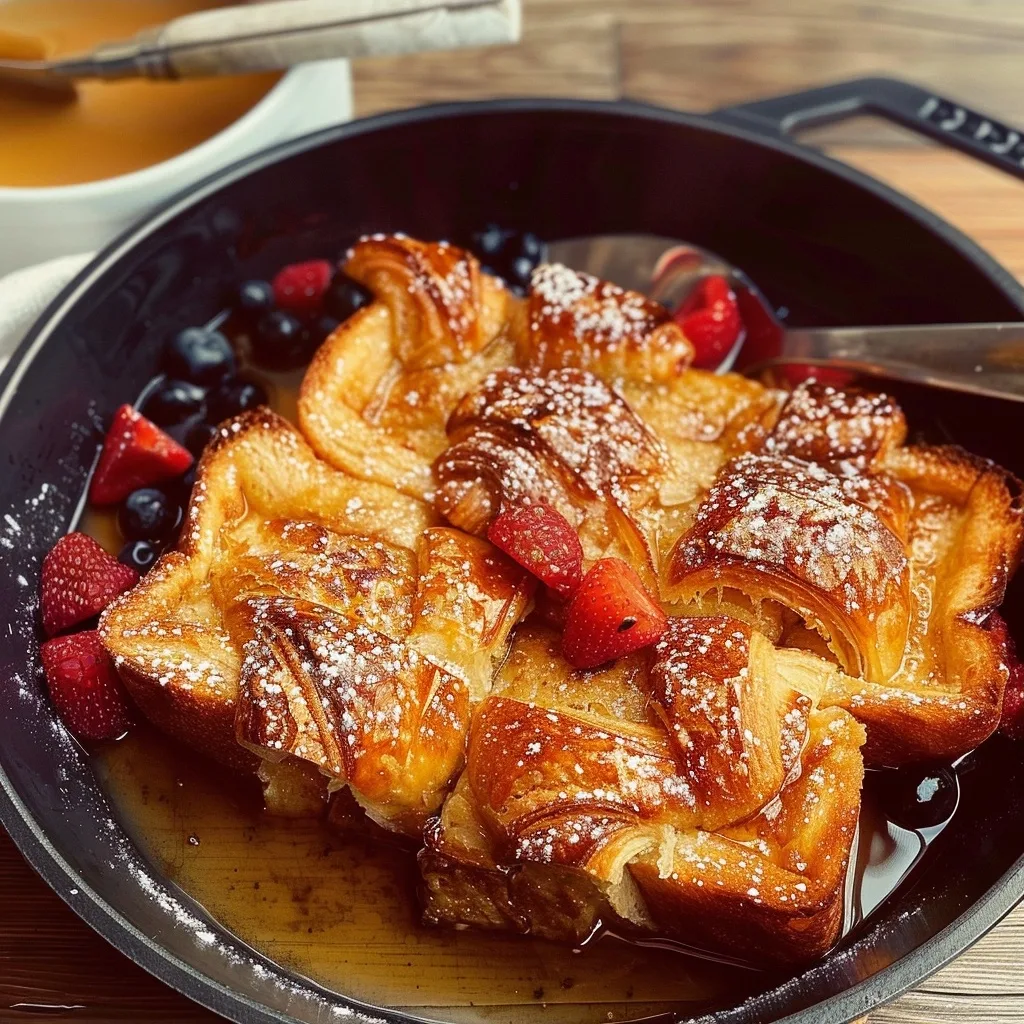
Croissant Baked French Toast transforms buttery croissant dough into a custard‑filled, skillet‑seared marvel. Classic French toast flavors mingle with flaky croissant layers, yielding a dessert‑style breakfast that balances sweetness and crunch. The result is a plate that turns breakfast into an indulgent treat while remaining quick enough for weekday mornings.

| Prep Time | Cook Time | Total Time | Servings | Difficulty | Cuisine |
|---|---|---|---|---|---|
| 25 minutes | 20 minutes | 45 minutes | 4 | Medium | French‑Inspired |
Why This Recipe Works
This recipe works because the croissant dough’s multiple layers trap rich custard, amplifying flavor and texture. During the baking phase, the pastry puffs until golden, while the custard thickens into a subtle custard cup that cools into a silky center when set. My first trial revealed that using freshly‑dough croissants instead of pre‑baked ones delivers a lighter crumb and less buttery heaviness.
In addition, the French‑toast batter contains double the milk fraction, preventing the heavy pastry from absorbing too much liquid. The result is a loaf that stays moist inside while its exterior remains crisp even after several minutes of rest. The technique of partially baking the croissants before dipping also reduces sogginess and preserves aroma.
Finally, a shallow pan grill creates an even steam field that gently cooks the custard without over‑browning the pastry. This method gives the dish a smooth interior and a caramelized shell that invites dipping in syrup or dusting with powdered sugar.
Ingredients
| Ingredient | Quantity | Notes (Alternatives) |
|---|---|---|
| Fresh croissants | 4 medium | Use gluten‑free croissants for a dairy‑free version |
| Whole milk | 1 ½ cups | Replace with oat milk for vegan option |
| Heavy cream | ½ cup | Use coconut cream to avoid dairy |
| Large eggs | 4 | Batter tastes richer with room‑temperature eggs |
| Granulated sugar | 2 tablespoons | Add more if you prefer sweeter custard |
| Vanilla extract | 1 teaspoon | Almond extract as nutty alternative |
| Ground cinnamon | ½ teaspoon | Optional spicier kick |
| Salt | A pinch | Elevates overall flavor |
| Butter | 2 tablespoons | Use clarified butter for lower smoke point |
| Maple syrup | For serving | Pure maple or agave as sweetener |
Step‑by‑Step Instructions
-
Preheat Forging
Heat a large cast‑iron skillet over medium heat and melt butter, monitoring to avoid darkening. This creates a searing surface that enhances caramelization without burning.
-
Prepare Custard
Whisk milk, cream, eggs, sugar, vanilla, cinnamon, and salt in a medium bowl until fully blended. A glossy mixture indicates proper incorporation of egg proteins.
-
Warm the Croissants
Place croissants on a parchment‑lined baking sheet and bake for 3–4 minutes, or until light golden. This step dries the exterior, limiting liquid absorption in the next stage.
-
Coat the Pastry
Submerge each pre‑baked croissant in the custard, allowing it to saturate for 30 seconds per side. Pat excess liquid to avoid sogginess.
-
Layer on Skillet
Stack the coated croissants in the skillet, separating each by ¼ inch. Heat for 3–4 minutes until the base achieves golden brown.
-
Switch Heat and Cover
Reduce heat to low, place a lid over the skillet, and bake for 12–15 minutes. The steamed heat fully cooks the custard core.
-
Check Interior
Insert a toothpick into the center. If it emerges clean or with minimal crumb, the loaf is ready. If sticky, cook 2–3 minutes more.
-
Rest Before Serving
Let the assembled loaf cool on a rack for 5 minutes. This setting time locks flavors and prevents looser crumb.
Chef Tips for Perfect Results
- Use croissants that were made within the past 48 hours to preserve moisture balance.
- Keep the batter at room temperature until use; colder batter creates uneven cooking.
- Pat the pastry with a clean towel before dipping to remove surface dust that can cause sticking.
- Apply a light spray of neutral oil on the skillet after butter has melted to prevent flare‑ups.
- Cover the skillet tightly with a lid that stalls some hot air, functionally mimicking a roaster oven.
- Season the final glaze with a pinch of sea salt after syrup drizzle for enhanced sweetness.
Common Mistakes to Avoid
- Over‑baking croissants before dipping; the pastry can become too hard and crumbled.
- Using too little butter in the skillet; this leads to uneven browning and a dry crumb.
- Cutting the custard mixture too soon; premature mixing can cause curdling.
- Filling the skillet to capacity; overcrowding creates steam pockets that make the pastry soggy.
- Skipping the resting phase; moving the loaf immediately to the plate chills the custard and disturbs structure.
Variations and Substitutions
| Ingredient | Substitution | Impact on Flavor |
|---|---|---|
| Cream | Half‑and‑half | Results in slightly lighter custard with reduced richness |
| Milk | Almond milk | Provides nutty undertone and dairy‑free profile |
| Vanilla | Almond extract | Delivers bittersweet undertones, elevating depth |
| Butter | Ghee | Extends shelf life and adds toasted note |
| Croissant dough | Pain au chocolat | Infuses chocolate bits into the custard core |
Serving Suggestions and Pairings
| Occasion | Pairing Recommendation |
|---|---|
| Sunday Brunch | Fresh berries and lemon yogurt drizzle |
| Specialty Breakfast | Smoked salmon, capers, and dill cream |
| Gift Package | Pack in a decorative tin with powdered sugar dusting |
| Weekend Snack | Mint‑espresso foam and chopped pistachios |
Storage and Reheating
| Method | Duration | Instructions |
|---|---|---|
| Refrigeration | Up to 2 days | Store in an airtight container; set on a rack to prevent steam accumulation |
| Freezing | Up to 3 months | Wrap tightly in foil and place in a freezer bag; thaw in refrigerator before reheating |
| Reheating (Oven) | 10 minutes at 350°F | Cover loosely with foil to maintain temperature without burning top |
| Reheating (Microwave) | 2 minutes (medium power) | Place on a microwave‑safe plate and stir once midway for even warming |
Nutritional Information (Per Serving)
| Nutrient | Amount per Serving |
|---|---|
| Calories | Approximate values: 420 kcal |
| Protein | 15 g |
| Fat | 22 g |
| Carbohydrates | 50 g |
| Fiber | 3 g |
| Sugar | 12 g |
| Sodium | 310 mg |
Frequently Asked Questions
Can I replace croissants with puff pastry?
Yes, puff pastry offers similar flakiness but may yield a denser custard core due to higher fat content. Adjust the bake time slightly to avoid over‑browning.
Is it necessary to pre‑bake the croissants before dipping?
Pre‑baking reduces absorptive moisture, preventing sogginess during the custard soak. It also creates an initial crust that supports subsequent steaming.
What if my custard mixture is too thin?
Increase the ratio of eggs or add an extra tablespoon of flour to thicken. Allow the mixture to rest for 10 minutes before applying.
Can I make this recipe in advance?
Prepare the custard batter a day ahead in an airtight container; refrigerate. Assemble the loaf the same morning to preserve texture.
How do I keep the loaf crisp after serving?
Serve immediately, or briefly broil the top for 1–2 minutes to revive crispness. Avoid covering until the loaf is heated through.
Enjoy this Croissant Baked French Toast as a gourmet breakfast that satisfies every craving for sweetness, crunch, and soulful comfort.
Let the aroma of buttery pastry and vanilla custard carry your morning into a delicious, well‑deserved feast.