
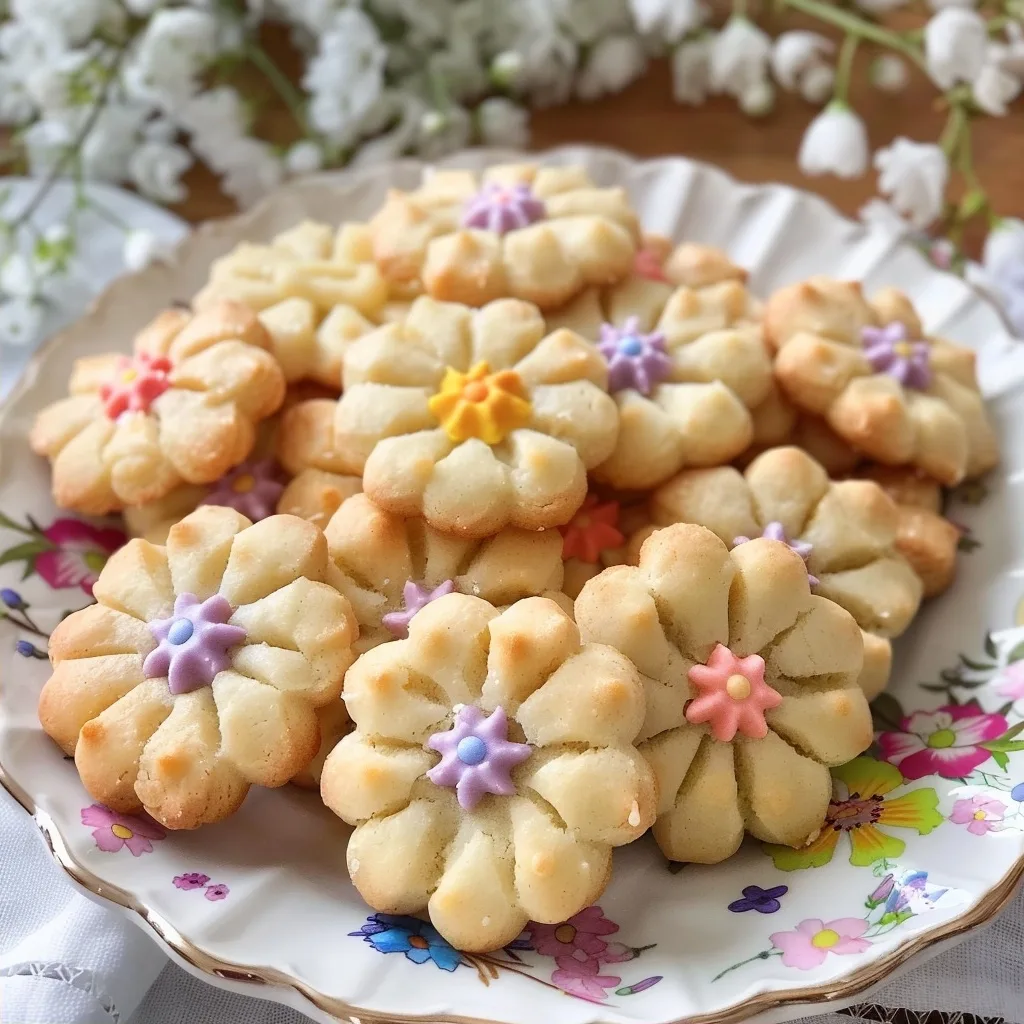
Spring Flower Shortbread Cookies are buttery, tender treats infused with delicate lemon zest and aromatic rosemary, perfect for garden parties and gifting.
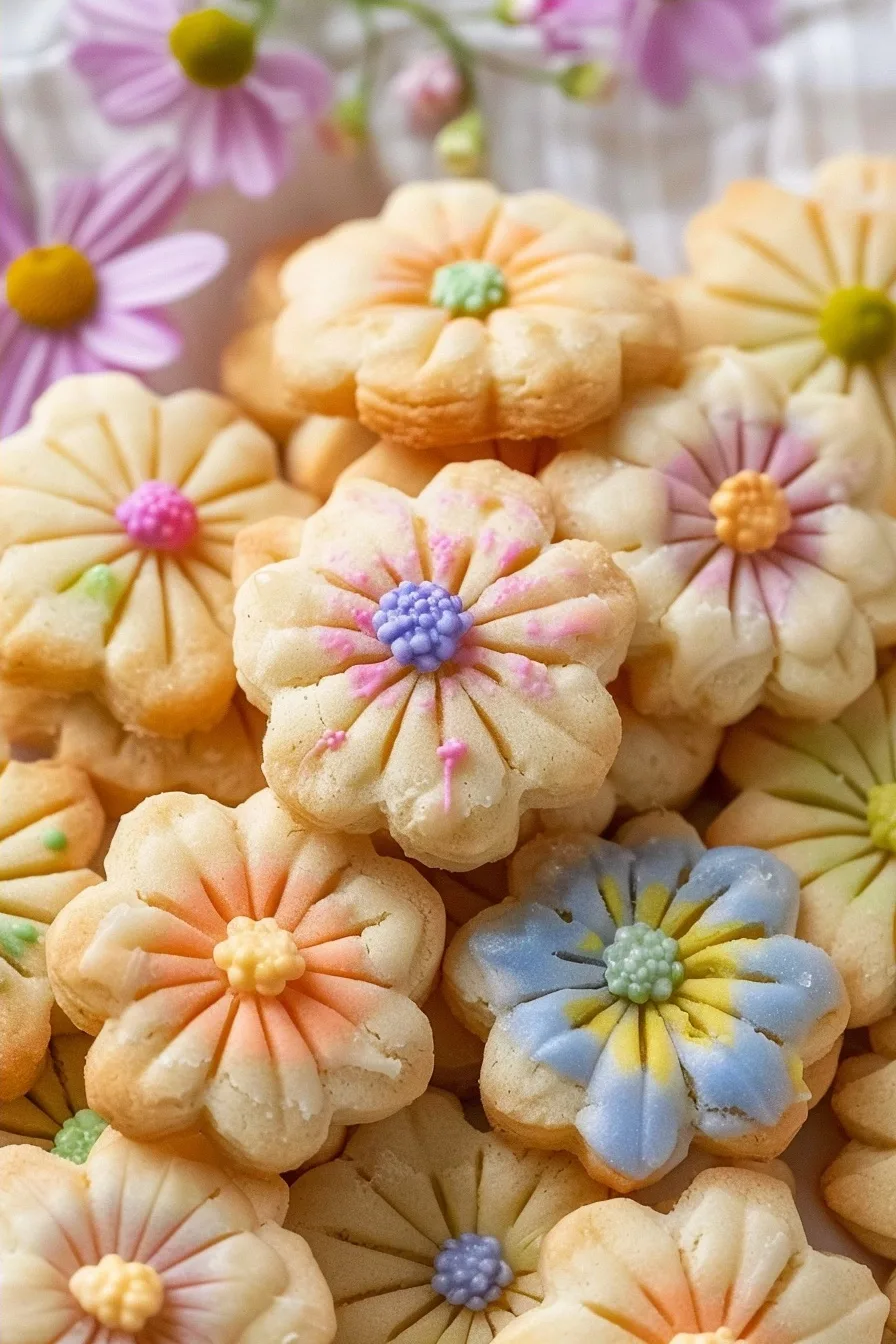
Recipe Overview
| Prep Time | 15 minutes |
|---|---|
| Cook Time | 12 minutes |
| Total Time | 27 minutes |
| Servings | 24 cookies |
| Difficulty | Easy |
| Cuisine | American |
Why This Recipe Works
When I first experimented with floral shortbread, I discovered that the key lies in balancing sweet butter with fragrant herbs. The fresh lemon zest contributes brightness, while rosemary anchors the flavor profile, preventing the cookie from becoming overly delicate. Achieving the right crumb texture required precise flour measurements and gentle mixing, a strategy I refined while testing batch variations.
My own kitchen experiments revealed that cooling the dough before baking preserves the buttery thickness and ensures the roll easily slices if desired. Finally, baking at a slightly lower temperature yields an even, golden edge that invites a crisp, airy bite, celebrating the spring theme without sacrificing classic shortbread tenderness.
Ingredients
| Ingredient | Quantity | Notes / Alternatives |
|---|---|---|
| Unsalted butter, cold | 1 cup (227 g) | Use at room temperature for easier mixing |
| Granulated sugar | 3/4 cup (150 g) | Can swap with coconut sugar for a hint of caramel |
| All‑purpose flour | 2 cups (240 g) | Optional chamomile‑infused flour for extra aroma |
| Lemon zest, finely grated | 1 teaspoon | Fresh zest enhances citrus notes |
| Loose rosemary, chopped | 1 tablespoon | Use fresh rosemary, not dried, for better flavor |
| Vanilla bean, split | 1 small bean | Or 1 teaspoon vanilla extract for convenience |
| Pinch of sea salt | ≈¼ teaspoon | Balance sweetness, can be omitted for low‑sodium diets |
| Edible flower petals, decorative | ¼ cup | Any edible cultivar, rinse thoroughly |
Step-by-Step Instructions
-
Crush Butter and Sugar
Break the butter into small cubes and crush them with a pastry cutter until fine. Add sugar and a pinch of salt, mixing until the mixture forms a dry, flaky dough.
-
Add Liquid Flavorings
Stir in the vanilla bean seeds and the lemon zest, ensuring even distribution. The vanilla’s warmth complements the bright citrus.
-
Incorporate Herbs and Flour
Fold the chopped rosemary and the flour alternately, pressing lightly to bind. Avoid over‑mixing to keep the crumb tender.
-
Shape the Dough
Press the dough into a 12‑inch square on a parchment sheet, smoothing the surface with back‑of‑hand. Cover with cling film and chill 20 minutes.
-
Preheat the Oven
Set the oven to 350 °F (175 °C). Place a baking stone or sheet for even heat distribution.
-
Bake the Cookies
Slide the chilled square onto the stone and bake 10‑12 minutes, or until edges show a light golden color. Remove briefly for dry‑butter caramelization.
-
Score and Cool
Use a knife to slice the square into 24 equal portions. Allow the pieces to cool entirely on a rack before decorating.
-
Decorate with Flowers
Gently scatter edible flower petals atop each cookie, pressing lightly to secure natural adhesion. The petals add both color and seasonal flair.
Chef Tips for Perfect Results
- Use butter that has fully cooled; it blades easier and prevents dragging.
- Blend 3:1 fat‑to‑flour ratio to guarantee a classic shortbread mouthfeel.
- Let the dough rest in the fridge for exactly 20 minutes, not more, to maintain visibility for tender crumb.
- For best caramel color, bake on a preheated stone, not a conventional tray.
- Try microwaving dried rosemary to release oils before chopping.
- Keep the dough pressed before baking to avoid domes that flatten unevenly.
Common Mistakes to Avoid
- Over‑mixing – This eliminates air pockets, producing dense cookies. Gently fold instead.
- Too‑high temperature – Results in burnt edges, drying the center. Stick to 350 °F for a uniform finish.
- Skipping chill – Leads to curling and uneven shapes. Chill for at least 20 minutes.
- Insufficient rosemary – The herb’s aroma may undercut the lemon. Use fresh rosemary, not dried.
- Rough dough handling – Compacts the butter, offsetting flakiness. Press gently and avoid heavy pressure.
Variations and Substitutions
| Ingredient | Substitution | Impact on Flavor |
|---|---|---|
| Butter | Shea butter (1/2 cup) | Offers nutty tone, slightly lighter. |
| Lemon zest | Orange zest | Provides sweeter, bright citrus. |
| Rosemary | Thyme | Herbaceous lap, milder. |
| All‑purpose flour | Whole‑wheat (1/4 replaced) | Nutty undertone, denser crumb. |
| Vanilla bean | Almond extract | Adds subtle nutty note. |
| Edible flowers | Microgreens | Offers crunch, mild flavor. |
Serving Suggestions and Pairings
These cookies shine at brunch tables, pairing gracefully with chilled Earl Grey tea, herbed lemon drizzle, or sparkling rosé. Pleasing guests on spring weddings, they fit elegantly as part of a dessert station beside pastel macarons and buttercream roses.
For an up‑scale lauded menu, present on porcelain ceramic plates, garnish with a whisper of powdered sugar and a single lavendered white chocolate drizzle, connecting floral aromatics to indulgent textures.
Storage and Reheating
| Method | Duration | Instructions |
|---|---|---|
| Air‑tight Tin or Plastic Box | Maximum 5 days | Seal after room temperature cooling. |
| Freezer | Up to 2 months | Wrap each cookie individually in cling film before box. |
| Reheating | 2 minutes | Warm in a 300 °F oven; 1 minute per cookie. |
Nutritional Information
| Nutrient | Amount per Serving |
|---|---|
| Calories | Approximate values: 115 |
| Protein | 1.2 g |
| Fat | 7 g |
| Carbohydrates | 10 g |
| Fiber | 0.5 g |
| Sugar | 6.5 g |
| Sodium | 105 mg |
Frequently Asked Questions
What can I substitute for fresh rosemary?
Use fresh thyme or oregano for a milder herbaceous note; avoid dried because of bitterness.
How do I know when the cookies are done?
Finish when edges turn a light golden hue and the center feels lightly firm. A quick press should wipe clean.
Why were my cookies too crumbly?
Cold butter wasn’t chilled enough, or the dough was over‑mixed, which exerts excess moisture. Relight fresh dough in steps.
Can I prepare these ahead of time?
Yes, chill and bake 24 hours before an event, then reheat briefly to regain crispness.
What pairing beverage complements the flavors best?
A glass of lightly sweetened sparkling apple cider accentuates citrus and herbal accents, elevating the tasting experience.
Enjoy baking, sharing, and reveling in the crisp, aromatic joy that colors every Spring Flower Shortbread Cookie.