
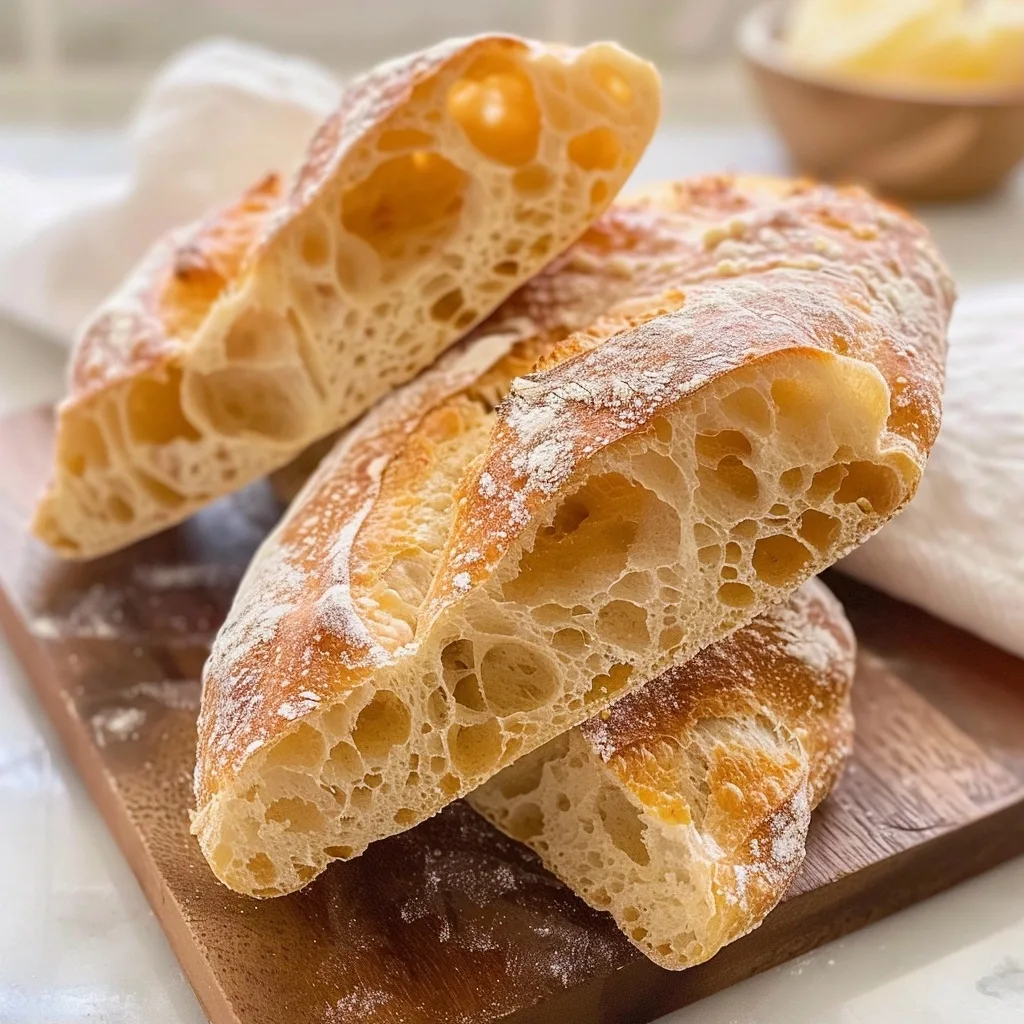
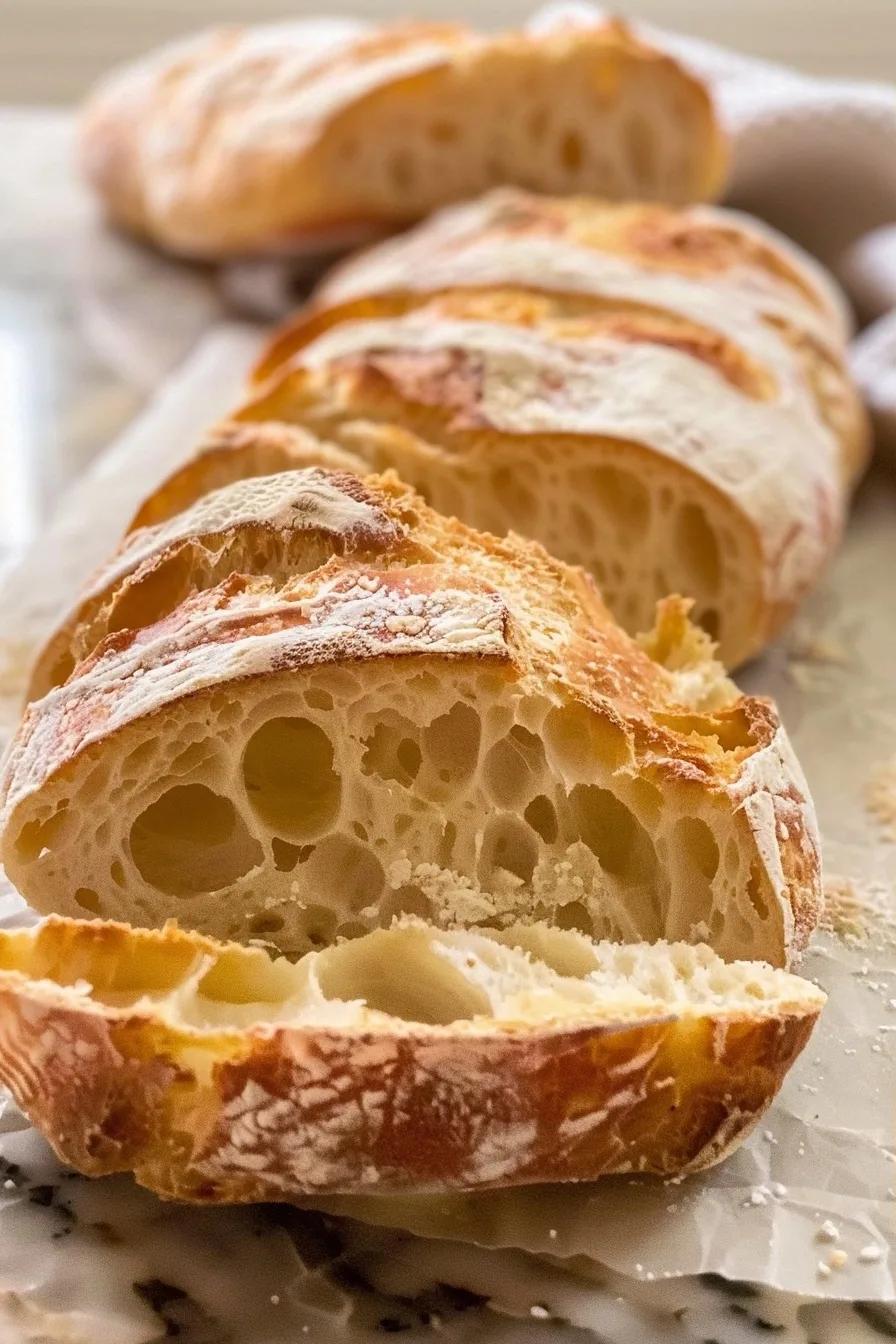
Bakery-Style No-Knead Ciabatta Bread is a airy artisanal loaf that tastes like fresh shop‑baked ciabatta but crafted at home. This simple method eliminates the need for labor‑intensive kneading, while still delivering a crispy crust and a chewy interior that’s full of depth.
| Prep Time | 5 mins |
|---|---|
| Cook Time | 45 mins |
| Total Time | 75 mins |
| Servings | 4-6 slices |
| Difficulty | Easy |
| Cuisine | Italian |
This recipe works because it takes advantage of high hydration and slow, overnight fermentation, which builds flavor and creates the signature open crumb.
When the dough sits at room temperature for twelve hours, tiny gluten strands slowly align under the weight of moisture. The result is a denominator of susceptors that pull steam into airy pockets, giving ciabatta its classic long, irregular holes and light, smoky notes without a labored rise.
Because no kneading is required, the dough retains excess pockets of bubbles that in handled dough might collapse. The flour’s natural enzymes are also allowed to finish their work, turning simple glucose into aromatic compounds that deepen the loaf’s aroma, a technique that mimics the days‑long proofing jars found in European bakeries.
This dish needs the following ingredients.
| Ingredient | Quantity | Notes (alternatives) |
|---|---|---|
| All‑purpose flour | 500 g (4 cups) | Can substitute 100 g bread flour for a chewier crumb. |
| Warm water | 375 g (1.5 cups) | Use filtered or bottled water to avoid chlorine flavor. |
| Olive oil | 30 ml (2 tbsp) | Choosing a light, fruity oil keeps the dough from becoming overly acidic. |
| Dry active yeast | 5 g (1 tsp) | For a stronger rise, double the quantity. |
| Salt | 10 g (2 tsp) | Reduce to 1½ tsp if using a low‑sodium flour. |
Follow this step‑by‑step instruction set to create the loaf.
- In a large bowl, combine 500 g flour, 5 g yeast, and 10 g salt. Whisk to evenly distribute the dry ingredients.
- Make a well in the center and pour 375 g warm water. Stir with a silicone spatula until the dough forms a loose, shaggy mass. Olive oil should sit approximately two teaspoons in the mixture; ensure the oil is well‑mixed for extensibility.
- Cover the bowl with plastic wrap or a clean towel. Let the dough rest at room temperature for 12 hours, creating a thick, airy structure from natural fermentation.
- At the end of the rest, preheat the oven to 230 °C (450 °F) and place a Dutch oven with its lid inside to heat. Use a parchment‑lined sheet pan to keep the dough from sticking if a Dutch oven is unavailable.
- Carefully transfer the dough onto the parchment. Use a sharp knife or bread lame to slice a few shallow cuts across the top—that encourages controlled expansion during baking.
- Place the dough (with parchment) into the preheated Dutch oven. Cover with the lid and bake for 25 minutes. This heated pocket traps steam from the dough, producing a blistered, golden crust.
- Remove the lid, reduce the temperature to 200 °C (400 °F), and bake for an additional 15 minutes, or until the loaf sounds hollow when tapped on the bottom.
- Transfer the loaf to a rack and cool for at least 20 minutes before slicing. This rest allows steam to escape gently, preventing a gummy interior.
These chef tips will help you nail the perfect ciabatta.
- Use a heavy‑duty mixing bowl; a shallow pan will disperse heat too quickly, stalling fermentation.
- When the dough rests, line the bowl with a towel to maintain humidity, especially in dry environments.
- Keep the dough’s surface damp with a fine mist of water during proofing if it begins to dry out—this reduces the formation of a crust on the dough’s surface.
- Use a parchment sheet pre‑heated in the oven for 5 minutes; this gives the dough an even start and less sticking.
- If you find the crust forms too dark, move the loaf to the oven’s lower rack during the final 10 minutes.
Avoid these common pitfalls for a flawless loaf.
- Overmixing: When the dough feels stiff, stop; additional mixing destroys the science behind open crumb.
- Insufficient proof time: A 6‑hour rest leads to tight, dense loaf; the full 12 hours is crucial.
- Undersized oven: If the oven is too small, the loaves will not spread properly; use a Dutch oven with a lid or insulated baking stone.
- Dry dough: If the surface dries before baking, a thin skin will limit browning; spray lightly with water.
- Using too many yeast: Excess yeast produces overly bubbly dough that collapses; keep the yeast at the recommended ratio.
Try these variations and substitutions to personalize the loaf.
| Ingredient | Substitution | Impact on Flavor |
|---|---|---|
| All‑purpose flour | Whole wheat flour (30 % replacement) | Provides nutty undertones and a denser crumb. |
| Olive oil | Neutral oil (e.g., canola) | Silences the fruity note but preserves moisture. |
| Salt | Sea salt flakes | Adds subtle mineral brightness. |
| Water | Lemon‑tang water (1 tsp lemon juice added) | Creates a slightly acidic profile, mimicking crisp beer‑baked bread. |
Serve this loaf with recommended pairings.
Freshly sliced ciabatta pairs wonderfully with crusty tomato bruschetta or a silky olive tapenade. The airy structure makes it ideal for loading with grilled vegetables and pesto, or for a sandwich that holds its shape. During holiday dinners, serve the bread warm with a pot of homemade broth or a savory cheese spread.
Store and reheat this loaf for maximum freshness.
| Method | Duration | Instructions |
|---|---|---|
| Room temperature wrap | 3 days | Wrap in parchment and then foil, keep in a pantry. |
| Refrigeration | 1 week | Place in a sealed bag; remove one day before serving. |
| Freezing | 6 months | Slice the loaf, freeze slices in a freezer bag, then toast directly. |
| Reheating | 5–7 minutes | Preheat oven to 205 °C (400 °F); place bread on a rack to warm. |
Approximate nutrition per serving (slice).
| Nutrient | Amount per Serving |
|---|---|
| Calories | 180 kcal |
| Protein | 5 g |
| Fat | 4 g |
| Carbohydrates | 35 g |
| Fiber | 2 g |
| Sugar | 2 g |
| Sodium | 425 mg |
Frequently Asked Questions
Can I use low‑fat flour?
Yes. Low‑fat flour reduces the fat content slightly but retains the dough’s structure. Adjust water by 10 ml to compensate for increased absorbency.
Is the loaf ready when it sounds hollow?
Yes. A hollow sound indicates internal steam has fully penetrated and the loaf has reached its full volume. Avoid overbaking after this point.
What should I do if the dough doesn’t rise?
Ensure yeast is active: test by dissolving it in a small amount of warm water with sugar before adding it to the flour. If it bubbles within 10 min, it is live.
Can I prepare a week in advance?
Store the cooled loaf in a tightly sealed bag at room temperature for up to three days. For longer storage, freeze the sliced loaf and toast or microwave for a quick snack.
How does the dough taste if I add herbs?
Adding rosemary or basil during the 12‑hour proof produces a fragrant overlay. The herbs infuse gently, preserving the loaf’s airy texture while adding aromatic accents.