
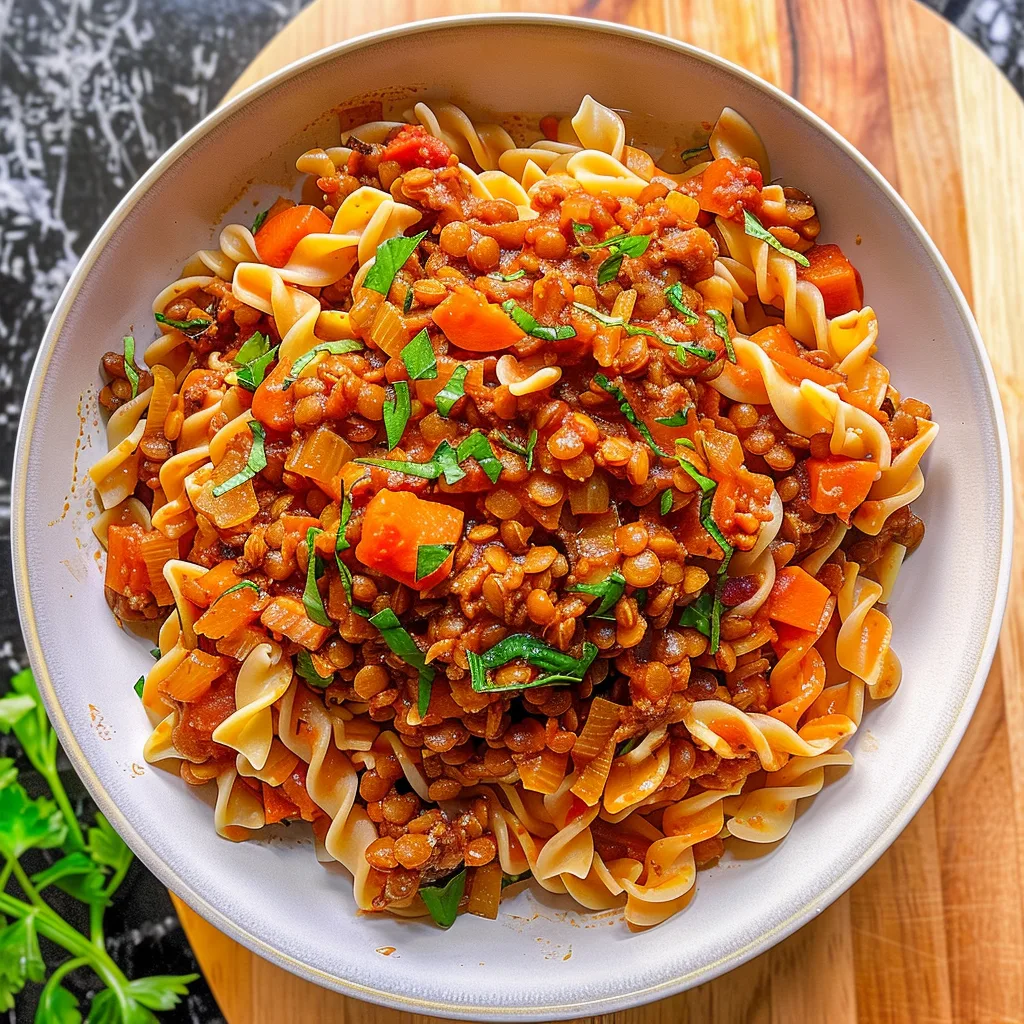
I cut straight to the chase: this 30 Minute Lentil Bolognese delivers a satisfying, savory pasta sauce in half an hour, using navy or green lentils, tomatoes, garlic, onions, carrots, celery, and a handful of spices. No alcohol or pork, and the result is creamy, tangy, and perfectly balanced.
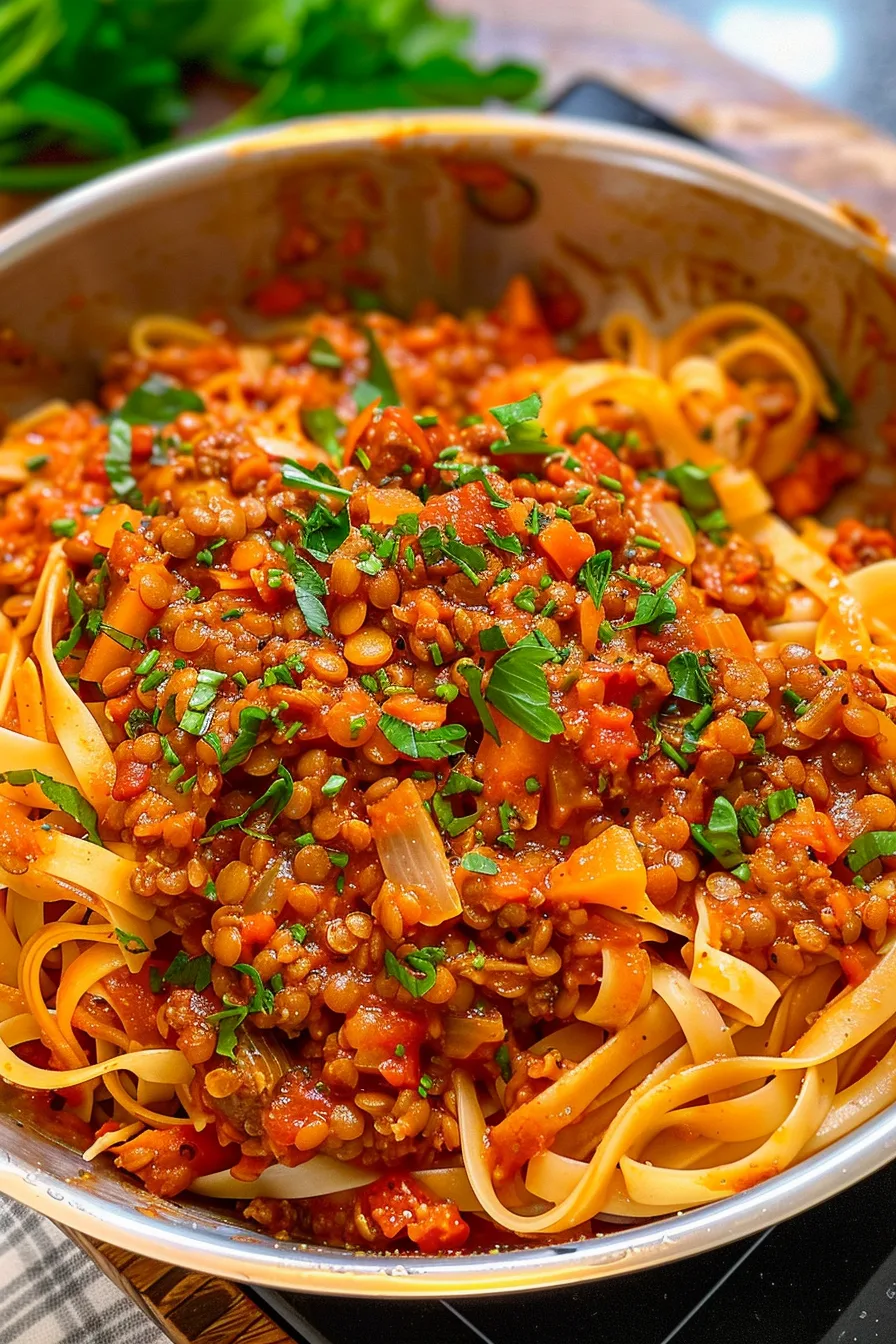
| Prep Time | 10 minutes |
|---|---|
| Cook Time | 20 minutes |
| Total Time | 30 minutes |
| Servings | 4 |
| Difficulty | Easy |
| Cuisine | Italian‑Inspired |
Why This Recipe Works
I remember the first time I swapped ground beef for lentils in a classic Bolognese. The legumes absorbed the tomato’s acidity, creating a thick, protein‑rich sauce that steamed pasta like gravy.
Because lentils cook faster than many legumes, the sauce forms quickly around sautéed aromatics. The acidic tomatoes keep the lentils tender, preventing them from becoming mushy. A splash of tomato paste at the end reduces sweetness while tightening the consistency.
Ingredients
| Ingredient | Quantity | Notes (alternatives) |
|---|---|---|
| Olive oil | 2 tablespoons | Avocado oil works too |
| Yellow onion | 1 medium, diced | Red onion creates a sweeter bite |
| Carrot | 1 medium, diced | Replace with sweet potato for depth |
| Celery stalk | 1, diced | Use fennel for a licorice twist |
| Garlic cloves | 3, minced | Hone garlic for a milder tone |
| Ground cumin | 1 teaspoon | Optional, adds warmth |
| Crushed red pepper flakes | 1/2 teaspoon | Adjust to taste |
| Can of diced tomatoes | 28 ounces | Use plum tomatoes for richer color |
| Tomato paste | 2 tablespoons | Keep stock for thickening |
| Vegetable broth | 2 cups | Low‑sodium if preferred |
| Dry lentils (green or navy) | 1 cup, rinsed | Use split lentils for faster cook |
| Fresh basil leaves | 1/4 cup, chopped | Or dried for easier storage |
| Parmesan cheese | Optional, for garnish | Use nutritional yeast for dairy‑free |
| Salt | to taste | Sea salt gives sharper flavor |
| Black pepper | to taste | Freshly ground yields best sharpness |
Step‑by‑Step Instructions
- Heat olive oil in a large skillet over medium heat until shimmering.
- Sauté onion, carrot, and celery for 5 minutes until soft and fragrant.
- Add garlic and stir for 30 seconds; aromatics should release their scent.
- Season the mirepoix with cumin and red pepper flakes, cooking for another minute to bloom the spices.
- Pour in diced tomatoes and tomato paste, breaking up chunks with a wooden spoon.
- Stir for 2 minutes so the tomato paste fully integrates.
- Introduce lentils, then ladle vegetable broth, bringing the mixture to a gentle simmer.
- Reduce heat to low, cover, and let cook for 15 minutes, stirring occasionally.
- Check lentil tenderness; if not yet soft, add a splash more broth or water and continue for 3–5 minutes.
- Adjust seasoning with salt and pepper, tasting for balance.
- Fold in basil, letting the residual heat wilt the leaves for a minute.
- Serve immediately over your favorite pasta or zucchini noodles.
- Garnish with grated Parmesan or nutritional yeast if desired.
Phase 1: Sautéing Aromatics
This initial step builds the flavor base. The vegetables release natural sugars when cooked just until tender, setting the stage for a vibrant sauce.
Phase 2: Tomato Integration
Incorporating tomato paste early reduces bitterness and thickens the sauce, while diced tomatoes provide body and acidity.
Phase 3: Lentil Simmer
Simmering on low heat allows lentils to absorb liquid without turning mushy, achieving a smooth yet textured consistency.
Chef Tips for Perfect Results
- Choose split lentils or rinse regular lentils thoroughly to cut cooking time to just 12–15 minutes.
- Use a cast‑iron skillet for even heat distribution; pans that retain heat provide consistent simmering.
- For a richer color, roast the tomatoes at 400°F for 10 minutes before adding them to the sauce.
- Stir the sauce after adding lentils to prevent any undissolved tomato paste pockets.
- Don’t over‑simmer after the lentils are tender; the sauce will thicken as broth evaporates, but bitterness can arise if left too long.
Common Mistakes to Avoid
- Overcooking lentils – Signaled by too mushy a texture; fix by reducing simmer time or adding a thickening agent like a pat of butter or a pinch of flour.
- Skipping the sauté – Leads to a flat sauce; remedy by reheating the dish and quickly crushing the vegetables for added depth.
- Too little liquid – Results in a dry texture; add a splash of broth or water during simmer to achieve desired consistency.
- Ignoring herbs – Missing the basil’s bright cue; rescue by adding a handful of fresh herbs at the end and stirring until wilted.
- Slow initial topping – Adding seasoning after simmering can cause uneven flavor; best to season in stages for a balanced profile.
Variations and Substitutions
| Ingredient | Substitution | Impact on Flavor |
|---|---|---|
| Lentils | Chickpeas | More Mediterranean depth, slightly coarser texture |
| Olive oil | Peanut oil | Subtle nutty note, higher smoke point for quick sauté |
| Tomato paste | Red lentil puree | Adds malty sweetness, thickens without salt load |
| Parmesan | Grated Pecorino | Saltier, stronger umami edge |
| Carrot | Pumpkin puree | Sweetness and silkiness, lower carbohydrate |
| Red pepper flakes | White pepper | Softer heat, less banner spice |
Serving Suggestions and Pairings
This sauce shines over al dente spaghetti, fettuccine, or polenta. For a low‑carb twist, serve over shirataki noodles or cauliflower rice.
Dress a crisp arugula salad with lemon vinaigrette to cut the richness. Pair with a light green‑leafy side such as sautéed spinach dressed in citrus.
Occasionally host a quick weeknight feast: thin the sauce with broth for a “pasta cloud,” then top with a sprinkle of walnuts for crunch.
Storage and Reheating
| Method | Duration | Instructions |
|---|---|---|
| Refrigerator | Up to 4 days | Store in a sealed container; warm on low heat or microwave on power 50% for 2 minutes. |
| Freezer | Up to 3 months | Freeze in freezer‑safe bags; thaw overnight in fridge, reheat gently. |
| Quick Microwave | 1–2 minutes | Stir, check temperature, add broth if thick. |
Nutritional Information
| Nutrient | Amount per Serving (Approximate Values) |
|---|---|
| Calories | 360 kcal |
| Protein | 16 g |
| Fat | 12 g |
| Carbohydrates | 42 g |
| Fiber | 12 g |
| Sugar | 10 g |
| Sodium | 350 mg |
Frequently Asked Questions
Can I swap lentils for another type of legume?
Yes, using chickpeas or split peas works; the cooking time will adjust, and the sauce texture changes slightly to more rustic.
What is the best way to ensure lentils don’t get mushy?
Stir gently and keep heat low; add broth gradually and keep the lid partially on, so the lentils finish steaming without concentrating too much moisture.
How do I troubleshoot a sauce that is too watery?
Reduce the sauce over low heat until the desired thickness occurs; a teaspoon of tomato paste then helps to absorb excess liquid.
Is this recipe make‑ahead friendly?
Absolutely; it stores well in the refrigerator for up to four days or can be frozen up to three months, reheating gently preserves flavor.
What pasta work best with this Bolognese?
Long strands like spaghetti or tagliatelle hold the sauce perfectly; thick ribbons such as pappardelle add a more hearty bite.
Conclusion
With its balanced texture, comforting flavor, and quick preparation, the 30 Minute Lentil Bolognese proves vegetarian cuisine can rival a classic meat sauce. Serve it hot, garnish with basil, and enjoy a dish that tastes as grand as it is effortless. Happy cooking!
Explore more vegetarian sauces
Learn about lentil varieties
Discover speedy dinner solutions
Serious Eats
Eat By Example