Quick Summary: Standard egg noodles are not gluten free. They are made with wheat flour, which contains gluten. However, certified gluten-free egg noodle brands do exist, and there are several substitutes that deliver a similar texture without the wheat. This guide covers everything you need to know before your next grocery run.
If you have celiac disease or a gluten sensitivity, egg noodles are one of those foods that seem like they should be safe but are not. The name focuses on the egg, which is naturally gluten free, but the base of nearly every traditional egg noodle recipe is wheat flour. I learned this the hard way: I once picked up a package labeled “gluten free” at a regular grocery store, cooked it for a family member with celiac disease, and within an hour it was clear something was wrong. The package had no certification seal, just a printed claim. That experience changed how I read labels permanently. For broader context on how egg noodles fit into the wider world of types of noodles, knowing what each variety is actually made of is the first step before assuming anything is safe.
The short answer is no, but the longer answer is what will actually protect you at the store.
Table of Contents
Table of Contents
Gluten-Free Egg Noodles: Ultimate Guide & Substitutes

Ingredients
- Certified GF Egg Noodles Jovial or Double Yolk brands
- Brown Rice Flour Common base for GF noodles
- Tapioca Starch For chewiness
- Xanthan Gum Essential GF binder
- Eggs The gluten-free protein source
- Rice Noodles Natural alternative
- Glass Noodles (Sweet potato starch based
Instructions
- Check for the Seal: Always look for the "Certified Gluten-Free" seal on the front or back of the package.
- Read the Base Flour: Ensure the first ingredient is rice, potato, or tapioca flour—not wheat or durum.
- Verify the Facility: Check if the label says "Made in a dedicated gluten-free facility" to avoid cross-contamination.
- Avoid Shared Equipment: Steer clear of packages that state "May contain wheat" if you have celiac disease.
- Cook with Care: Always boil GF noodles in fresh water and stir immediately to prevent sticking.
Notes
- Texture Tip: Gluten-free noodles absorb water faster than wheat noodles. Always check them 2 minutes before the suggested package time.
- Storage: Toss cooked GF noodles in a tiny bit of oil if you aren’t serving them immediately to prevent them from turning into a clump.
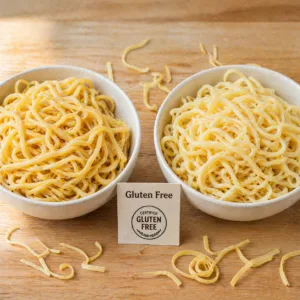
Gluten-Free Egg Noodles: Ultimate Guide & Substitutes
Ingredients
- Certified GF Egg Noodles Jovial or Double Yolk brands
- Brown Rice Flour Common base for GF noodles
- Tapioca Starch For chewiness
- Xanthan Gum Essential GF binder
- Eggs The gluten-free protein source
- Rice Noodles Natural alternative
- Glass Noodles Sweet potato starch based
Instructions
- Read the Base Flour: Ensure the first ingredient is rice, potato, or tapioca flour not wheat or durum.
- Verify the Facility: Check if the label says "Made in a dedicated gluten-free facility" to avoid cross-contamination.
- Avoid Shared Equipment: Steer clear of packages that state "May contain wheat" if you have celiac disease.
- Cook with Care: Always boil GF noodles in fresh water and stir immediately to prevent sticking.
Notes
- Texture Tip: Gluten-free noodles absorb water faster than wheat noodles. Always check them 2 minutes before the suggested package time.
- Storage: Toss cooked GF noodles in a tiny bit of oil if you aren’t serving them immediately to prevent them from turning into a clump.
Quick Answer
No, standard egg noodles are not gluten free. Traditional egg noodles are made from two main ingredients: eggs and wheat flour. Wheat flour contains gluten, which makes conventional egg noodles off-limits for anyone with celiac disease or non-celiac gluten sensitivity.
That said, certified gluten-free egg noodle options are available from several brands, and homemade versions can be made using gluten-free flour blends. If you need a completely safe substitute, rice noodles, glass noodles, and certain tapioca-based noodles all deliver a comparable result in most dishes where egg noodles are typically used.
Why Standard Egg Noodles Are Not Gluten Free
The confusion usually starts with the name. “Egg noodles” sounds like they are primarily an egg product, but the egg is actually a binder and enricher, not the structural base. The structure comes from wheat flour, specifically all-purpose or durum wheat flour, both of which contain significant amounts of gluten protein.
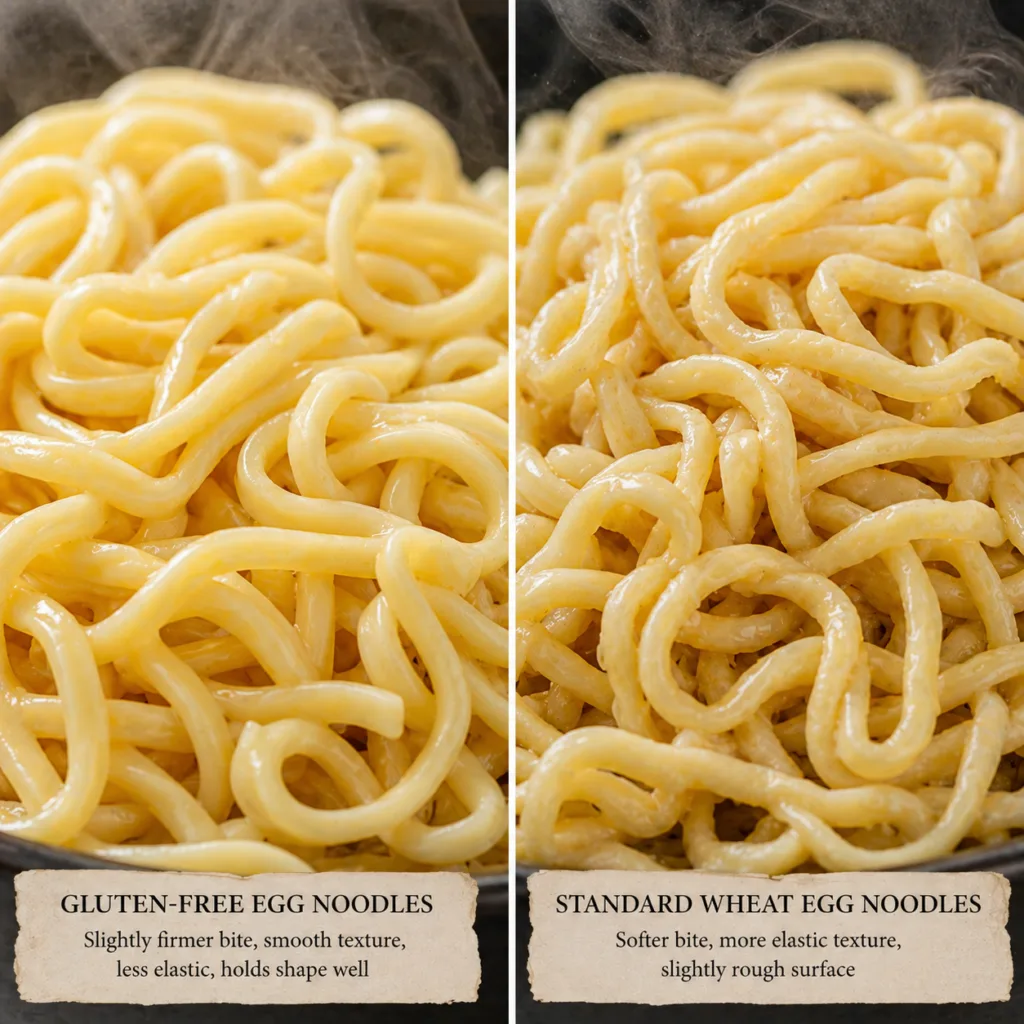
Gluten is what gives the noodle its elasticity and chew. Without it, or without a substitute that mimics its binding behavior, the noodle falls apart during cooking. This is why standard egg noodle recipes rely on wheat flour as the foundation and use egg to add richness, color, and a slightly firmer texture.
For anyone with celiac disease, even trace amounts of gluten from cross-contamination can cause a reaction. This means that even egg noodles made in facilities that also process wheat products carry a risk, regardless of whether the noodle itself lists wheat as an ingredient.
What Are Egg Noodles Made Of
Standard egg noodles contain three core ingredients:
- Wheat flour (all-purpose or durum): the structural base, the source of gluten
- Eggs: adds richness, color, and a slightly denser texture than plain pasta
- Salt: flavor and a small structural role in the dough
Some commercial brands add niacin, iron, and B vitamins as enrichment, but the wheat flour base remains constant across virtually all conventional egg noodle products.
Gluten-free versions replace the wheat flour with alternatives such as tapioca starch, potato starch, rice flour, or a blend of gluten-free flours combined with xanthan gum to replicate the binding effect gluten would normally provide.
Are Egg Noodles Dairy Free
Yes. Standard egg noodles do not contain dairy. The two primary ingredients are wheat flour and eggs, neither of which is a dairy product. Most commercial egg noodle brands are dairy free, and homemade versions made with flour and eggs contain no milk, butter, or cream by default.
If you are managing both a gluten intolerance and a dairy sensitivity, the egg noodle itself is not the concern on the dairy side. The issue arises with the sauces, soups, or dishes the noodles are served in, many of which do contain cream or butter. The noodle base is dairy free; check everything around it.
✅ 3 Things to Check on the Label Before Buying
This is the step most people skip, and it is the one that matters most for celiac safety. Before any egg noodle product goes in your cart, check these three things:
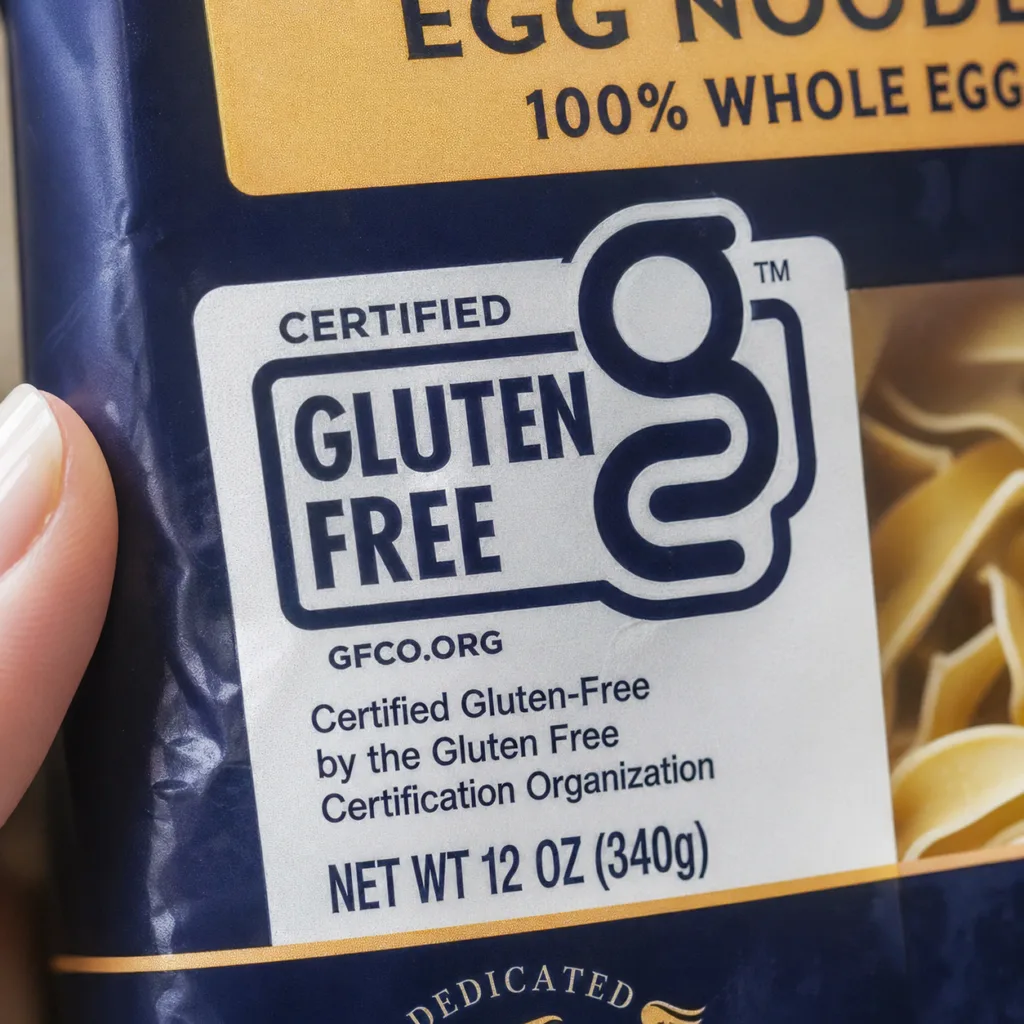
- “Certified Gluten Free” seal: This means the product was independently tested and confirmed below 20 ppm of gluten, the FDA threshold for celiac-safe labeling. A brand simply printing “gluten free” on the package without certification has not necessarily been tested.
- “Made in a dedicated gluten-free facility”: This phrase means there is no shared equipment with wheat products at all. It is the safest option available, and Jovial is one of the few brands in this category that consistently earns this label.
- “May contain wheat” or “processed in a facility with wheat”: These are cross-contamination warnings. For someone with a mild sensitivity, this may be acceptable. For someone with diagnosed celiac disease, it is a risk not worth taking.
The Mistake Most People Make When Buying Gluten Free Noodles
This is where most people go wrong, and it is an easy mistake to make. A package that says “gluten free” on the front is not the same as a package that says “certified gluten free.” The first is a brand claim. The second is a tested result.
Manufacturers are not legally required to certify their gluten-free claims. They can print “gluten free” based on their own internal assessment of the recipe, without any third-party testing, and without any guarantee that cross-contamination did not occur during production. For someone with a sensitivity, this distinction may not matter much. For someone with celiac disease, it absolutely does.
The second common mistake is assuming that a noodle made without wheat ingredients is automatically safe. If it was produced on the same line as a wheat product, it can still contain enough gluten to cause a reaction. The facility matters as much as the recipe.
A third mistake worth naming: buying from the “health food” section of a store and assuming everything there is certified. Health food sections stock plenty of products with self-declared labels. Read every package, regardless of which aisle it came from.
Gluten Free Egg Noodle Brands Worth Knowing
After testing six different GF egg noodle brands across soups, stir-fries, and casseroles, the differences in real cooking conditions were significant. At the 8-minute boil mark, which is roughly standard for most egg noodle dishes, Jovial held its shape cleanest with the firmest bite. Double Yolk came close, but one brand that shall remain unnamed turned into a soft, breaking mess by minute six. Certification matters, and so does the flour blend behind it:
- Jovial Organic Brown Rice Tagliatelle: certified gluten free, made in a dedicated GF facility, holds shape well at full cook time, closest texture to a traditional egg noodle and the one I reach for first
- Double Yolk Gluten Free Egg Noodles: available in multiple widths, nearly indistinguishable from wheat-based egg noodles in taste, reliable texture across most cooking methods
- Manischewitz Gluten Free Egg Noodles: available in thin, medium, and wide cuts, made with tapioca starch and potato starch, widely available in grocery stores, good for soups
- Gefen Gluten Free Noodles: the only readily available egg-free and gluten-free option in this category, though the texture is noticeably softer than the others at full cook time.
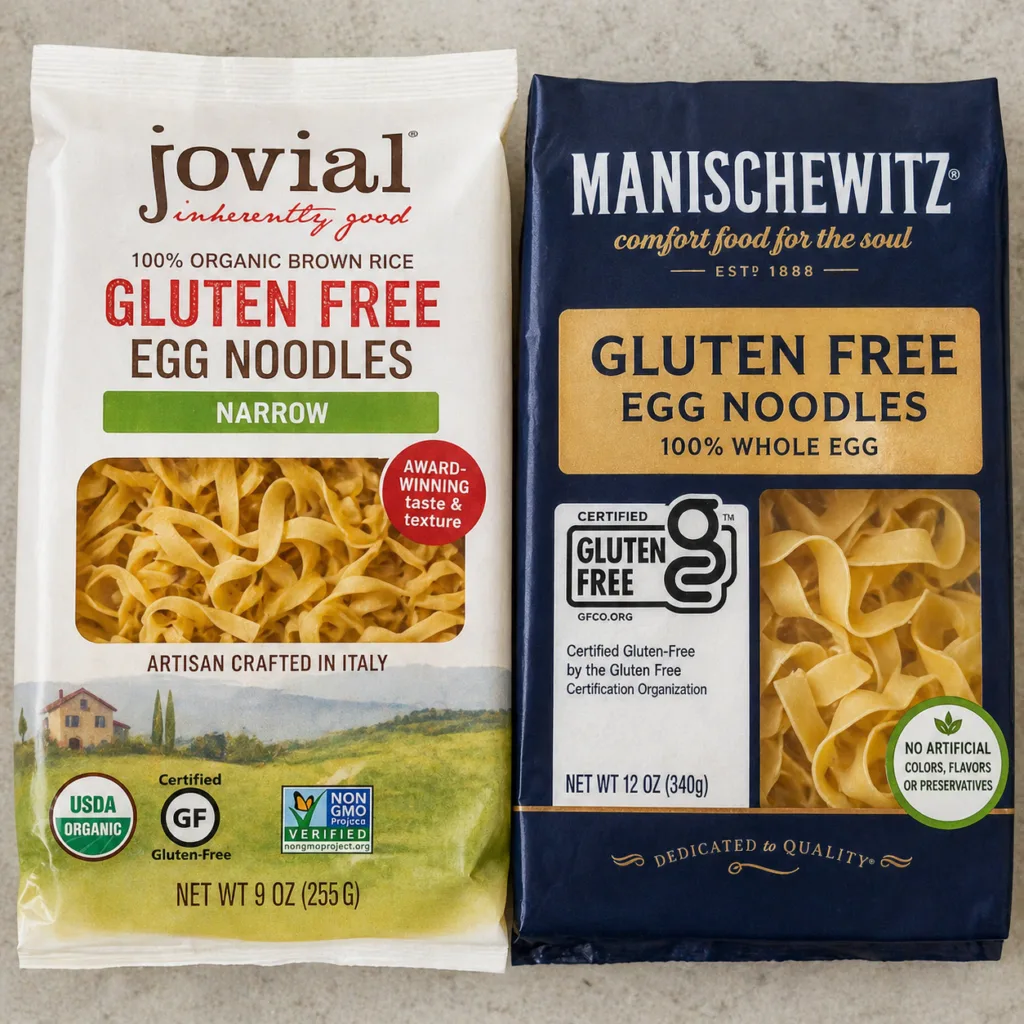
When shopping, always look for labels that say “certified gluten free” rather than just “gluten free.” Certified products have been tested to contain fewer than 20 parts per million of gluten, which meets the FDA standard for celiac-safe labeling.
Gluten Free Egg Noodle Substitutes
If certified gluten-free egg noodle brands are not available, these substitutes work well in most dishes that call for egg noodles:
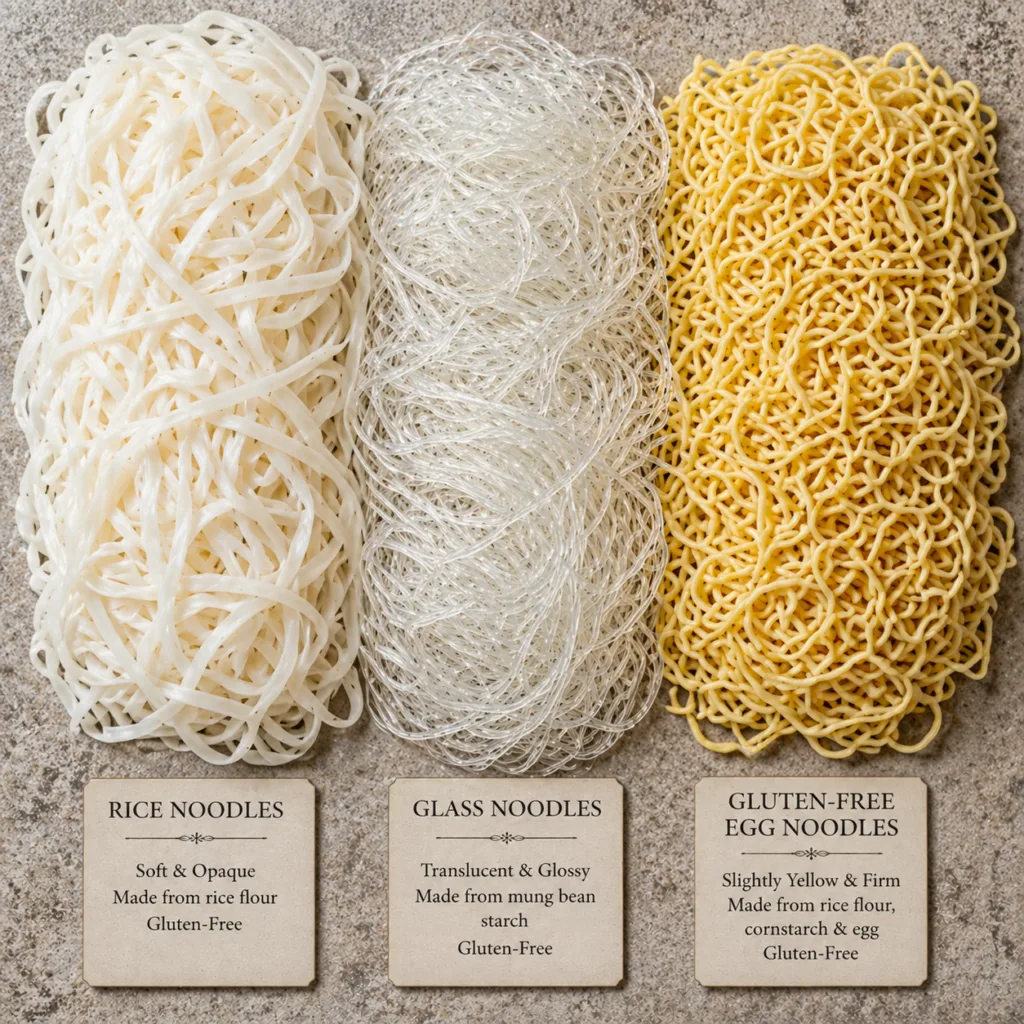
- Rice noodles: naturally gluten free, mild flavor, widely available, work well in soups and stir-fries; texture is slightly softer than egg noodles
- Glass noodles (sweet potato starch): naturally gluten free, chewier than rice noodles, absorb sauce well, excellent in stir-fry dishes; for a full breakdown of what glass noodles are made of, they differ significantly from egg noodles in both texture and behavior
- Soba noodles (100% buckwheat): naturally gluten free when made purely from buckwheat, nuttier flavor, good in cold noodle dishes and broths; many soba products contain wheat, so check labels carefully
- Tapioca noodles: soft, slightly chewy, gluten free, less common but increasingly available in Asian grocery stores
- Zucchini noodles: a vegetable-based option for anyone avoiding all starchy noodles, no gluten, very low carb, best in lighter sauces
- Homemade GF egg noodles: made with a gluten-free flour blend, xanthan gum, eggs, and tapioca starch; the texture is very close to traditional egg noodles and worth making if you use them regularly
Unlike what are udon noodles, which are also wheat-based and not gluten free, most of the substitutes above require no special equipment and are straightforward to cook.
What Makes a Gluten Free Egg Noodle Work
The challenge in making or buying a gluten-free egg noodle is replicating what gluten does structurally. Gluten forms a network of proteins that gives dough elasticity and strength. Without it, noodles made from alternative flours tend to fall apart in boiling water or turn mushy before they reach the plate.
The solutions that work best combine two or three of the following:
- Tapioca starch: adds chewiness and flexibility to the noodle
- Potato starch: contributes structure and a neutral flavor
- Rice flour: the most common base for GF noodles, mild and reliable
- Xanthan gum: a binding agent that mimics gluten’s elastic network, small amounts go a long way
The egg itself helps significantly. Because egg proteins set during cooking, they add a firmness that pure starch-based noodles lack, which is why gluten-free egg noodles tend to hold together better than gluten-free plain pasta.
🚨 Pro Tip: Cross-Contamination Is the Hidden Risk
For people with celiac disease, the ingredient list is only half the picture. Cross-contamination during manufacturing is a serious and often overlooked risk with egg noodles. A product can be technically made without wheat but still test positive for gluten if it was produced on shared equipment or in a facility that also handles wheat.
What to look for on packaging:
- “Certified Gluten Free” means tested below 20 ppm, the FDA celiac-safe threshold
- “Made in a dedicated gluten-free facility” means no shared equipment at all
- “May contain wheat” or “processed in a facility with wheat” are cross-contamination warnings
- “Gluten free” without certification is a brand claim, not a tested guarantee
If you have celiac disease rather than a sensitivity, the difference between certified and self-declared matters significantly. Jovial’s dedicated facility is the safest option currently available in this category.
How to Cook Gluten Free Egg Noodles Without Ruining Them
Gluten-free noodles behave differently from wheat noodles during cooking. The starch networks that hold them together are less stable under heat, which means timing and technique matter more.
Key tips for perfect gluten-free noodles:
- Use a large pot with plenty of water so noodles have room to move freely
- Stir in the first 60 seconds to prevent sticking, starch-based noodles clump fast
- Check for doneness 1 to 2 minutes earlier than the package suggests, GF noodles overcook faster
- Rinse under cold water immediately after draining to stop cooking and prevent clumping
- Toss with a small amount of oil if they will sit before being used in a dish
- Add to hot soup or sauce right before serving, not while the dish is still actively cooking
Are Egg Noodles Healthy
For the average person without gluten sensitivity, egg noodles are a reasonable source of carbohydrates and contain slightly more protein than plain pasta due to the egg content. They are naturally dairy free and provide B vitamins from the egg and wheat enrichment.
The health question becomes more specific when comparing standard egg noodles to gluten-free alternatives. Gluten-free egg noodle products made from tapioca and potato starch tend to be lower in fiber and protein than their wheat counterparts, because the alternative starches used are more refined. Rice flour-based options sit in the middle. For a complete look at how different noodle types compare nutritionally, the full breakdown of gluten free noodles covers all the major options side by side.
Quick Comparison: Egg Noodles vs Common Substitutes
| Standard Egg Noodles | Rice Noodles | Glass Noodles | GF Egg Noodles (certified) | |
|---|---|---|---|---|
| Gluten free | No | Yes | Yes | Yes |
| Dairy free | Yes | Yes | Yes | Yes |
| Main ingredient | Wheat flour + egg | Rice flour | Sweet potato starch | Rice/tapioca flour + egg |
| Texture | Firm, chewy | Soft, silky | Springy, chewy | Close to standard |
| Best use | Soups, casseroles, stir-fry | Stir-fry, soups | Stir-fry, saucy bowls | Direct swap for egg noodles |
| Celiac safe | No | Yes | Yes | Yes (if certified) |
| Widely available | Yes | Yes | Yes | Specialty stores |
Common Questions About Egg Noodles and Gluten
Do egg noodles contain gluten?
Yes. Standard egg noodles are made with wheat flour, which contains gluten. The egg component is gluten free, but the wheat flour base makes the finished noodle unsafe for anyone with celiac disease or gluten intolerance.
Can celiacs eat egg noodles?
Only if the egg noodles are certified gluten free. Standard egg noodles are not safe for people with celiac disease. Look for certified GF brands such as Jovial, Double Yolk, or Manischewitz Gluten Free Egg Noodles.
What is the best gluten free substitute for egg noodles?
For texture and behavior in cooking, certified gluten-free egg noodles from brands like Jovial or Double Yolk are the closest match. For a readily available alternative, rice noodles work well in soups and stir-fries, and glass noodles are excellent in saucy dishes where you want a chewier texture.
Are egg noodles dairy free?
Yes. Standard egg noodles contain no dairy ingredients. They are made with wheat flour and eggs only. The dairy concern in egg noodle dishes comes from the sauces and broths they are served in, not the noodle itself.
Can I make gluten free egg noodles at home?
Yes, and homemade versions tend to have better texture than most store-bought GF egg noodles. A basic recipe uses gluten-free all-purpose flour blend, tapioca starch, xanthan gum, eggs, and a small amount of oil. The dough is rolled thin and cut like standard pasta.
Are rice noodles a good swap for egg noodles?
In most recipes, yes. Rice noodles are naturally gluten free, cook quickly, and work well in soups, stir-fries, and saucy dishes. They are softer and less dense than egg noodles, so dishes that rely on a firmer noodle texture may benefit from glass noodles or certified GF egg noodles instead.
How to Store Gluten Free Egg Noodles
Dry (uncooked): Store in an airtight container in a cool, dry pantry for up to 12 months. GF noodles are slightly more moisture-sensitive than wheat noodles, so sealing the package tightly after opening matters.
Cooked: Refrigerate in an airtight container for up to 3 days. Toss with a small amount of oil before storing to prevent clumping. Reheat in a skillet with a splash of water or broth over medium-low heat.
Freezing: Not recommended for most GF egg noodle alternatives. Starch-based noodles lose their texture after freezing and thawing, turning soft and mushy.
Serving Ideas
- In chicken noodle soup: GF egg noodles hold up well in a broth-based soup; add them in the last 5 minutes of simmering so they do not overcook
- In a beef and noodle casserole: any certified GF egg noodle works as a direct swap; the egg content gives the dish the same richness
- As a cold sesame noodle bowl: rice noodles or glass noodles work well here with a peanut-soy dressing and fresh vegetables
- In a stir-fry: glass noodles are the strongest option for a saucy skillet dish; they hold their texture through tossing better than rice noodles.